From Instagram to the classroom to the book shelves ‒ a Bagenalstown teacher’s recipe for success
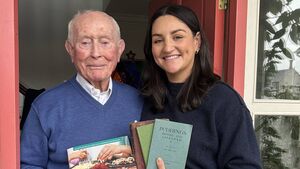
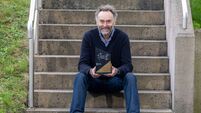
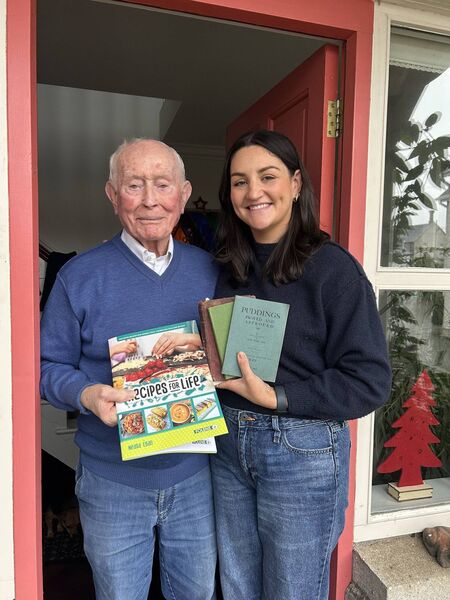
Neasa Egan, a home economics teacher in Presentation de la Salle, Bagenalstown who has just published a recipe book, pictured with her grandad
WHAT started as a creative solution to keep students engaged during online classes has blossomed into something much bigger for Neasa Egan. The home economics teacher at Presentation de la Salle College in Bagenalstown recently launched her cookbook Recipes For Life and it’s already making its way into classrooms around the country.
“The Instagram account came about around four years ago. Because of lockdown (during the covid-19 pandemic), we were teaching online and I was just trying to come up with something to encourage not just the students but maybe the parents as well, trying to get a little bit of home cooking going on,” Neasa explains. “So I just started posting with that, thinking that would just be for a little bit and then I really loved doing it, so I kept going.” That love for sharing recipes caught the attention of educational publisher Folens, who reached out through the Association of Teachers of Home Economics (ATHE), of which Neasa is a member. What began as an ebook became so popular that it’s now available as a printed copy in schools nationwide.
But this isn’t just any cookbook. Neasa has carefully crafted each recipe with the realities of modern home economics classes in mind. “We needed skill-based recipes that were doable in an hour,” she says, noting that while classes used to be a double 40-minute period, most schools now have hour-long sessions.
The stakes are high for students, too – the cooking exam accounts for 50% of their junior cycle grade and 50% for leaving certificate applied as well. “That’s why the recipe book is tailored to make sure that they get it done within the hour,” Neasa explains. This includes time for preparation and cleaning up afterwards.
The recipes are scaled down so students aren’t making “a big, massive lasagne” but something manageable that can be adapted at home if needed. “The idea is that they get it baked and, hopefully, have it for lunchtime,” she says, adding that students are often “tucking into it and asking to bring a fork out for their lunch.” When asked what recipes are crowd pleasers, Neasa laughs: “Anything sweet.” The recipe book has mouthwatering desserts, including chocolate lava pudding.
But she’s also seen students light up over homemade pizzas and lasagne. “For some of them, they’re making these things for the first time. It’s great seeing them realise ‘oh, I can make this myself. I don’t have to depend on someone else to make it for me or I don’t have to go out and buy a pizza, I can actually make it myself’.” Cost is another crucial consideration, especially with rising food prices. Not all schools can provide ingredients so students often have to pay for them. “You don’t want to put extra expense on families. So that’s why I have the minimal ingredients,” Neasa says. She plans lessons strategically too – if students buy a large pack of flour for one week’s baking, they’ll use it again the following week.
Currently on maternity leave, Neasa has found time for a different culinary adventure â cooking from vintage Irish cookbooks. It’s a project that’s brought her closer to her granddad, whom she sees every day. “My granny was a great cook and I’m doing a lot of recipes for him from her old domestic science books.” Her grandad has become an enthusiastic collector, buying old cookbooks every few weeks. “When you look through some of the recipes, it’s so interesting,” she says. Some discoveries have been surprising – like the ‘egg flip,’ which turned out to be a drink rather than a cooking technique.
These historical recipes aren’t just a hobby. “In home economics, you have to teach about the historical development of food and eating patterns,” Neasa notes. She’s excited to bring these old cookbooks into class and show students what was popular decades ago. “If you suggested eating liver or kidneys, things like that, the kids would be like, ‘what? You can eat that’.” The vintage recipes shared on her Instagram – where she has over 15,000 followers – have struck a chord with people messaging to say they’ve unlocked childhood memories.
‘‘People message me and say ‘oh my God, my granny used to make me that.’ It’s so nice that food can bring back memories.” The popularity might even lead to a second cookbook featuring these nostalgic dishes.
Back at Presentation de la Salle, home economics is thriving. “When I started teaching there were three classes and now we’re going up to four classes,” Neasa says proudly.
The subject is also shedding old stereotypes.
“Even in terms of the number of boys doing home economics that has definitely improved as well which is so great to see,” she says. She points out to her students that most famous chefs people can name are men, adding: “I always say to them that home economics is the only subject where you can eat your homework.”
The change from years past is striking. “I remember a teacher who has since retired telling me that the boys used to be asking if they could go out the fire exit because they didn’t want to be seen doing home economics, whereas now it’s totally different. I give them wooden knives and forks so they can share their food and show the other lads what they’re after making and they would be delighted with themselves.”
Even her grandad has got swept up in the cooking enthusiasm. “He’d be reading the recipe books and saying ‘oh God, we used to have that when we were kids.' And he’s really getting into it. It’s lovely." Recipes For Life is available at https://folens.ie/pages/recipes-for-life.
Neasa’s adventures in cooking and baking can be found on Instagram at @ComeDineOnline.