Passing of celebrated gardener, botanist, traveller and author Seamus O’Brien
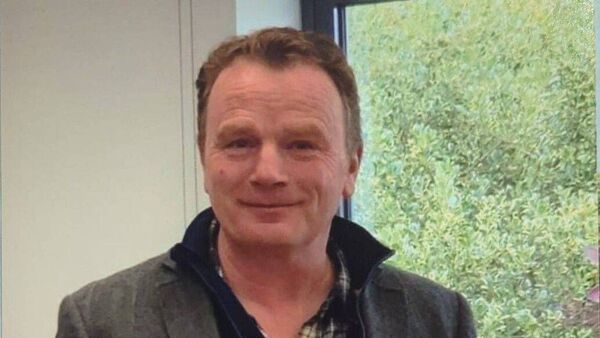
The late Seamus O'Brien pictured with the prestigious Royal Horticultural Society of Ireland (RHSI) Loder Rhododendron Cup
THE recent death of Seamus O’Brien, head gardener at the National Botanic Gardens, Kilmacurragh Estate, Kilbride, Co Wicklow, marks the passing of a man acknowledged as a towering figure in the realm of Irish horticulture.
Seamus passed away suddenly on Monday 22 December at the age of 55.
A native of Carrigeen, Baltinglass, Co Wicklow, Seamus was a celebrated gardener, botanist, traveller and author, known for his work on renowned plant explorers such as Augustine Henry and Joseph Hooker, having penned acclaimed books on both men.
At the time of his death, Seamus was completing the editing of a third book.
It was a measure of the esteem in which Seamus was held that he was regarded as an internationally-respected gardening expert. He possessed vast knowledge of native and exotic plant species and was an enthusiastic advocate of gardening for a changing climate and for the protection of nature.
Son of Mary (née Wilson) and the late Matt O’Brien, Seamus was educated at Bigstone National School and Scoil Chonglais Secondary School in Baltinglass, before going on to Multyfarnham Agricultural College in Co Westmeath, where he studied horticulture. He was a very bright student.
He trained at the National Botanic Gardens in Glasnevin and undertook further training at Kew Gardens in London â the Royal Botanic Gardens.
Back home in Ireland, Seamus was first employed in 1993 on a Victorian garden restoration project on Valentia Island in Co Kerry, before undertaking another restoration plan at the Shackleton Gardens at Beech Park, Clonsilla, Dublin.
In his own words, Seamus observed: “Better to be a creator than a curator.” His next employment in 2000 brought Seamus back to the National Botanic Gardens in Glasnevin.
In 2006, the position of head gardener at Kilmacurragh came up, and he applied successfully. Seamus said he was attracted to Kilmacurragh Estate due to its history, the fact it was in his native Wicklow, and because they were the only gardens that would woo him away from the Glasnevin gardens.
At an early age, Seamus developed an abiding interest in plants, sparked by his mother Mary showing him the nectaries at the base of a flower. This started his life-long passion for rhododendrons.
Seamus is remembered by his mother as being a kind, caring and gentle little boy who always did his best to please. He was a very bright student who had a deep love and respect for nature.
She recalled that Seamus had discovered a tomato vine growing wild on top of a mound of clay at home and became intrigued when it began forming fruit.
She continued: “With his friend Stephen, they went exploring a sandpit for fossils and were fascinated by little baby pine martens there, while in search for flowers for me, arriving home late.
“Seamus always had a love for gardening while working alongside me in the garden – the day was never too long for him. With similar interests we had formed a very close bond which, I am happy to say, grew through the years.”
Before becoming head gardener at the National Botanic Gardens, Kilmacurragh in 2006, he was a young and knowledgeable gardener known in Irish horticulture circles. Plant preservation and growing-on species threatened by extinction were the main interest of this master gardener.
He developed the gardens at Kilmacurragh Estate and their famed rhododendron walks for public enjoyment after the grounds had fallen into neglect.
In the weeks before his death, Seamus welcomed the news that the abandoned 17th century Kilmacurragh House, around which the historic gardens were built, was to be restored.
Seamus travelled all over the world fundraising €6.5 million towards this objective. He only received the news days before his untimely passing that the necessary funding required to complete the restoration project was sanctioned, writing in a Christmas card to his mother that “it was the last Christmas for the house to be without a roof”.
He had been greatly looking forward to catching up with family over the festive season. Staff told Mary that Seamus had planned to take her to visit a walled garden in Kilkenny. He then planned to visit various family members before heading back home to his so-loved Kilmacurragh to catch up with staff and neighbours.
Sadly, this plan was never to be realised.
The distinguished gardener said the rebuilding of the house, along with the planned opening of an additional 50 acres of restored parkland and formal gardens this year, would return Kilmacurragh to the ranks of Ireland’s great estates.
A lecturer and award-winning author, Seamus O’Brien’s expertise and writings were in demand internationally.
As an avid traveller, the Wicklow man was awarded membership of The Explorers Club, whose membership included Edmund Hillary, the New Zealand mountaineer and explorer who was the first man to conquer Mount Everest in May 1953. The Explorers Club also included American astronaut Edwin ‘Buzz’ Aldrin, the second man to walk on the moon on 20 July 1969 as part of the Apollo 11 mission.
China was a favourite research destination for Seamus. He travelled to the country on some 13 or 14 occasions.
Diarmuid Gavin, garden designer and television presenter, in a tribute, stated that Seamus O’Brien had done the state and the gardening world much service.
The RTÉ gardening personality described Seamus as a genius who spent his life planting and restoring gardens, looking after plant collections, travelling to see plant species in their native habitat, lecturing, writing and enthusing.
Diarmuid commented: “Latterly, he ran the Botanical Gardens outpost in Wicklow, where he revitalised a jewel in the crown of Irish gardens. He was a gentleman, always ready with a smile, advice and encouragement. And he was Irish gardening’s greatest ambassador.”
Seamus was also a much-valued member of the Rhododendron Camellia and Magnolia Group and was long-standing chairman of that body’s Irish branch.
He was a recipient of the prestigious Royal Horticultural Society of Ireland (RHSI) Loder Rhododendron Cup. This cup is awarded in recognition of his work in conserving the rhododendrons in Kilmacurragh and his willingness to share his knowledge through his books recording his travels and those of notable Irish plant hunters.
Notably, while the Loder Cup has been awarded to recipients in many countries, Seamus O’Brien was the first Irishman to claim this accolade.
Seamus was also awarded the RHSI gold medal of honour as head gardener at Kilmacurragh.
The tributes to Seamus carried in all the Irish daily newspapers spoke of the high esteem in which he was held for his reputation as a plantsman, a scholar, a traveller and a devoted friend to so many people.
Having reposed at St Paul’s Oratory, Baltinglass, requiem Mass for Seamus O’Brien was celebrated in St Joseph’s Church, Baltinglass on Sunday 28 December, followed by cremation service for family and close friends in Halligan’s Cremation Chapel, Barrack Street, Tullow.
Seamus, who was predeceased by his father Matt and brothers Thomas and Lorcan, is mourned by his mother Mary, sisters Marie and Eilish, brothers Matt, Michael, Donougha and Shane, sisters-in-law, brother-in-law, uncles, aunts, nephews, nieces, work colleagues, relatives and friends.
Huge crowds attended the obsequies, with the banks of flowers in the church for Seamus’s funeral Mass reflective of this outstanding Wicklow man’s love of gardening.