Dead dolphin found on the shore in St Mullins, miles from the sea
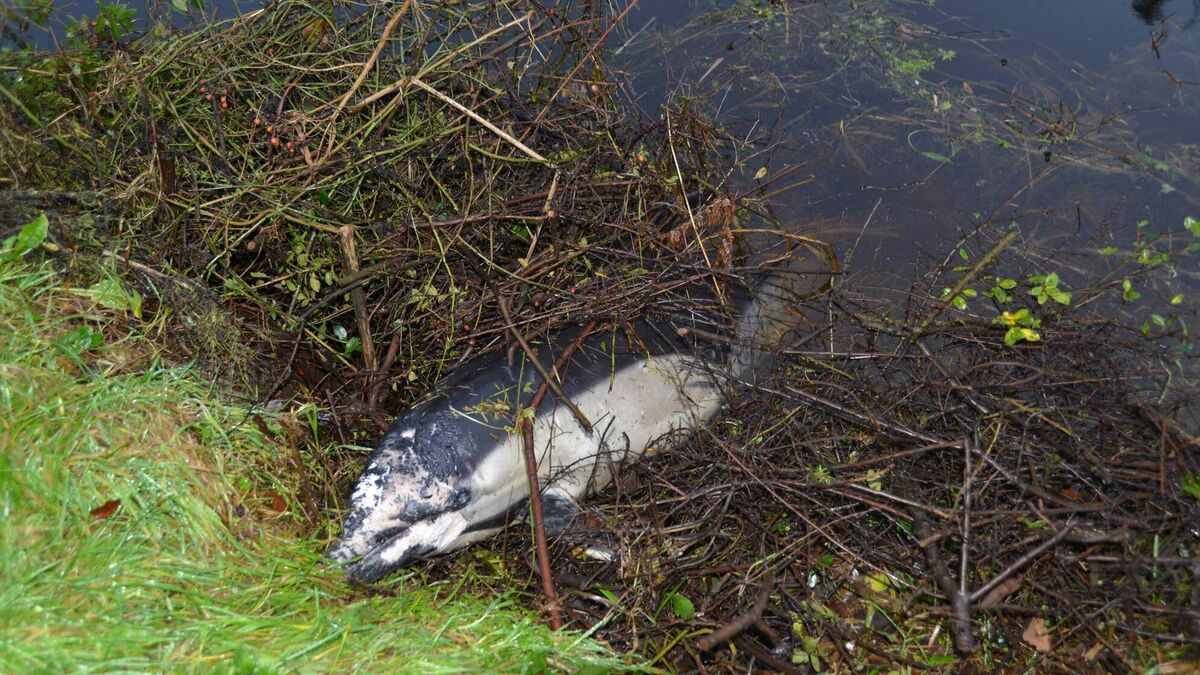
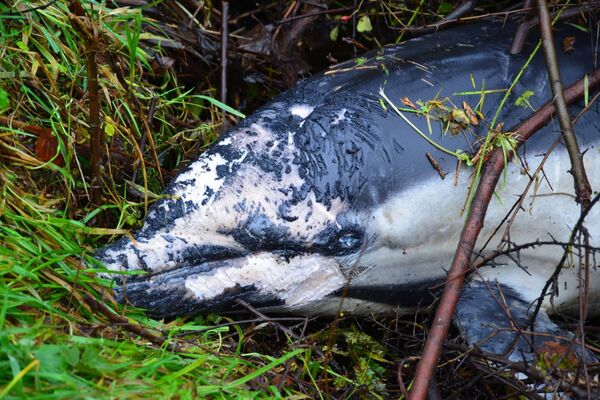
The dead dolphin found in St Mullins. Photo by Anthony McGahan.
One of mother nature’s most beautiful creatures came to an untimely end on Tuesday afternoon, washed up on the banks of the River Barrow.
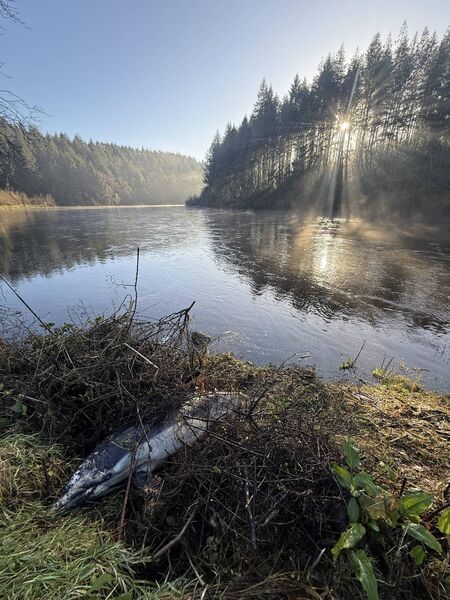
The scratched carcass of a common dolphin lies at least 27 km from the sea, partially submerged in bushes below the cottages between The Quay and Bauck Street in St Mullins. The sharp-eyed resident who found it reckoned that the dolphin was between 1.5 and 2 meters long and could weigh as much as 150 kg. It is believed to be the first ever dolphin found stranded in County Carlow.
Neither the Irish Whale and Dolphin Group (IWDG) or the environment department of Carlow County Council said they were the appropriate body to organise removal of the carcass, due to its unprecedented location.
The resident who found the dolphin could not log it through the IWDG portal online as landlocked Carlow was not one of the counties in the drop-down menu of options. He notified the group over the phone instead.
Anthony McGahan, a geoscientist and resident of St Mullins, explained that the dolphin likely travelled up the river from the sea during a high tide. In the 20 years Anthony has lived in the village, he said he has never seen a dolphin this far inland, but seals, otters, European egrets and cormorants are not uncommon.
According to IWDG public sighting records, a member of the public noticed a common dolphin milling in the River Barrow further downstream at the Mountgarrett Ferry Bridge on the Kilkenny, Wexford border on 7 December, but it is not possible to confirm whether this was the same dolphin.
The group noted there are often more dolphins spotted inshore along the south coast of Ireland during wintertime due to sprat and herring movements.
“The common dolphin is a pelagic species, used to open seas, who seem to be becoming more abundant in our waters, on the move from further south for some reason”, said Gemma O'Connor, ive-stranding coordinator with IWDG. “As a result we are seeing them more in our coastal waters and some do follow spawning fish up river, a habitat they are unfamiliar with and can get into difficultly,” she continued.
The River Barrow is tidal as far as the first lough in St Mullins, so “there’s an element of salt water”, explained Anthony, meaning a dolphin might be able to survive. It may also have died further downstream and been carried into the village by high tides over the past few weeks.
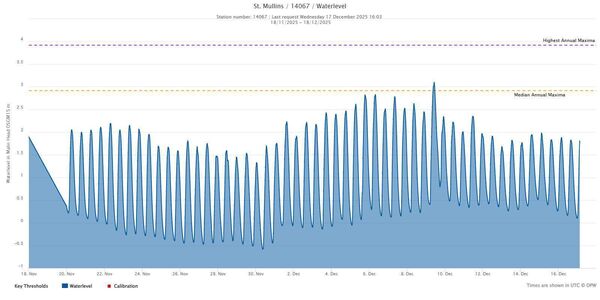
The village of St Mullins was severely flooded on 9 December, with the water level reaching over 3 meters. Anthony said that flooding is not uncommon in the village due to its location, but that it is “getting more regular, and inundation is getting that little bit more extreme” due to climate change.
Gemma said typically IWDG volunteers would collect data and photos from the dolphin, in addition to a skin sample which is stored in the natural history museum for genetic testing. However, their volunteers are located in the coastal counties, “so in this case we do not have anyone nearby with a genetic kit to collect a skin sample.” They said Carlow County Council would be the best placed to answer about removal from the waterway and that “the public should refrain from touching it, as it can harbour some illnesses or viruses.” However, the council’s environment department said the IWDG was the more appropriate group to remove the carcass in this instance.