Closure of pathology unit final nail in coffin for autopsies
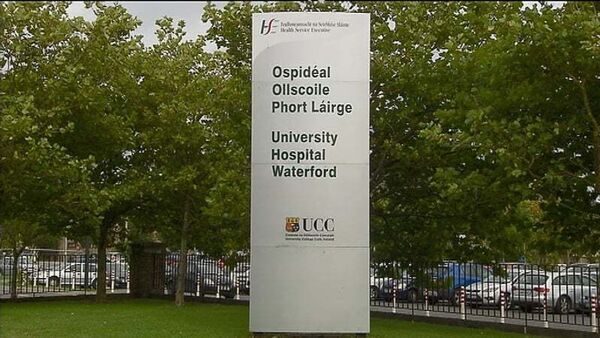
The pathology unit at University Hospital Waterford will stop carrying out post mortems
THE government has no plan for where post mortems for people from Carlow will be carried out after 1 January, when University Hospital Waterford’s pathology unit will stop doing them.
UWH is currently responsible for carrying out autopsies for Carlow, Kilkenny, Tipperary, Waterford and Wexford, and conducts about 700 post mortems annually. The hospital informed the Department of Justice, which is responsible for post mortems, in November 2024 that consultant pathologists would cease carrying out coroner-requested autopsies from January 2026, the HSE confirmed.
Eugene O’Connor, acting coroner for Carlow and Laois, told : “Because of the lack of resources in the pathology service, we’re getting autopsy reports later and later. They can take over a year in some areas and sometimes longer.”
Such delays can have a great emotional impact on the relatives and loved ones of the deceased, Mr O’Connor said, as he cannot conclude cases unless he has an autopsy report.
Mr O’Connor said that he had been raising the issue of resourcing pathology with the Department of Justice since 2018. It is Mr O’Connor’s understanding that “some progress has been made in recent weeks about putting an arrangement in place to address this issue,” but that the plan is not yet finalised.
Ben O’Sullivan, chief executive officer at University Waterford Hospital, laid out the pathology department’s reasons for ceasing post mortems in January 2026 in a letter to Micheal Murphy TD, seen by . The letter stated that pathologists at UWH currently provide coroner services to the Department of Justice as independent contractors but say that they are ‘struggling to sustain their commitments to the Coroners Service’ on top of their typical workloads as pathologists.
The pathologists at UWH are ‘facing rapidly increasing demands on their diagnostic surgical pathology workloads, both in terms of quantity and in terms of complexity’. The letter talked about how there is a ‘global shortage of appropriately-qualified pathologists willing to provide autopsy services’.
Pathologists at UWH spoke of the ‘increasing recognition that autopsy pathology is in itself a distinct speciality, which should be delivered by specially trained autopsy pathologists’. UHW is ‘currently significantly understaffed in terms of consultant pathologists’ and, according to a recent workforce planning exercise, the coroner’s post mortem workload at UHW requires four dedicated autopsy pathologists to be fulfilled.
The letter stated that on two separate occasions UWH had been unsuccessful in recruiting consultant pathologists ‘“largely because of the expected coroner’s post mortem commitments on top of an extremely busy diagnostic service’.
The decision by UWH’s hospital pathologists to stop performing post mortems fits into a wider trend of hospital pathologists across the country choosing to cease providing this service. Pathologists at Cork University Hospital, St James’ Hospital, the Mater Hospital, Beaumont Hospital and University Hospital Limerick have all ceased performing autopsies in recent years.