Carlow Rape Crisis Centre marks its 30th anniversary
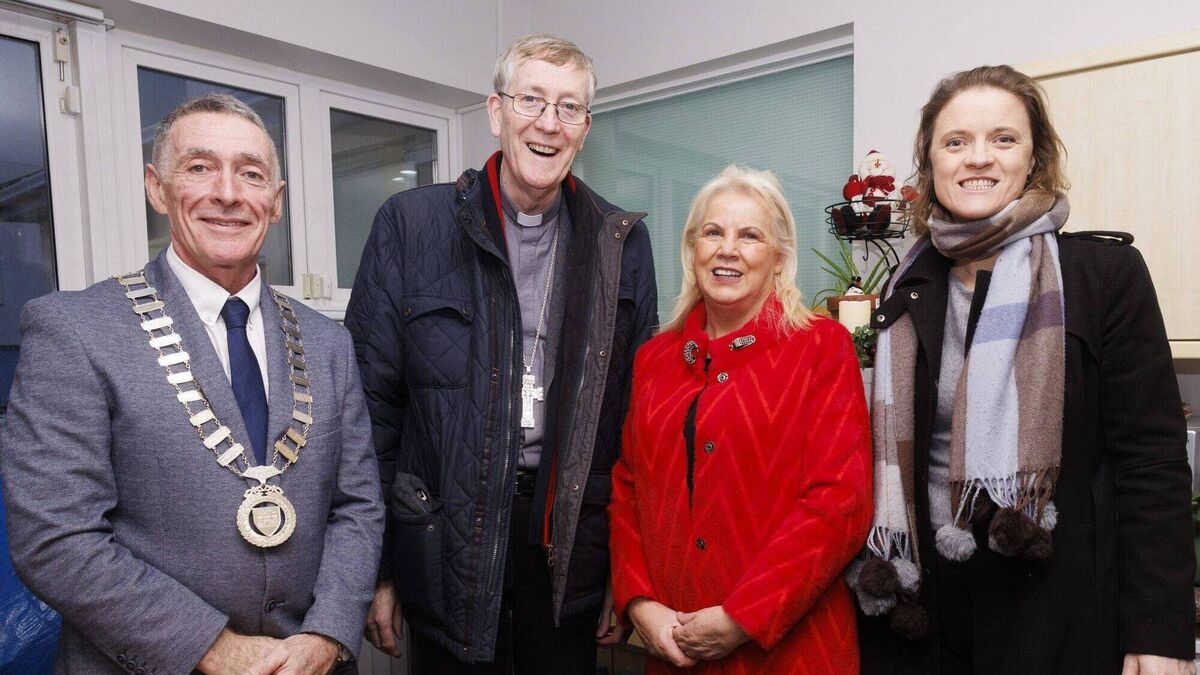
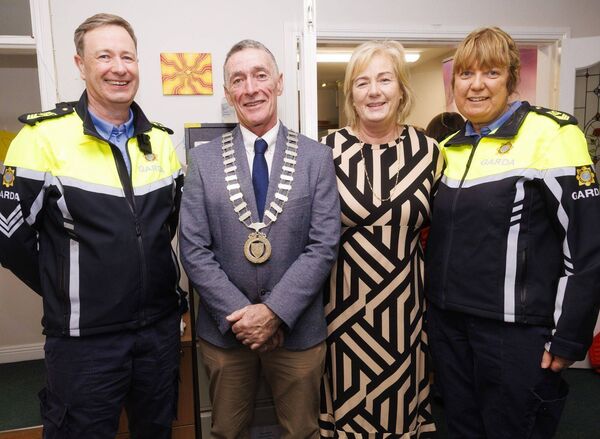
At the Carlow and South Leinster Rape Crisis Centre's 30th anniversary celebrations were mayor of Carlow cllr Paul Doogue, Bishop Denis Nulty, minister of state Jennifer Murnane O'Connor and Kildare cllr Vera-Louise Behan
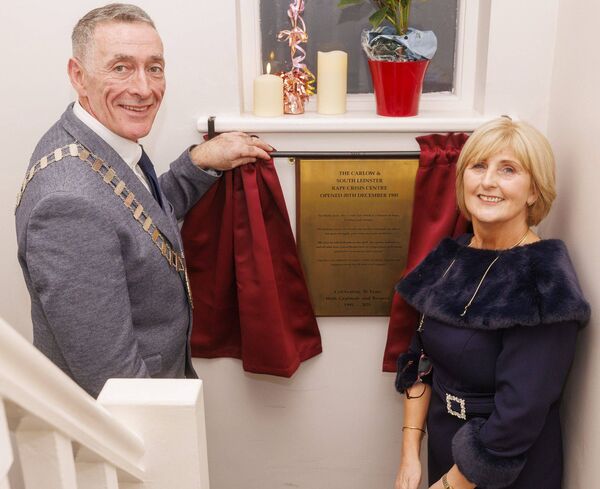
FOR 30 years, the Carlow and South Leinster Rape Crisis Centre has been providing essential support and services to survivors of sexual violence from its premises in Carlow town.
To mark this significant anniversary, an event was held at the centre on 20 December, the same day it was founded in 1995, with members of the local community coming together to acknowledge the incredible work that the centre has done over the last three decades.
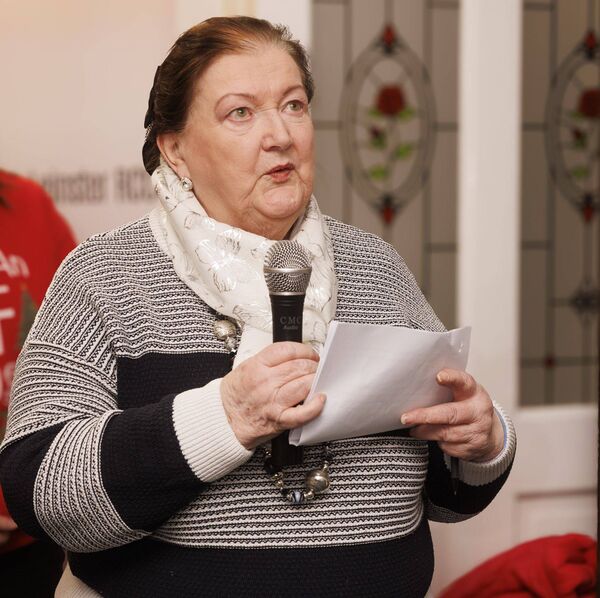
Mary Hogan, an alternative therapist, who founded the centre on 20 December 1995, said that she set up the service after realising there were people in the locality dealing with trauma on their own.
“A few of us realised there were people in Carlow dealing with trauma completely on their own. There was simply nowhere local for them to go to get help,” she said. “As alternative therapists working with individuals and involved in other like-minded groups, we kept meeting people who needed support and we said ‘well, if it doesn’t exist, we’ll have to build it ourselves’. That’s how it started â just a small group with a big purpose.”
In her address, Ms Hogan recalled walking around Carlow in search of a suitable location that was both private and accessible. After stumbling upon a building undergoing renovation by Peter Byrne, she decided that it was the ideal location and, 30 years later, the centre is still there and Peter is still the landlord.
Ms Hogan said it was “very moving” to see how the centre has developed over the years.
“Honestly, it’s very moving and has grown into so much more than I ever imagined, the wider scope of services provided in outreach services, education programmes, training and information and support to other organisations. It’s so hard to believe we would still be here 30 years later, so much stronger than ever. I’m incredibly proud â not of myself, but of everyone who kept this centre going and built on it. It’s wonderful to see something we started at a kitchen table become such an important part of the community.”
For sexual violence survivor Ann Cummins, the support given to her by the centre was “vital” in enabling her to deal with her trauma and reclaim her life.
“To have this centre here, for me in my journey and for everyone else out there that is suffering in any way, it is vital,” she explains.
“A week before Christmas in 2024, I was suicidal. A darkness took over; I could see no light. I don’t know what even to this day got me out of that river, but Eddie, my counsellor here at the centre, was on my mind.
“I could not wait to see him the following week and, from that day on, I have grown stronger and stronger and I am here today because of his dedication and work.”
For Ann, the hardest part of her healing process was taking that first initial step up the stairs and into the centre.
“It was like being a child again coming up those steps. That was the first major step for me and I am so glad that I eventually made it. I would not be here today without taking that giant step that day.”
Today, the centre provides a full range of free, confidential and trauma-informed supports for anyone aged 16 or over who has been affected by sexual violence. People can access the centre’s services by contacting the helpline, phoning the office directly, calling the centre or reaching out by email to arrange an appointment. A GP referral isn’t needed.
Anne Kirwan-Finn has been the director of services at the centre for the past 17 years and said the event was not just the anniversary of a service but also the anniversary “of a community’s commitment to compassion, dignity and hope”.
“When I joined the Carlow centre, it was already built on the courage of volunteers who, back in 1995, opened these doors with a big belief â that survivors in Carlow and south Leinster deserved a place of safety, somewhere to be heard, believed and supported with dignity and respect.”
National research shows that the need for specialist sexual violence services has never been greater, with calls to national and regional helplines continuing to rise. According to figures from the Central Statistics Office, four in ten adults have reported experiences of sexual violence in their lifetime.
Anne has seen this rise first hand throughout her time working in the centre and, while she says the increase in disclosure and people reaching out is positive, the growing demand for the centre is putting pressure on its ability to provide the services needed.
“One of the biggest challenges we face today is the same challenge facing rape crisis centres across the country: demand continues to grow every year and the level of support people need is becoming more complex. Over my 17 years as director of services at the centre, the clients using the service have increased dramatically. In 2008, 53 clients were being seen; at this moment, 258 clients have availed of our service this year alone.
“Funding is an ongoing issue. Like many centres, we rely on a mix of state funding and fundraising. Rape Crisis Ireland and Cuan have both highlighted the need for sustainable funding so that centres can plan, recruit and retain staff; this, thankfully, has been fully supported by Cuan, with whom we have a very good working relationship,” she added.
David Gahan has been a member of the board of directors for the past three years and was appointed to the role of chair of the board 18 months ago. A qualified psychotherapist, he started his career at the rape crisis centre back in 2012 and was the centre’s first male therapist, where he worked for several years before leaving and then returning, not as a psychotherapist but as a member of the board.
Through his involvement on the board, David ran the highly successful KAS programme, consent workshops for young people in secondary schools in Carlow and the surrounding counties.
“KAS stands for ‘Knowledge, Awareness and Safety’ of sexual violence. It is about consent and how to keep yourself safe in that area during adolescence, from the ages of 12 to 16 or 17,” he said.
To date, KAS workshops have been delivered to 30 schools across Carlow, Kildare, Laois, Wicklow, Kilkenny and Wexford, with approximately 2,500 students taking part.
Going forward, David would like to see better pathways created to make the healing process for survivors of sexual violence more accessible.
“I think survivors are still out there; they are not reaching out and they are not coming into the centre and getting the help that is needed. The pathway for their healing is not direct and straightforward; there are a lot of obstacles,” he said.
“I think the challenge going forward for the rape crisis centre and rape crisis centres all around Ireland is to create better pathways where people understand trauma and understand sexual abuse and understand the pathway that then needs to be taken,” he added.
Addressing the attendees, David outlined what the centre’s priorities are as it enters its next chapter.
“Looking ahead, our priorities are clear: to reduce waiting times so survivors can access support when they need it; to meet the changing needs of a diverse society; to expand the outreach and awareness, particularly for young people; to strengthen partnerships that improve care pathways; to increase our capacity to meet rising demand; and to continue advocating for a society that believes survivors and stands firmly against sexual violence.
“But beyond all strategy and planning, our core purpose remains unchanged â to offer a safe place where survivors can speak, heal and reclaim their lives.”
If you have been affected by any of the issues raised in this article, you can contact the Carlow and South Leinster Rape Crisis Centre’s freephone helpline on 1800 727 737 or the 24-hour national helpline on 1800 778888.