Carlow College: we need transparency, accountability and straight answers
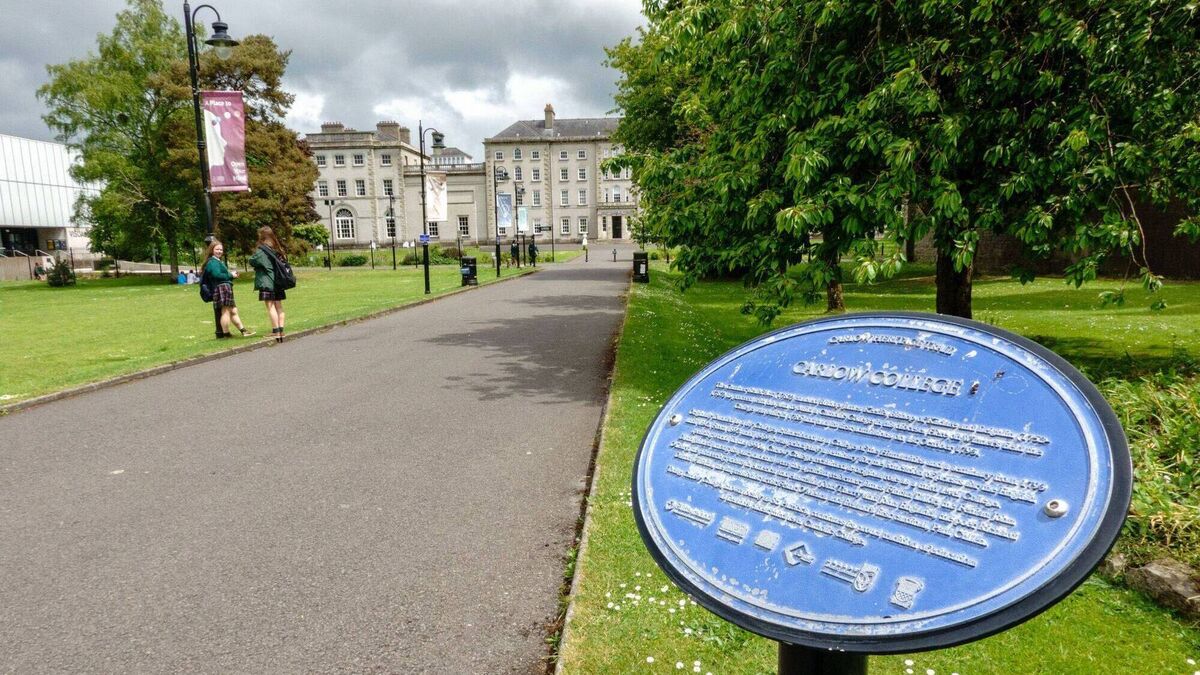
The shock announcement that Carlow College is to close in two years took (nearly) everyone by surprise Photo: michaelorourkephotography.ie
OVER the last few decades, we have watched many areas of society fail, usually affecting the most vulnerable worst. It seems the inability of our services to provide even the most basic supports has been cascading.
We now have over 5,000 children in this country who are homeless, while over €300,000 is spent on a bicycle shed at Leinster House. Elderly parents cry while explaining that they pray they will die before their children with special needs because there will be no-one left to care for them, while building a hospital creates an overspend of more than €1.5 billion. The government goes to court to ensure companies do not pay tax, while a third of the population goes into debt to cover basic bills.
This list could go on. But our minds are not built to handle such incoherence and they tend to shut down when faced with it. We reason, despite all evidence to the contrary, that decision-makers surely know what they’re doing, that they’re trying their best and that somehow it will all work out. There’s no point worrying about it.
However, for anyone who would like to see how a disaster-in-the-making unfolds, I invite you to pay attention to what is happening at Carlow College. Those involved have tried to sell the closure of one of Carlow’s oldest institutions â and the largest single lay-off since the closure of the sugar factory â as something positive. But decisions have already been made that will have disastrous consequences for us all. First, some background.
On 19 May, staff, students and the wider community were shocked to learn that after 250 years of service, Carlow College is to close its doors. All staff would be laid off, teach-out arrangements put in place and by August 2028 the gates would close. The South East Technological University (SETU) would then take over, although no details were given as to its plans.
The shock was compounded by the fact that it had been openly discussed for years that SETU would eventually take over the college â but with the understanding that staff would be retained and that Carlow College would continue as the university’s humanities campus.
Answering questions from senator Patricia Stephenson in the Seanad following the closure announcement, the minister for further and higher education, research, innovation and science James Lawless said there had been engagement with all stakeholders throughout the process and that three main objectives had been achieved: taking care of students, taking care of staff, and ensuring that the college buildings would continue to be used for education.
But as details emerged, none of these appeared to be assured.
Two cohorts of social care students had begun their courses on the understanding that after three years they could complete an add-on year, bringing their qualification from FETAC level 7 to level 8 â making them eligible for managerial positions. Shortly after the closure announcement, they were told that this add-on would no longer be available, despite the college remaining open and the teachers still present. No explanation was given and there was considerable anger, since this was a substantial change from what students had signed up for.
Complicating matters further, the course’s core material is spread over three years at Carlow College, but four years elsewhere. A student transferring for a fourth year elsewhere would likely repeat material already covered, risking a shortfall in the credits needed to qualify.
After a backlash from students and the media, the college opened discussions with minister Lawless to find a solution. There have been no updates since.
Staff expected a routine meeting on 19 May. What followed felt like a slap in the face. On leaving that meeting, having just learned that they were to be laid off, they discovered a Facebook post already welcoming the closure, glossing over it as a ‘transition’, with no mention of the 87 people losing their jobs. This callous indifference set the tone for a growing sense of betrayal, compounded by the discovery that the long-discussed ‘original plan’ appeared never to have been seriously considered â nothing about it had ever been put on paper.
Many now believe, rightly or wrongly, that this plan was a fabrication to mask what was actually intended.
In the Seanad, minister Lawless insisted that all stakeholders had been consulted â yet neither staff nor their union representatives had been. Those who built Carlow College’s success were not even considered stakeholders in their own future.
The minister sought to blame senior college staff for the lack of transparency, but neglected to mention that on 22 June, when clarification was sought on the proposed timeline, he refused to engage, citing cabinet confidentiality. If he were genuinely interested in transparency, that would have been the moment to show it.
There remain vague and contradictory indications about the future use of the college buildings and nothing at all about the grounds.
Minister Lawless was quick to insist that the building’s future as an educational facility was secure. Yet the between Carlow College and SETU tells a different story: SETU undertakes only to ‘consider educational and related uses of the campus … subject at all times to SETU’s strategic priorities’.
That wording is vague enough to allow SETU to do almost anything it wants with the grounds.
Many people I’ve spoken to assume that SETU can simply extend its existing classes onto the Carlow College campus. That is not how student number caps work: they are fixed to the campus, not the institution. Close Carlow College and that quota disappears. If SETU wants to grow its social care intake, for example, it must build a new course from scratch â a laborious and costly accreditation process.
Dr Sarah Otten, philosophy lecturer and SIPTU representative at Carlow College, put it plainly: “Carlow College has a constellation of highly qualified and experienced staff with a proven track record in producing excellent results in student formation. Dismantling these teams and courses, only to build them up again later, would be prohibitively expensive and a disgraceful waste of taxpayer money.”
If SETU wishes to expand its social care, psychology and other humanities courses, its best option is to take over those already running rather than start over. If it doesn’t, Ireland will have up to 60 fewer care workers, 60 fewer psychologists and 60 fewer community workers graduating each year.
STEM subjects (science, technology, engineering and maths) matter â but they won’t help children who are self-harming while CAMHS runs at only 50% staffing, nor will they meet what the minister for health Jennifer Carroll MacNeill has herself called the “urgent need ... to build supply of healthcare workers”.
Whatever is ultimately decided, we will all be the poorer for it â whether through wasted taxpayer money or diminished frontline services.
What is happening at Carlow College is too important to unfold in the dark. We need transparency and accountability. Check out our ‘Save Carlow College’ Facebook page to keep abreast of protests and activism and join us while we fight to save the country’s second-oldest third-level institution, Carlow College.