SETU launches advocacy certificate for family carers

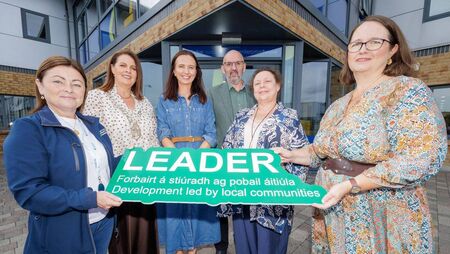
The team behind the new course in SETU: (back) Michelle Woods, Dr Tony Murphy and Dr Rosemary Flynn; (front) Nicola McEntee, Dr Helen Murphy and Yvonne McCahill
SOUTH-East Technological University (SETU) has launched a new Level 6 advocacy certificate for family carers in collaboration with the All-Ireland Institute of Hospice and Palliative Care (AIIHPC).
The fully-funded programme has been designed to develop participants’ understanding of advocacy while providing practical skills in communication, leadership, rights, responsibilities and influencing positive change.
It will be delivered flexibly online, allowing carers to access higher education while balancing their caring responsibilities.
“Family carers are advocates every single day,” said Nicola McEntee, project lead at SETU. “Whether they are navigating healthcare services, communicating with multi-disciplinary teams or ensuring that the wishes of the person they care for remain central to decision-making, advocacy is an essential part of the caring role.”
The new certificate was launched during Palliative Care Week to recognise the invaluable contribution family carers make in supporting people with palliative and end-of-life care needs.
“Family carers are essential providers of palliative care and are a vital support to palliative care services right across the island of Ireland. Their knowledge, compassion and commitment make an extraordinary difference to the lives of those they support,” noted Yvonne McCahill, programme manager, policy and engagement at AIIHPC.
The programme forms part of SETU’s project, funded by the Higher Education Authority (HEA), which has provided flexible, accredited educational opportunities to hundreds of family carers nationwide.
It is designed to build on carers’ lived experience and empower in them the knowledge to support their personal, educational and professional development. The programme is also open to former family carers, recognising their ongoing contribution to advocacy, volunteering, peer support, education and policy development.
Strengthening carers’ advocacy skills will ensure the “needs, preferences and dignity of people receiving palliative care remain at the heart of every conversation and every decision,” said Yvonne.