Archaeologists unearth large settlement of prehistoric houses at Baltinglass Hillfort area
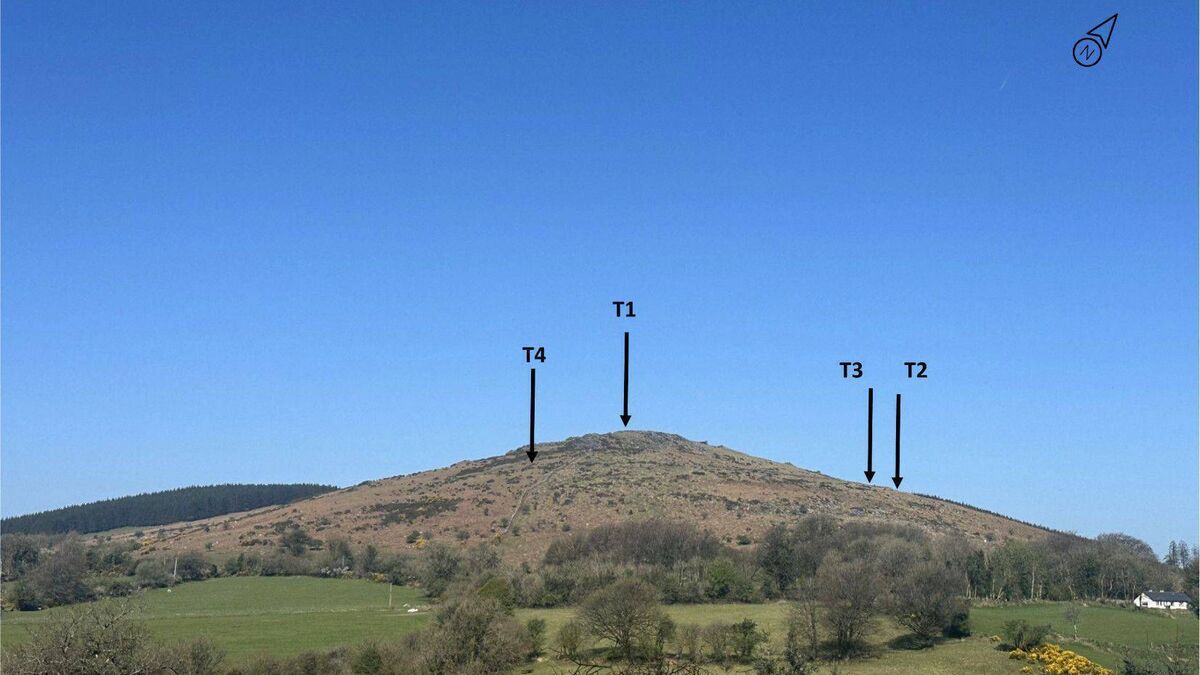
View of Brusselstown Ring Hillfort from a distance showing where the test digs were carried out
LOCALS in Baltinglass have called for strong protections to be put in place around the wider Baltinglass Hillfort area following recent landmark discoveries by archaeologists at the site.
Archaeologists have found what is believed to be the largest settlement of houses ever discovered in the entirety of prehistoric Ireland and Britain at Baltinglass Hillfort in Co Wicklow.
Local man Paul Carberry who has long campaigned about the historical importance of the site said: “What we would have said for years, going back to the start of the campaign, is that the protection of the entire area is very important for future generations. There is enough of it intact to see an incredible landscape that could be hugely valuable into the future for education, for archaeologists and for tourists.” The study, which was completed by researchers at Queen’s University Belfast, also proposes the Wicklow mountain site as Ireland’s earliest proto-town – a large Neolithic settlement that started to develop features that are assciated with towns and cities of later eras.
This would mean the settlement at Baltinglass Hillfort would predate the Viking towns considered to be Ireland’s earliest urban settlements by two millennia.
Paul, along with other Baltinglass locals, has long campaigned for the preservation of the site and, in 2020, he was part of a local community that objected to a planning application for a wind farm on an adjoining hill.
Going forward, Paul would like to see Wicklow County Council do more to promote the site’s historical importance as a destination for tourists.
“The site really has potential. The county council have potential there to work with local people, work with farmers and make it attractive for them. But to unlock that potential, it has to be done in a sensitive way.” In response to queries from about any future plans for the site, Wicklow Co Council said that it welcomed the latest research from Queens University recognising the significance of the site.
The statement read: “The Baltinglass Hills Megalithic Hillfort complex has long been identified as an area of archaeological potential and significance in the Wicklow County Development Plan with a stated objective ‘to protect the integrity of Baltinglass Hills archaeological landscape, including identified monuments and their wider setting by resisting development that may adversely impact upon the significance and understanding of this important landscape.’ “In recent years, the council has played a key role in supporting research to uncover the significance of this landscape of co-funding a range of activities, namely; test excavations, LiDAR survey, the drawing up of a statement of archaeological significance and, in 2024, the production of a publication by James O’Driscoll, Alan Hawkes and William O’Brien.”
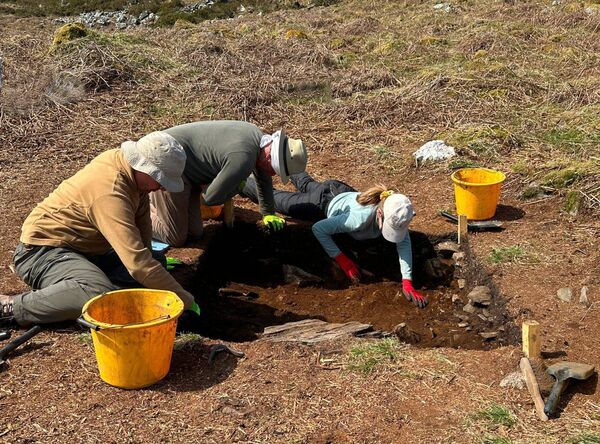
Lead author of the research project at Queens, Dr Dick Brandherm, said that despite the extensive survey work done at the site over the past two decades, critical questions about the settlement remained unanswered, which is why they embarked on the recent series of excavations.