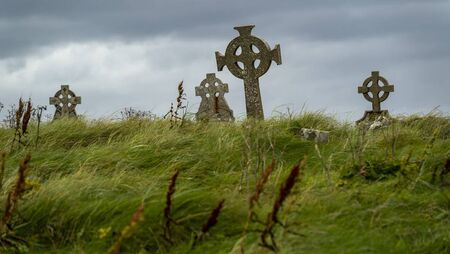
Victims of the Great Famine remembered at graveyard memorial
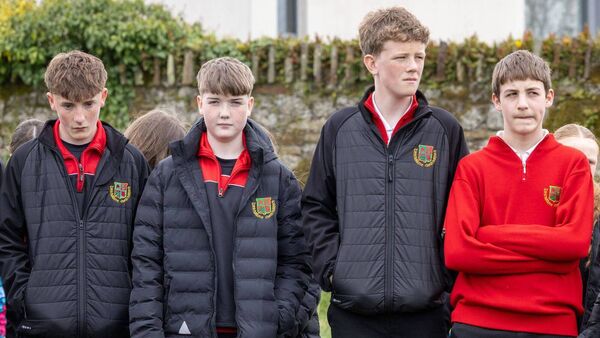
Students from Gaelcholaiste Ceatharlach pictured at the annual Afri Carlow Spring Festival of Living Famine Walk in the Carlow Workhouse Burial Ground on the Green Road, Carlow Photos: Michael O'Rourke Photography 2026
STUDENTS and staff of SETU, in collaboration with Afri (Action from Ireland) and the Delta Centra, took part in an annual commemorative walk on Friday 17 April to remember those who died during the Great Famine.
The walk itself was a procession to a memorial at the famine graveyard that part of the SETU campus is built on. The graveyard, which was part of the county workhouse, is where 3,000 people who lost their lives during the Great Famine were laid to rest.
This year for the first time the walk passed through a gap in the last remaining wall of the old Carlow workhouse, where many people died during the famine.
The event is organised through a collaboration of SETU’s social care students, AFRI and the Delta Care Centre.
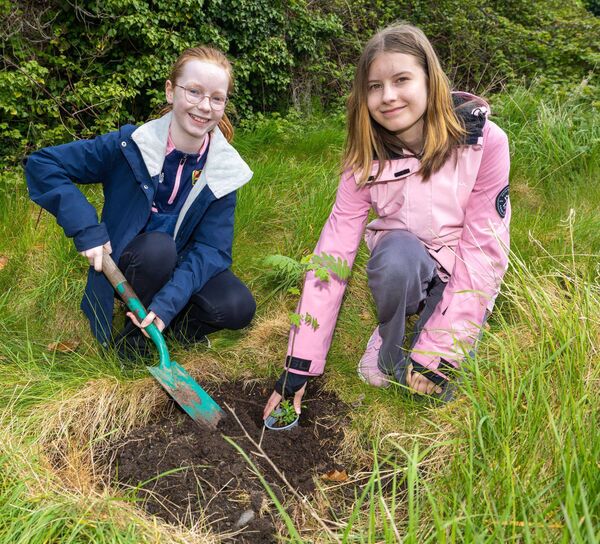
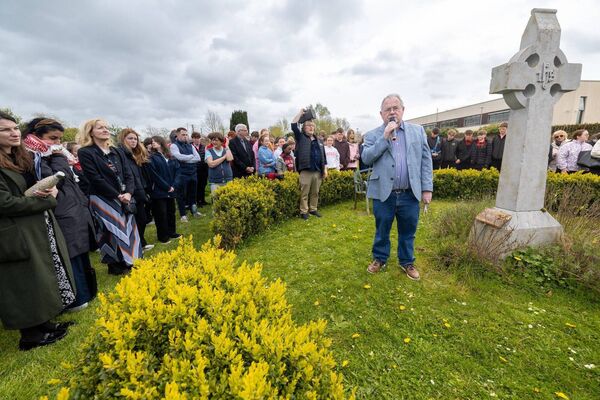
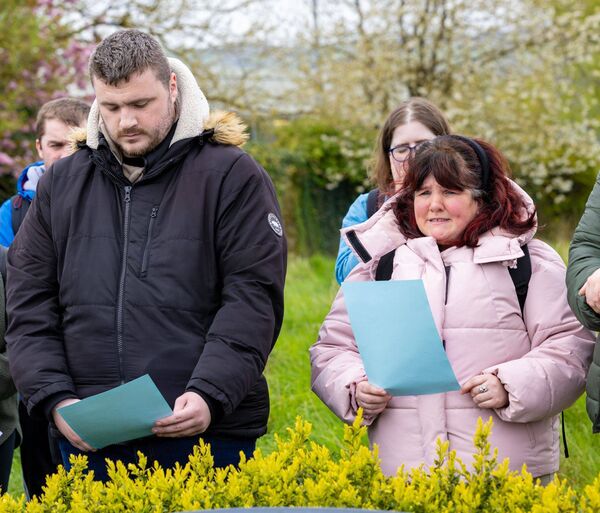
At the memorial, participants planted a tree and hosted a ceremony where attendees from the Delta centre read the names of girls from Carlow who were sent abroad through the scheme.
The scheme ran from 1848 to 1850 and saw over 4,000 young women, of whom at least one parent belonging to them had died, transported from workhouses across Ireland to Australia. The scheme was aimed at reducing the overcrowding of workhouses in the aftermath of the famine and to help reduce the gender imbalance in the Australian colonies.
“We wanted to honour not only the people who had died, but also other people from Carlow who were forced to emigrate, like the girls who went through the scheme, who we commemorated as well, and the many people who left us whose stories we don’t know,” said Katie Martin, AFRI co-ordinator.
The theme of this year’s walk was .
“The day came about because there was a sense that we needed to have place-based remembrance. I think it’s very hopeful, the fact that (a school and) and a university are both built upon these spaces, which at one time would have been symbols of the most devastating part of Irish history,” Katie said.
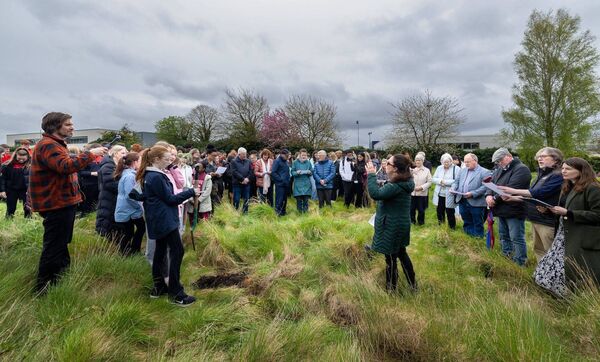
The event has been running for over a decade and was initiated by Fr Martin Smith, SETU Carlow chaplain.
However, while this year’s theme was one of hope, Katie stressed that the walk was a chance for people to take a truthful look at history.
“We remembered why these things happened because of colonial rule, dispossession and policies of empire,” Katie said. “Sometimes, the famine is kind of framed as this natural disaster and we want to show in our work that that is not true, that the famine was entirely preventable.” The event also looked forward and asked participants “what our ancestors who are buried would ask us to do now with the agency and power we have in this moment,” Katie concluded.