Oisin ‘thrown to the wolves’ by the HSE, says his mum
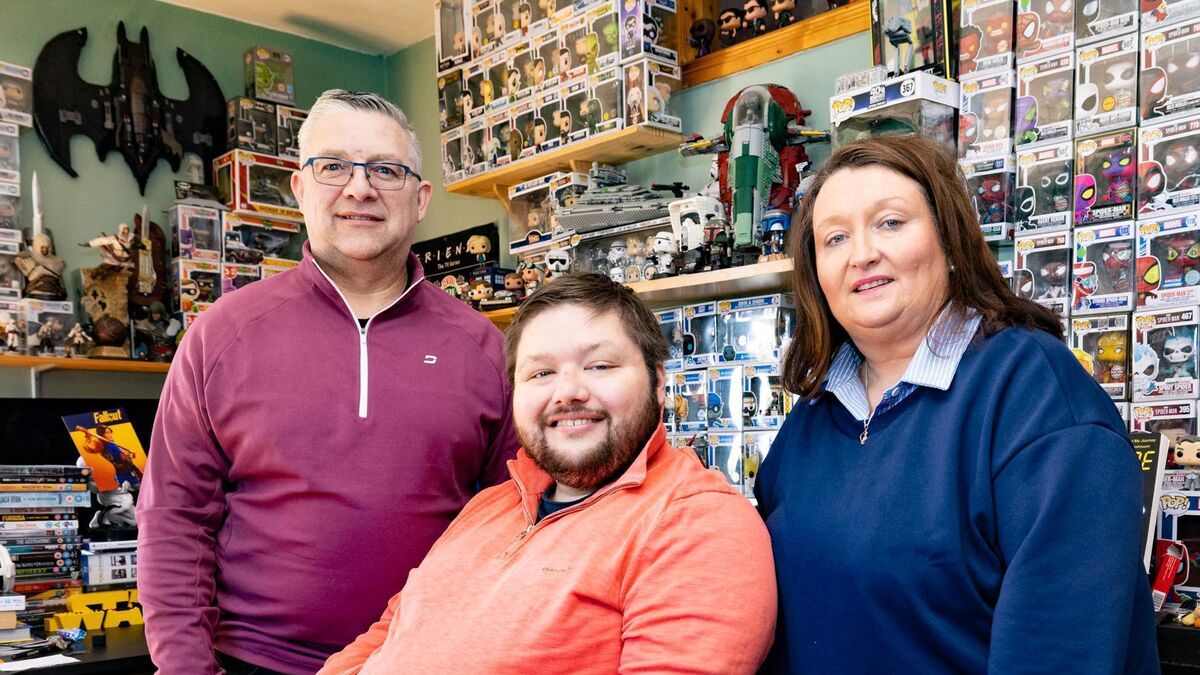
Oisín Pollard from Bagenalstown who suffers from Friedreich's Ataxia pictured with his parents Elaine and Niall Photo: Michael O'Rourke Photography
THE mother of a young Carlow man with Friedrich’s Ataxia says her son has been ‘thrown to the wolves’ after the HSE refused to pay for a life-changing drug for people with his condition.
Last week, the HSE’s National Centre for Pharmacoeconomics (NCPE) recommended against reimbursing the costs of a drug that has been proven to help stabilise the progress of the rare neurological disease.
“I was so heartbroken myself over the last few days. I felt we were thrown to the wolves,” said Elaine Pollard, mother of Oisin (27).
“If they don’t reimburse it, they’re sentencing Oisin and all the Friedrich’s Ataxia (FA) community to live a life with a disease that is ravaging their bodies. They will have no quality of life and it will eventually kill them. That’s the thing â they’re going to die,” she added.
The Bagenalstown mother told that it has been an uphill battle to lobby for access to the drug Skyclarys, which has been approved for use across Europe since February 2024. On 14 July, the case was referred to the HSE’s Technical Review Committee for Rare Diseases, which came back with a positive recommendation for the drug.
However, another blow was dealt when the NCPE subsequently ‘concluded that the current price was substantially above the level typically regarded as cost-effective in Ireland, having regard to the limited efficacy of the drug’, according to a HSE statement.
Now, approximately 200 people and their families are waiting for a final decision on 25 August.
Life will look very different for Oisin if Skyclarys is not approved. Since spoke to Elaine in March, she says Oisin’s condition has noticeably worsened. Time is running out.
“His speech has gotten a lot worse. His hearing has gotten a lot worse. The dexterity in his hands â he’s dropping stuff. Now, he’s avoiding certain foods because of the risk of choking and he needs more support for personal care, like having a shower.”
Every day that individuals with Friedrich’s Ataxia do not have access to the drug, their condition is irreversibly worsening, says Elaine. “Every day we’re losing time. They’re losing mobility that they never get back. Once it’s gone, it’s gone, and if it gets to a stage where it’s gone too far, they have no hope,” she says, her voice trembling.
Oisin’s 28th birthday is approaching in October and he is worried that it may be his last, says his distraught mother. She says the government and the HSE is “giving a death sentence” to those with the disease and “telling them that their life is not worth anything, that money outweighs their life”.
Elaine praised deputy Peter ‘Chap’ Cleere for his support, with the TD last week saying he was “deeply disappointed” by the recommendation not to approve Skyclarys.
“I will continue to support Emily, Oisin, their families and the wider Friedreich’s Ataxia community in their campaign and I will continue to support their campaign for this decision to be overturned,” he added.
Elaine and others in the community, including their friend and advocate Emily Felix, have been in the public gallery of the Dáil several times and have spoken to TDs prepared to listen.
“In the Dáil, the taoiseach stood up and said that we have to trust the process, that it’s all science led. The minister for health said the same.” Elaine feels that this isn’t the case: “It’s budget-led, it’s money-led.”
“They want to portray it as science-led, but we feel that they’re not listening to patients and the scientific evidence that is there. They’re saying they’re looking for more evidence, that there’s not enough, but it’s released in up to 11 countries in the EU and they all go through stringency tests before it’s been made available,” she explained.
When asked what she would do if the drug ultimately does not get approval, she said: “I don’t know what I’ll do. I’ll have to chain myself to the Dáil railings. I would’ve been up on Wednesday morning and outside the Dáil straight away, if it wasn’t closed.”
This time next week, HSE senior management will meet to make a final decision, one that will deeply impact the lives of hundreds of people and their families and friends.
“We’re trying to build a life and make the most of it when Oisin is still able to go and do things, but you know what’s coming down the line. I wouldn’t wish it on my worst enemy to have this disease.”