New guidelines to build one-off rural houses
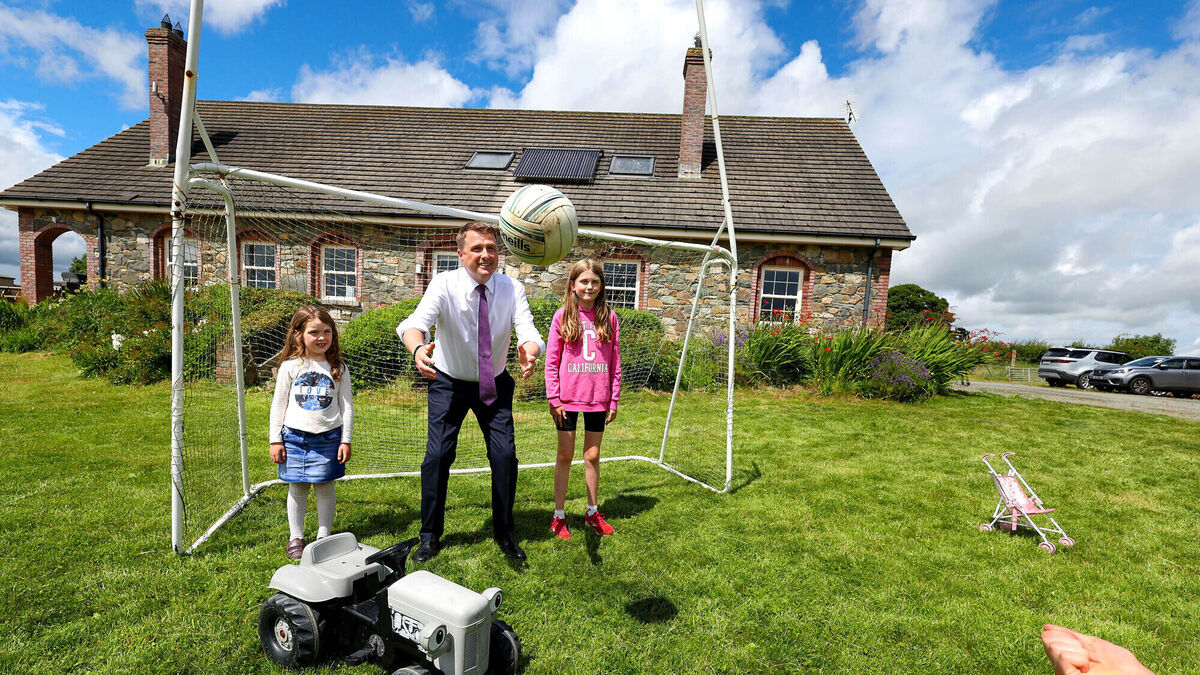
Minister James Browne and Holly aged 6 and Maria aged 11 from the Sweeney Family at their family home in Ardee Co.Louth. Pic: Marc O'Sullivan
THE government has released new guidelines making it easier for people to build one-off rural houses in their locality.
This morning (Tuesday), minister of housing James Browne and minister of state for planning John Cummins brought a draft statement to cabinet outlining new planning guidelines for rural and gaeltacht housing, aimed at easing current rules for building one-off houses in rural areas.
The government is calling the changes the “biggest overhaul of rural housing policy in more than 20 years.” Minister Browne said the new guidelines offer a more “consistent” national approach to housing delivery in rural areas.
“The statement strikes the right balance between supporting rural communities, ensuring vibrant rural towns and villages and protecting the character and sustainability of our countryside,” minister Browne said.
The draft National Planning Statement says that a ‘rural area’ is defined as a rural settlement with a population of under 1,500 at the last census.
For someone looking to build in one of these areas, they must first show a ‘social need,’ outlining their strong ties to the locality.
This means having lived in the area for a long period of time (up to ten years) with the proposed site being in or around the area where they lived or are originally from (up to 10km).
The statement also outlines how people whose job depends on them living in a rural area, such as in agriculture or education, can display an economic need in their planning application.
Also included are guidelines for gaeltacht areas, such as the requirement for anyone seeking planning permission in a gaeltacht to sit an Irish language exam first.
The statement also includes conditions that houses must not be used for short-term letting.
Carlow/Kilkenny TD and Fianna Fáil spokesperson for rural affairs Peter ‘Chap’ Cleere said building a home in rural Ireland should be one of “life’s biggest milestones,” but, for many, it has become “unnecessarily challenging.” “Outdated planning rules and uncertainty have turned what should be an exciting step into a stressful and expensive process,” deputy Cleere said.
The draft statement must now go through an environmental assessment before it returns to the government for final approval.