National Lottery regulator accused of presenting 'sanitised' report and ignoring gambling risks
Seán McCárthaigh
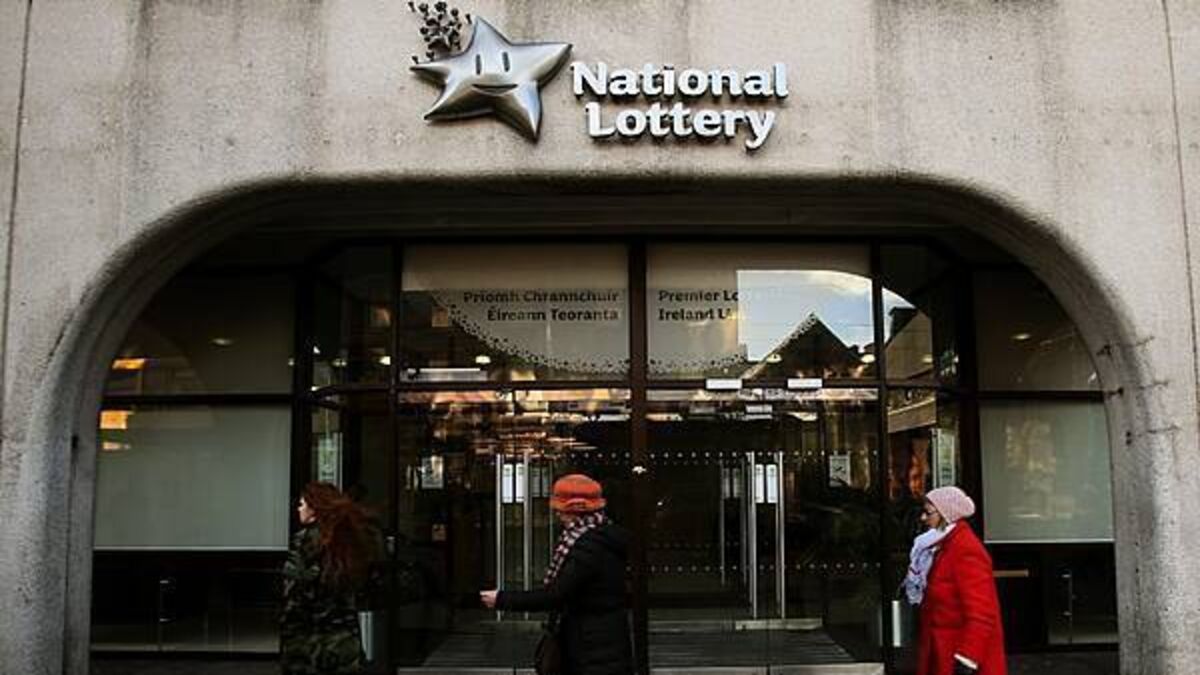
The Regulator of the National Lottery has been accused of presenting “an overwhelmingly positive and sanitised image” of the National Lottery in its annual reports while effectively “hiding the darker side of gambling,” according to a new academic research paper.
The study claims the watchdog routinely frames playing the National Lottery as a game and entertainment while seldom making any references to gambling.
The research by a team of academics from several Irish third-level institutions also found that the regulator’s annual reports make no reference at all to terms like “addict”, “addiction” or "danger.”
They claim that the careful and overwhelmingly positive language in the reports very deliberately frames the lottery as focused on prize-winning and good causes, while they are devoid of references to addiction and gambling.
The study entitled Complicit in the Charade: A critical content analysis of the Annual Report of Ireland’s Regulator of the National Lottery 2014-2024 is published in the Journal of Global, Public and One Health.
Researchers conducted a critical content analysis of all annual reports published by the Office of the Regulator of the National Lottery (ORNL) between 2014 and 2024.
Their findings show that participating in the National Lottery is routinely framed in terms of play and as a game.
The study said the annual reports “focus intensely” on good causes and prizes, while a focus is also evident on governance, safety, and player protection.
In contrast, it claims references to gambling are seldom mentioned, while terms such as addiction or danger never appeared across the entire data set.
The study noted that little attention is also given to underage participation in the lottery.
It observed that the practice of test purchasing to check if shops are selling tickets to under-18s is commonly referred to as mystery shopping, which it claimed undermined the seriousness of the issue.
The report’s main author, Frank Houghton of the Technological University of the Shannon in Limerick, said there had been a dramatic increase in the use of some terminology in the regulator’s annual reports over the past decade
Dr Houghton pointed out that there was a fivefold increase in the use of the phrase “good causes” in the 2024 annual report compared to 2015.
In contrast, he noted that both the terms “problem play” and “player protection” were used less frequently in the most recent annual report compared to 10 years ago.
The study said Ireland’s history in terms of State-sanctioned gambling could be described as “murky at best.”
It pointed out that the Regulator is required to achieve a balance between protecting both participants’ interests and the interests of the National Lottery.
The study said a vital first step in such protection was “to acknowledge that participation in the lottery is gambling and that gambling can lead to gambling harm and addiction.”
It added: “At present the actions of the ORNL, as evidenced through these reports, appear to prioritise economics over participant protection.”
It recommended that a public health perspective towards gambling be explicitly adopted by both the Government and the ORNL.
In a statement, the Regulator of the National Lottery said it was important to note that its annual reports were corporate governance documents which are published together with the C&AG audited accounts of the National Lottery Fund held in the Central Bank and managed and controlled by the regulator.
“The language in the report mirrors the language used in the Act and the Licence,” the regulator stated.
It also pointed out that one of its core functions was “to ensure that the terms of the licence are being met.”
The regulator said it also had to ensure that all funds raised for good causes are correctly transferred to the State.
It highlighted how it had overseen the introduction of new measures to prevent underage purchases and problem gambling each year since the start of the licence.
The regulator noted that its website, which was relaunched in 2023, has a prominent section on player protection, including preventing problem gambling.
It is estimated that the gambling industry in Ireland is worth over €10bn per annum, with sales of National Lottery products estimated to be worth approximately €1bn per year.
A study published in 2022 suggests that 0.3 per cent of the population – around 12,000 people – were problem gamblers, while another 0.9 per cent (another 90,000 adults) were classified as moderate risk gamblers.
A further 2.9 per cent of the population – corresponding to 90,000 adults – met the criteria for low-risk gambling.