Father who stabbed man to death took law into his own hands, lawyer says
Fiona Magennis
A father of four who stabbed a man to death in what he later told gardaí was an act in defence of his property and his family “took the law into his own hands” in circumstances where he was not entitled to do so, a prosecution barrister has told a murder trial jury.
“I say the force used was disproportionate to anything Jordan Ronan [the deceased] had done on the night,” Patricia McLaughlin SC told the 12 jurors in the trial of Patrick Murphy (37), who has pleaded not guilty to Mr Ronan’s murder.
She told the jury they could see from CCTV and ring doorbell footage that Mr Murphy armed himself with a knife, ran out of his house, opened the door of the car and deliberately stabbed Mr Ronan in the chest.
“He pushed the blade almost all the way in,” she said, noting the knife penetrated the chest cavity, lung, heart and liver measuring a depth of 18cm.
Ms McLaughlin said sometimes cases are “exceptionally simple” and suggested this was one such case.
“I say that is clearly murder. How could it be anything else to stab a boy in the chest and to do it deliberately, how could you intend anything other than serious injury?” she said.
However, Ronan Kennedy SC, defending, told the jury: “Whatever you may think about Mr Murphy’s actions, he is not a murderer.”
He said Mr Murphy and his family were at home “minding their own business” when their “peace, their security” was violated.
He noted the youngest of the couple's four young children was just a few months old at the time and they were in the “sanctity of their own home”.
He said the interaction between Mr Murphy and Mr Ronan lasted “no more than seconds”.
Counsel said Mr Murphy acted in the way that he did “out of sheer panic in the heat of the moment” after his property was violated by an intruder.
Mr Murphy, of Drumcairn Parade, Tallaght, has accepted that he stabbed Mr Ronan, causing his death, but has pleaded not guilty to his murder.
CCTV
The jury has heard that Mr Ronan suffered a single fatal stab wound to the chest in the early hours of the morning on July 26th, 2024.
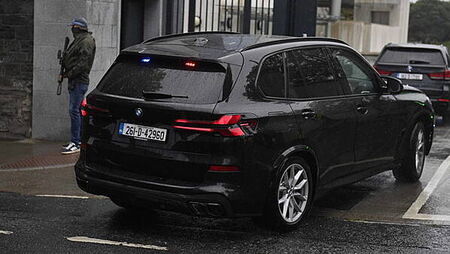
CCTV footage showed Mr Ronan entering the accused man's van, which was unlocked, before getting into Mr Murphy's partner's BMW, where the fatal encounter occurred. Gardaí recovered a Revolut card belonging to Mr Murphy on the deceased's body.
In her closing address to the jury on Monday, Ms McLaughlin said the central issue in the case was whether Patrick Murphy had the intention to kill or cause serious injury when he stabbed 20-year-old Jordan Ronan.
She said Mr Murphy raised two defences in his statement to gardaí; provocation and the justifiable use of force.
She said in the CCTV and doorbell camera footage, the jury have a complete visual representation of what happened.
“You can see the entire interaction between Jordan Ronan and Patrick Murphy from the moment the doorbell camera goes on and he sees him until the fatal stabling.
“I would submit to you there is nothing in the actions of the accused on the footage that suggests he was completely out of control, quite the contrary he was determined to take control of the situation.”
Turning to the defence of justifiable use of force, Ms McLaughlin said the law allows people to defend themselves and their property, but it does not permit violence motivated by anger, retaliation, or vengeance.
“The jury must first consider whether Mr Murphy honestly believed force was necessary, she said. However, she argued that belief alone was insufficient, particularly where the force used was excessive.
“When someone uses force, particularly when they pick up a knife, the potential consequences of that can be catastrophic as they were in this case,” said Ms McLaughlin.
“I say in this case Mr Murphy decided to take the law into his own hands in circumstances where he was not entitled to do so.”
Ms McLaughlin also highlighted Mr Murphy’s actions after the incident, including removing the doorbell camera and seeking to conceal the footage, while Mr Ronan lay dying on the street. She said this behaviour was relevant to Mr Murphy’s state of mind.
Defence senior counsel Ronan Kennedy argued that Mr Murphy reacted “as any father would”, acting to protect his family, his property and himself from a perceived threat. The interaction between the two men, he noted, lasted only seconds, compounding the tragedy.
He said the paths of two men, previously unknown to each other, collided “in the dead of night” when Mr Ronan entered Mr Murphy’s property “as an intruder with criminal intent”.
Counsel said he wanted to assure the jury that he was not suggesting that Mr Ronan “deserved what he got”. He said all human life and each and every person, including Mr Murphy, deserved the protection of the law.
“Whatever you may think about Mr Murphy’s actions, he is not a murderer,” said Mr Kennedy.
“Mr Murphy and his partner were at home minding their own business when their peace, their security was violated,” said.
He said it was clear, “as night follows day” that in entering the property, Mr Ronan was not only committing criminal offences but he was invading the constitutional rights of Mr Murphy and his family.
“His actions were acts of aggression against the occupants of that home,” said Mr Kennedy.
Mr Kennedy said despite the fact it was summer, Mr Ronan was wearing two sets of clothes, a darker set over lighter clothes. He also noted Mr Ronan had various items on his person including two different sets of pliers, a black hat and three bags of cannabis.
He asked the jury, in considering whether Mr Murphy believed he needed to use force to protect his property his family and whether the force was proportionate, to put themselves in his position at the time. He said Mr Murphy had “split seconds” to decide what to do to protect his family and his property.
He reminded them Mr Murphy told gardaí he was concerned for his property and his family and “took this as a serious provocation” and “never planned for any of it to happen”.
“Trouble came to his door uninvited,” said Mr Kennedy, going on to note that Mr Murphy feared there were multiple intruders and a possible invasion of his home.
“He’s going to have to live with this for the reset of his life but he’s not a murderer and I’m inviting you to acquit him of the offence of murder,” said counsel.
Three verdicts
Mr Justice Kerida Naidoo told the jury there are three verdicts they can return; guilty of murder, not guilty of murder but guilty of manslaughter or not guilty.
Mr Justice Naidoo said a verdict of guilty of murder is appropriate where the prosecution has established Mr Murphy had the necessary intent to kill or cause serious injury. This was subject to the defences raised, the judge said.
He said only the defence of justifiable force can result in a verdict of not guilty but either justifiable force or provocation can result in a verdict of manslaughter.
Mr Justice Naidoo told the jury that if they accept the accused killed the deceased they must consider whether the prosecution has disproved the use of justifiable force beyond reasonable doubt.
He said the jury had to question whether Mr Murphy honestly believed circumstances existed that required him to use force to defend himself or another or his property.
He said if they conclude he had no such honest belief then he is guilty of murder.
He said if they conclude that he believed he was required to use force but the level of force was not what would be used by a reasonable person then the verdict was not guilty of murder but guilty of manslaughter.
He said for a defence of provocation to apply, there must be a total loss of self-control to a degree that the use of violence must be justifiable.
He said if the jury find the defence of provocation does apply then the charge of murder is reduced to manslaughter.
He told the jury they must be unanimous in their verdict.
Mr Justice Naidoo asked the jury to return at 11am on Tuesday to begin their deliberations.