Carlow was a diverse county religiously at time of 1926 census
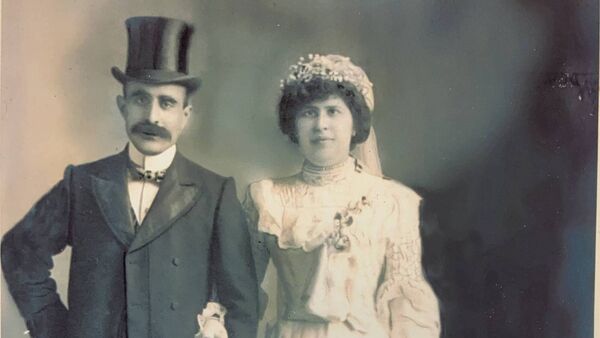
Filip and Fanny on their wedding day
THE 1926 census asked people, among other things, their religion and, when looking at the Carlow census returns, this has led to some fascinating revelations.
While Carlow in 1926 was overwhelmingly Catholic, with 26,644 people professing to practise the religion, there was a substantial Protestant minority as about 2,500 people professed to practise various Protestant denominations.
There was a noticeable number of inter-faith couples living in Carlow in 1926. Mary and Thomas Corrigan, for example, lived with their son William, and Thomas’s father, who was also called William, on the family farm in Kilbree near Bagenalstown. On their census return, William Sr and Thomas listed their religion as Church of Ireland, while Mary and her son William were listed as Catholic.
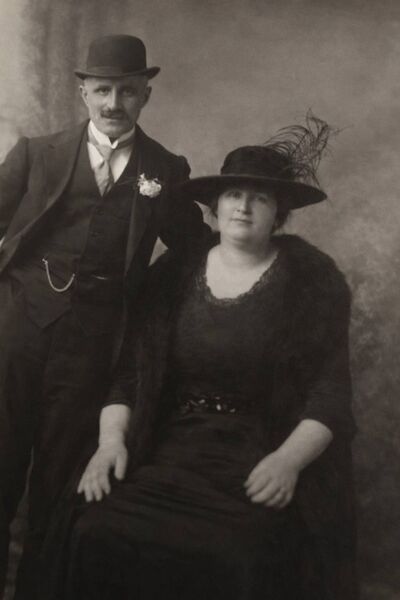
Mary and Thomas had been married in St Andrew’s Church, Bagenalstown, which is a Catholic church, on 31 October 1921. Although their son William is listed as a Catholic, there is no surviving records to say that he was baptised in the Catholic Church.
There are numerous other examples of so-called ‘mixed marriages’ in the census and, while they were not perhaps the norm, they were clearly far from uncommon.
Within Protestant communities, there were quite a wide variety of denominations present in Carlow at the time. There were 90 Methodists, 75 Presbyterians, six Quakers, one Congregationalist and a number of people who said that they followed the Church of Scotland.
While the National Archives categorises these people as being ‘Church of Ireland’, that is not an accurate representation of their religion, as the Church of Scotland varies greatly in its structure and worship style from the Church of Ireland.
It seems to have been common for different members of Protestant families to be part of different denominations in Carlow in 1926. Take, for example, the Browns: Walter Kenneth Brown, a farmer, lived with his cousin David Hastings Brown in Long Range, near Bagenalstown. Walter said that he was a Congregationalist, while David said that he was Presbyterian.
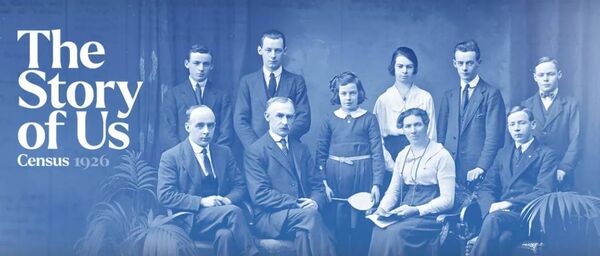
You can also see this in the Yarnell family census return. William Yarnell, a motor engineer, states his religion as Church of Ireland, while his wife Clara says that she is a Methodist.
The four children follow different denominations. The oldest, Frederick, who is William’s son from a previous marriage, is listed as being Church of Ireland, but the three younger children â Patricia, Reginald and Cyril â are listed as Methodist.
Aside from Christians, 14 Jewish people were recorded in the census. They were members of two families, Robinson and Davis. The Robinson family consisted of mother Fanny, father Filip and their six children, who ranged in age from 19 to five. Filip’s real name was Yakov, but he was advised to change it to Filip as it was easier to understand.
Fanny and Filip ended up far from where they were born. Fanny was born in Vilna and Filip was born in Kovno. Today, Kovno is called Kaunas and Vilna is Vilnius, and both are in Lithuania. In the 1870s, when Fanny and Filip were born, Vilna and Kovno were part of the Russian Empire, so when Fanny and Filip filled out their census returns, they both said they were born in Russia.
Jewish people from that region were known as Litvaks. During the period when Fanny and Filip left Kovno, there were frequent waves of anti-Jewish mob violence where crowds of people would invade Jewish neighbourhoods and settlements to rob, beat and sometimes burn out any Jewish people they found.
According to their granddaughter Phillipa Blatt, Fanny and Filip’s families both fled violence in Kovno and moved to Preston, which is outside Manchester, as there was already a large Jewish community there. Preston is where Filip and Fanny married and had their first children.
Phillipa said that the couple moved to Ireland in 1906, as it was easier to make a living here. Filip worked as a travelling salesman before eventually settling in Carlow town. They chose to settle in Carlow as there was already a small Jewish community here and it was more affordable.
Filip ended up opening a furniture store, which operated for over 70 years on Burrin Street, called PF Robinson & Sons.