Parents question Killeshin NS’s ‘problematic’ admissions policy
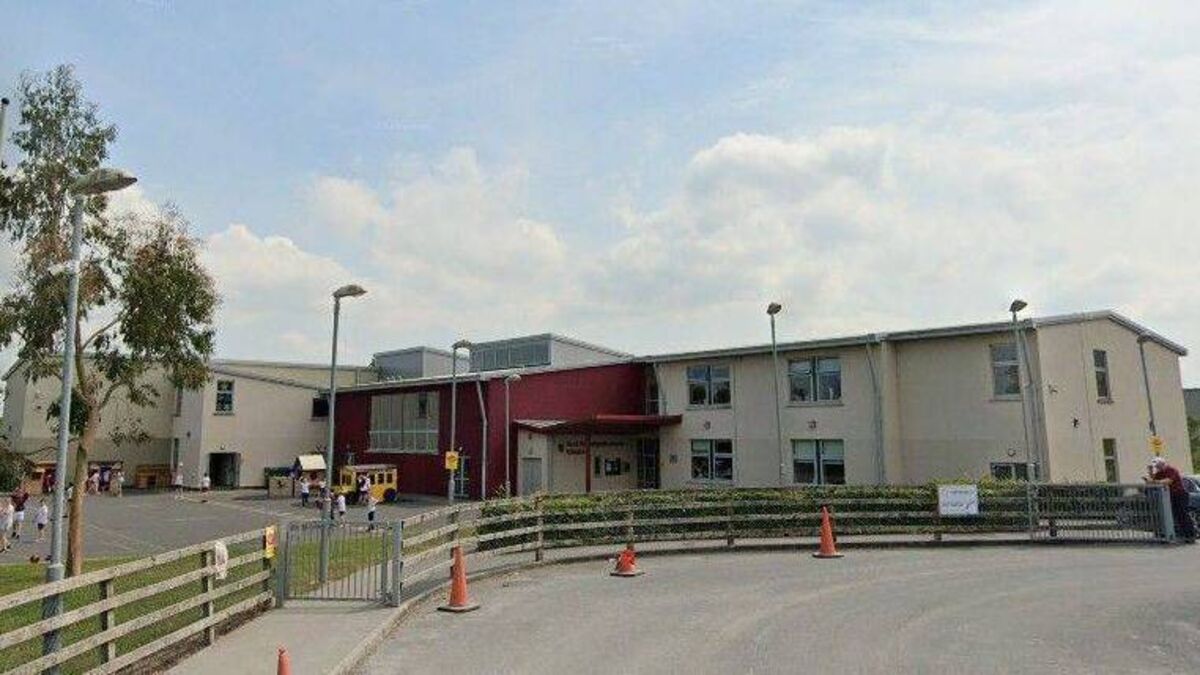
Killeshin NS, copyright Google Images 2025
THREE five-year-olds living on the same street in an estate in Killeshin will be going to different primary schools next September because of what parents allege is a ‘problematic’ new admissions policy at Killeshin NS.
The local national school is located within a large new Rath Glen and Sruth na Ghleanna estate in Killeshin, where many young families bought houses in recent years.
“We often have problems in the morning trying to get out because of school traffic, which is going to be very irritating if we’re not going there,” said Alison Miller, whose five-year-old daughter was rejected by Killeshin NS.
Alison has counted four children living in the estate and three children in the area who were not admitted to the school, despite living within a kilometre of the building. For the next eight years, instead of walking down the road to school every morning, these kids will have to be driven to schools outside the village.
Another parent, Jessie Kendrick, said she can see the school from her home and hear the kids when they play outside. The closeness of the school “was a selling point”, said Jessie. “They used it in the advertisement for the houses.”
There will be two junior infants classes with 25 pupils each starting in September.
Figures released to Alison by the school show that 31 of the 50-person junior infants year group were admitted because they have a sibling already attending, five were admitted because their sibling previously attended and 13 were admitted because their parent is a past pupil. One more child was admitted because they were the eldest child living in the parish.
In a letter to Alison and her partner explaining why their daughter was refused admission, former principal Nicola McGuill told them that there was an ‘unforeseen increase in the number of applicants’ this year, including a doubling of the number of children admitted because their siblings already attended.
Ms McGuill said the board of management had reviewed its admissions policy on 23 September 2025, leading to a prioritisation of children with direct connections to the school over those living close by. She wrote: ‘The board felt that using proximity to the school would put children living beyond the estate at an immediate disadvantage, despite living in and contributing to the area of Graiguecullen/Killeshin for many years.’
“How can you contribute to the area when you’re a kid,” was Alison’s response.
She pointed out that the catchment area for the school is parish-based and includes Graiguecullen, meaning there are a lot of children living outside the village who are eligible to attend because their parents are past pupils. Alison further argued that the school had exceeded the 25% cap on the proportion of children admitted under this criterion, which was brought into law in 2018.
Alison and Jessie were disappointed and very surprised to be among the 30 or so families placed on the waiting list for the school in October last year. “My daughter just turned five there last week and actually for the first time she said to me yesterday ‘why can’t I go to the school in Killeshin like my friends?’ I didn’t think she really knew until then,” said Alison.
Jessie, too, has had to explain to her daughter, who attends preschool near to the national school, that she won’t be going to the ‘big school’ with all her friends.
Isabella, another parent, said her daughter was “very upset” when her parents told her that she wasn’t going to the local school. “The biggest stress was actually on her,” said Isabella. “She was hoping to be in the same class as her neighbour.”
Alison appealed the decision and tried to discuss a solution with the school, thinking that extra pupils wouldn’t be the most difficult problem in the world to solve. “I would have thought they would just put on a third junior infants or do a multi-grade class,” she said.
The three women made the point that they will now have to drive to school every day, which goes against the effort to build sustainable and environmentally-friendly communities.
“These kids could be walking to school every day of their lives until fifth and sixth class,” said Jessie.
Isabelle mentioned that this was a disappointment for her also.
“Instead of walking or cycling, you’re going to get in your car and you’re going to drive out. It’s irritating, to say the least, especially when you see passing cars that are coming from other places,” agreed Alison.
“There’s big talk in the world nowadays about the lack of community. The community is eroding and people don’t know their neighbours. And these things do stem from when you are disconnected from your community, which is what is happening,” said Alison.
Even in terms of the GAA, “it will have a knock-on effect if they go to school in a different area; they might want to play for that area rather than where they’re actually living,” noted Jessie.
They want people who are considering moving into the estate to note that a school place is far from guaranteed. Both women question if they would have bought a house there knowing what they know now and say they have considered moving because they don’t have a real connection to the place.
“It does make you feel not part of it … disconnected,” said Alison.
“It’s pushing new people away,” agreed Isabella.
“There was a lot of applicants, which is fair enough, but to me their policy is problematic,” said Alison, noting that her understanding was that location is usually not so deprioritised in school admission policies. St Fiacc’s NS in Graiguecullen puts location second on the list of priorities, above children of people working in the school.
Isabella is also concerned that the policy makes it “basically impossible for new people living in Killeshin to get into the school”.
Despite being tempted, they decided against appealing to the minister of education as allowed under the .
They did get in touch with local councillor Aisling Moran, who proposed a motion at a Laois Co Council meeting in January urging the Department of Education to ‘review the admission protocols in rural primary schools so that children living in the local area will be considered as a priority when school places are being allocated’.
The department responded by saying it was down to the board of management of the school to decide the criteria for admission.
“I had asked that the school look at putting on an extra classroom. I had asked that they look at splitting half the junior and half the senior infants. None of that was an option,” cllr Moran said.
She added that she did speak to the former principal but was unable to reach the board of management on this issue.
The board of management of Killeshin NS also did not respond to a request for comment before publication of this article.
Cllr Moran echoed the parents’ point that this policy will have knock-on effects: “You’ve now lost a whole generation of kids. This is about a community. Kids need to know the kids next door.”
Alison wants the board of management to change its policy and find a way to accommodate the children living close by, not only for her own child but for the younger children who might face the same difficulties next year. “If we get nowhere, I would expect it to be better next year for other applicants.
“As someone said to me ‘you should never pass a school to go to another school’.”