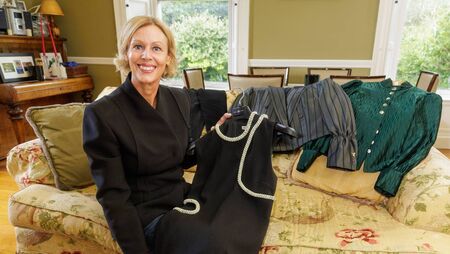
Burning love: when did safe sex go out of style? asks SETU student Kayla Reilly
2022's Free Contraception Scheme gives people aged between 17 and 35 access to many forms of contraception free of charge
PICTURE THIS: you’ve just clocked out of work and about to head home when you get a call from a friend asking you if you want to go to Carlow with them. You haven’t seen them in a while, so you gladly agree.
On the drive over, your female friend tells you that she needs to get both a pregnancy test and the morning after pill. This happened to me about a month ago, and I was shocked by her ‘pass the salt’ tone. While I will never outwardly judge someone for their sexual choices, this got me thinking. Why do so many young people in 2025, especially women, not use birth control in effective ways?
The issue has me banging my head against the wall! I know so many people personally who have needed to take pregnancy tests, morning after pills and STI tests because they didn’t use protection. Yes, I know that no form of birth control is 100% effective, and not every situation is under your control, but many risks are preventable. Contraception and information regarding safe sex practices have never been as accessible in Ireland as they are right now – there are resources available online, free contraception schemes and numerous clinics and centres around; however, there are still rising numbers of STIs and unplanned pregnancy among young people.
What’s up with this contradiction?
Ireland has had an inter sting and complicated relationship with contraception dating back to the early 1900s. Basically, Catholicism ruled society and, following its independence in 1922, Ireland embraced strict sexual morality, following the doctrines of the Church. Divorce was banned and contraception was a no-no.
This lasted until 1973, when a law was passed that allowed married couples to import contraception, but only for family planning purposes.
Fast forward to the early 1980s, when women in Ireland were demanding more control over their sexual health and reproductive autonomy. In 1985, the law changed allowing condoms and spermicides to be sold to adults without a prescription.
The 1990s were also a pivotal time for contraception in Ireland as there was finally an understanding that birth control was an essential part of healthcare, even if a lot of shame and embarrassment lingered. As time passed, contraception became increasingly more accessible to the people of Ireland.
In 2022, a monumental government initiative was announced: the Free Contraception Scheme was introduced, allowing people aged between 17 and 35 to access to many forms of contraception free of charge. This scheme covers numerous methods of birth control, consultations and emergency contraception.
For many people, this allowed them access to contraception that they might not have had before.
As a college student, I’ve had many chats with my friends about sex. Honestly, it’s a topic that is probably brought up at least once a day within my friend group. We talk about all the nitty-gritty details, including whether contraception was used; too often, it’s not.
Now, I’m not going to pretend I am the poster child of impeccable contraception use, but I have been on some form of birth control since I became sexually active.
This got me thinking about the reasoning behind the lack of use. I know for some people using hormonal birth control isn’t something they want to do, but there are still so many people not using anything. I really wanted to get to the core of this: are people embarrassed, are they scared, or do they just not care?
Let’s talk about condoms. Condoms are one of the most accessible forms of contraception out there. They protect you from contracting STIs and prevent pregnancy.
They are sold in nearly every shop and even offered for free in many health clinics, as well as at most college and university student unions. There’s even a free service available at www.sexualhealthcentre.com where you can get condoms posted out to you.
In a study published by NUIG in 2024, it was found that from 2010 to 2022 the number of young people reporting condom use at their last sexual encounter dropped from more than three quarters to less than half.
So why do so many people not use them? There are a few reasons I’ve heard as to why condoms aren’t often used, ranging from not having one available at the time, to it being awkward asking a sexual partner to use one, to it not feeling as good with one.
I know for myself and many of my friends the last thing we want to do when things are getting a bit steamy is to stop the action and ask to use a condom. No-one wants to be sitting on the bed in a state of undress waiting for a condom to be put on. And while for many people these might seem like valid reasons, they are excuses that can no longer be ignored.
I have more often than not found myself having to ask a partner to use a condom instead of it being expected. I know that even with being on birth control, there are many risks, and I know I don’t want to get an STI – do they?
I asked one of my friends, Emma (21), a college student at SETU Carlow, what her habits regarding safe sex are, and got some answers that, while slightly shocking, were not surprising. She said that for a lot of people protection is often overlooked: “A lot of people, including myself, might be like, ‘oh, it’s grand, it’s only this once’, but how many times can you say that until you get an STI?”
She also said that it can be a bit awkward or intimidating to buy condoms at a store, especially if the cashier is male, making her less likely to purchase them herself.
I spoke to another one of my friends, ‘Mia’ (23), a student at the University of Limerick; her name is not actually Mia, but she doesn’t want everyone knowing her business. She said that one of the biggest reasons why she wasn’t on contraception was the fact that she felt like she needed to tell her mum. They don’t have that kind of relationship, so by putting off that conversation, she was putting off getting on contraception.
She also said the side effects were a big reason: “I didn’t want my skin to break out; I didn’t want to gain weight; I didn’t want to have mood swings. I’m stressed in college; I didn’t want to make things worse.”
Mia said she never felt awkward asking her sexual partner to use a condom. “Even if I had the HSE free condoms and my partners were like ‘really?’, I would be like ‘yeah, put it on’.” However, often there were times when no-one had a condom, and she would have unprotected sex.
Mia decided to go on birth control because she had too many scares, and it wasn’t worth “the stress of having to second guess everything all the time”.
I talked to my friends about their experiences and habits, but I also wanted to get an expert’s opinion.
Dr András KöltÅ, a psychologist and specialist in health promotion at the University of Galway, gave me his take on the decline in contraception use.
“We don’t know the exact reasons, but we should conduct more qualitative studies with young people to better understand the reasons,” he said.
He added that during the AIDS epidemic, there was a lot of governmental effort put into promoting condom use, but now that there are ways to prevent and manage HIV and AIDS there isn’t as much effort and funding going towards this.
Another factor is the misconception that if hormonal contraception is being used, condoms don’t need to be. He said many people downplay the risk of STIs, but it’s important to encourage condom use especially to boys and men to help balance out the responsibility, so that girls and women don’t feel the pressure to be on hormonal birth control if they don’t want to.
Ireland is still a very religious country, and there’s no denying the amount of shame and stigma that exists around the topic of sex.
I grew up in a household that didn’t shy away from the topic of sex. As a child, I got the birds and the bees talk from my mother, and as I teenager I had the mortifying experience of watching as she showed me how to put a condom on a banana. Now, I’ll admit that at the time I wasn’t thrilled about talking to my parents about sex, but looking back I can see that it benefitted me in the long run.
I have been very open and comfortable talking to my friends and family about sex and contraception, and, yes, that includes my parents and even my grandparents. I talked to my dad, Paul (56), and I asked him if his parents ever spoke openly to him about sex and contraception and why he is so open talking to me about it.
“I don’t think we really discussed sex growing up,” he told me.
He said that it wasn’t necessarily a taboo topic, but just something that wasn’t spoken about in a typical Irish household. His parents, he said, “were of their time and of their generation”.
He said that one of the reasons he’s able to talk so freely to me and my sisters about such a ‘taboo’ topic is the work that my mum has done to normalise the subject. He knows that respect and trust is important, and that in order to make responsible choices these conversations need to be had.
My mum is American and had a very different experience growing up compared to my dad. She followed in the footsteps of her mother, always being very open and never making the topic of sex or contraception something to be ashamed about. She knows what it’s like to be a young woman, and has always helped me feel empowered in my decisions.
Having age-appropriate conversations with children and young adults is an easy way to destigmatise the topic, and make sure that when they start having sex they do it right, from the jump.
Contraception has come a long way in Ireland, but there’s still a lot of work to do. Young people and adults alike need to get more comfortable talking about things that are deemed awkward or embarrassing.
If you have any questions about contraception, it’s always recommended to talk to your GP, but there are also a range of websites that offer advice and information such as www.sexualwellbeing.ie and www.mycontraception.ie.