Funeral home plan beside Dublin's former Regency Hotel refused
Gordon Deegan
An Coimisiún Pleanála has turned down plans for a funeral home by the operators of the former Regency hotel in Dublin 9.
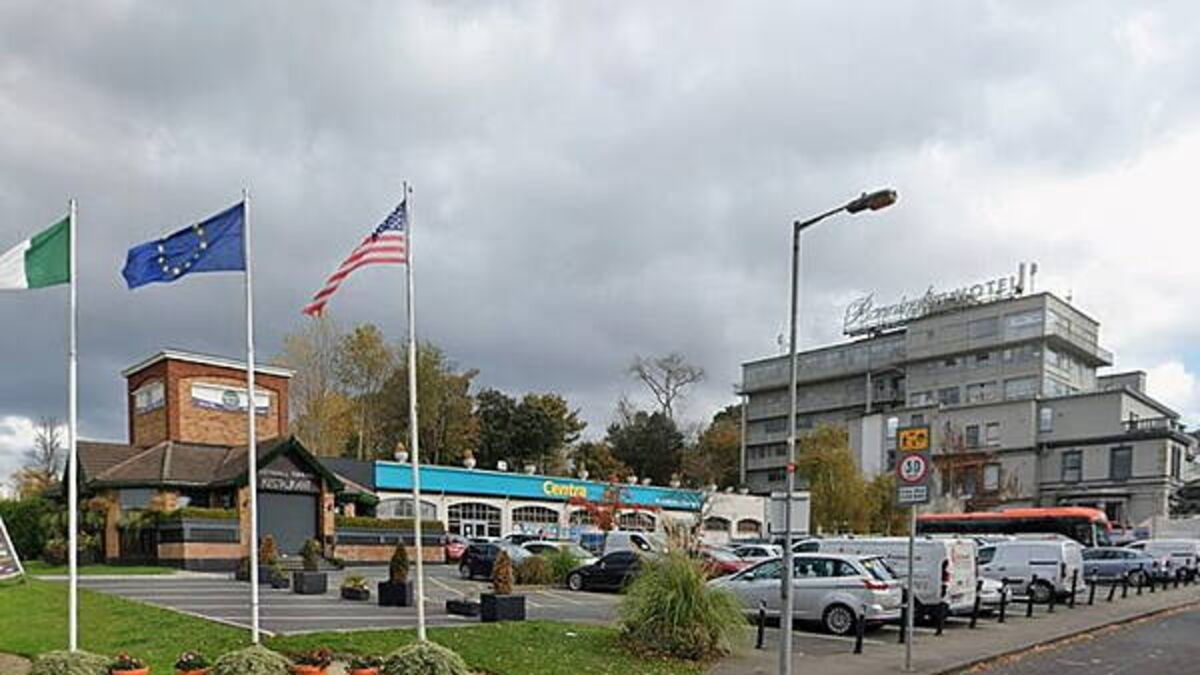
One of Dublin’s best-known funeral directors firms, Staffords Funeral Directors, was lined up to operate the funeral home at the Whitehall Terrace, Centra Retail Units, Bonnington Hotel, Swords Road.
Owners of the hotel, Liffeyfield Ltd had lodged a first-party appeal against a planning refusal for the funeral home close to the Bonnington Hotel issued by Dublin City Council earlier this year.
However, the Commission has refused planning permission on a number of grounds after local residents voiced their opposition to the scheme.
The Regency Hotel was the scene of the gangland murder of David Byrne in February 2016 that sparked a murderous feud between the Kinahan and Hutch organised crime groups.
Owners of the hotel, the McGettigan family, subsequently rebranded it as the Bonnington and incorporated Liffeyfield Ltd in 2017 to operate the hotel.
In its refusal, the Commission found that the proposed use as a funeral home is a non-permissible use for the site, which is situated on lands zoned Sustainable Residential Neighbourhoods in the Dublin City Development Plan.
The appeals commission stated that the proposed development is in an area which is subject to high parking demand.
The Commission stated that in the absence of sufficient information in relation to car parking management, the applicant has failed to demonstrate that the proposed development would not result in unacceptable levels of overspill car parking in adjacent residential areas.
Objectors claimed that seven-day use of a funeral home will seriously injure neighbouring residential amenity and traffic congestion from the funeral home will have an adverse effect on all the residents within the area.
However, in a submission in support of the Liffeyfield appeal, Manahan Planners for Stafford Funeral Directors argued that a funeral home is a quiet, low-intensity community use that serves the residential population of an area and is compatible with the established commercial character of the subject site.
Mr Manahan described his client, Stafford Funeral Directors as “potential occupiers of this unit if permission is granted”.
He said that the proposed use would generate less traffic and operate during more limited hours than the authorised restaurant use.
Mr Manahan stated that matters relating to parking management and traffic operations can be adequately addressed by way of condition.
He stated that funeral homes are inherently quiet, dignified, and unobtrusive uses. The operation of a funeral home does not give rise to noise, odour, litter, or other forms of environmental nuisance.
He said that the hours of operation are limited and predictable and that a funeral home is a considerably less intensive use than a restaurant, which is the authorised use of the premises.
He said that the traffic flow to and from the premises as a funeral home would be no greater than – and in all probability significantly less than – the traffic generated by the premises when it operated as a restaurant.