Digital skills camp clicked with kids
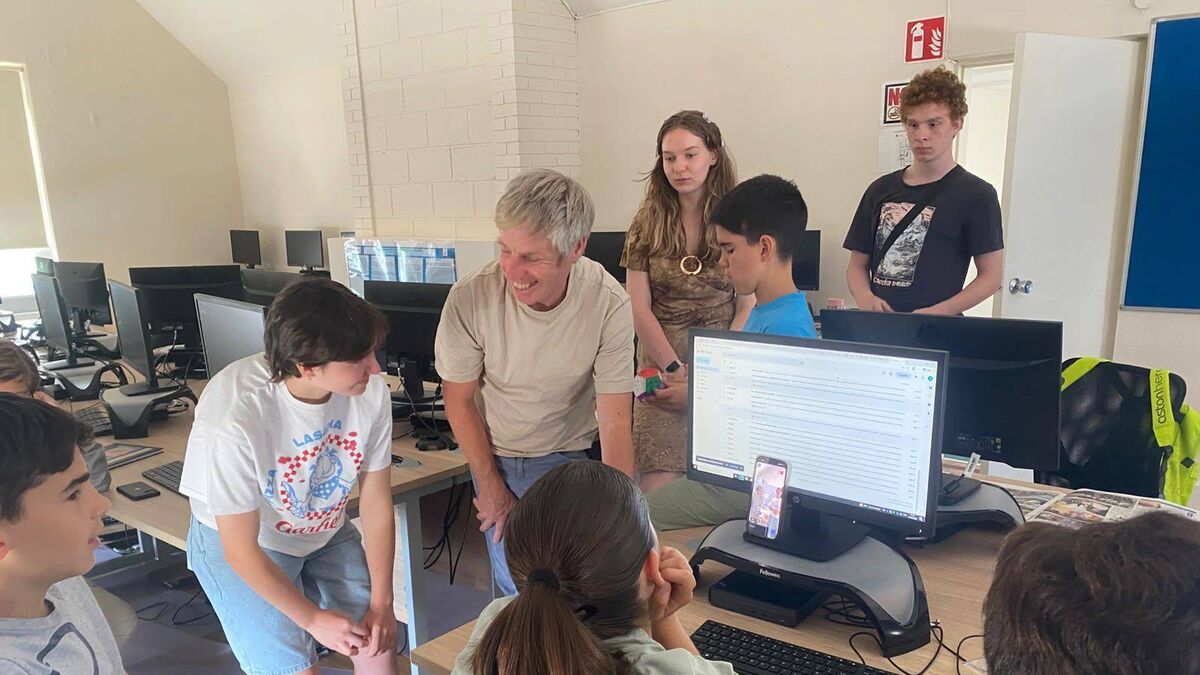
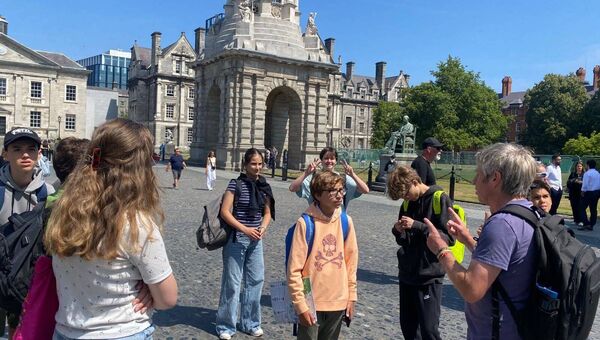
DDen summer camp participants working on their digital skills in Carlow College
FORMER Tyndall College student Conor Joyce Byrne first went to the DDen digital skills summer camps five years ago. Now aged 19 and having done all the camps on offer, he is starting a course in engineering technology at Carlow Institute of Further Education, hoping to advance into a robotics degree the following year.
The camp’s founder, Dr Immanuel Darkwa, describes Conor’s story as one of the “great stories” of the camps, which he founded as a way of “bringing students together and teaching them critical skills; skills that I think are necessary for life, for work, even for school”.
Immanuel is a professor in environmental sustainability at the University of Limerick. Before going into academia, he was an architectural engineer, which is where his interest in digital solutions came from.
He started the camps during the Covid-19 pandemic after moving back to Carlow as a way of “doing something for the local community”.
Thirteen kids attended the first iteration of the camp, engaging in critical thinking while social distancing at the back of the Presbyterian church on Athy Road. The next year, it was held at An Gairdín Beo and 25 kids attended over a five-week period.
In its third year, the camp moved to Carlow College and expanded to host between 40-60 teenagers over five weeks.
“We are in a world where digital tools are needed. There’s opportunity to consume them, like just watching reels the whole time on Facebook or you learn how to actually use it to produce something.”
The camp attendees have, indeed, produced something using their new-found skills, designing flyers for a local coffee shop, collaborating on a project with Carlow County Museum and mapping heritage sites in Carlow.
This linking of the camp and local community is something very important to Immanuel.
At the same time, he is determined to keep it fun. They split the desk-based work over four days, with a presentation or output on Friday. On Wednesdays, they travel. On the other days, they spend a maximum of an hour and a half working on achieving a goal, such as collecting data. As soon as that is done, they are “out on the pitch” playing games and having an ice cream.
“The kids are like ‘I thought this was a tech camp. I had more fun than tech’. But on the Friday when they do the presentations, they’re going ‘Oh my gosh, I didn’t know I did all this’,’’ said Immanuel.
“It’s not like school. The difference is that it’s very focused, and once they’ve done that, then it’s break time.”
Immanuel used to do a lot of the teaching but now bogged down with running two master’s programmes in UL, he has passed the baton to university student Clodagh Harding. He has also enlisted the help of Stephen Dargan, a workplace leadership, productivity and wellbeing coach, who is now a camp director, and Carlow local Clodagh McHugh.
Clodagh graduated this year with a bachelor’s degree in English and geography from UL and will go on to complete a research master’s in geography next year, with Immanuel as her supervisor.
She said she was initially nervous to teach the camp, not having a background in computing. “I didn’t have amazing digital skills going in there,” she admitted. But she was a quick learner, teaching herself Python coding language by using online resources.
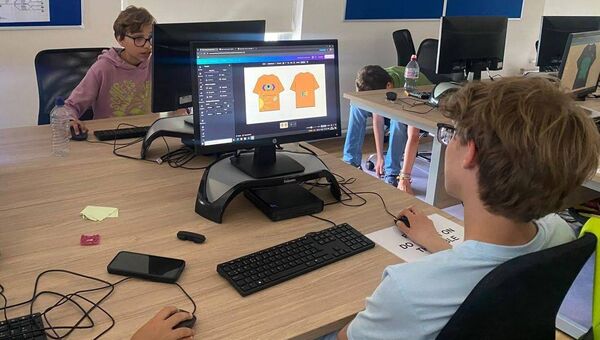
Now, after a summer of teaching, she sees how the camp puts the students “ahead of other children their age.”
“They’re always using social media and they’re always on their phones, but if we can put that to good practice and have them learn skills like coding, that’s what will set them apart and help them with their future,” said Clodagh.
“They’re way more prepared than I ever would have been, having not done a digital skills camp when I was younger.”
Clodagh had the added challenge of teaching a classroom that mostly consisted of European students who had come to Carlow to learn English over the summer. This has been a new trend, with fewer Irish children attending the camp.
But she has taken it in her stride, enjoying seeing the kids go from being very shy at the beginning of the week to making friends within a few days. “By the end of the week, they’ve improved their English so much, they’ve improved their confidence.”
“Definitely my favourite part of the camp has been seeing how much they have improved all of their skills from the beginning of the week to when they’re presenting,” she said.
Immanuel is hoping for more engagement by local children next year and is looking into collaborating with businesses in the area who might hire the young people in the future.
As a social enterprise, he’s keen to point out the camp won’t be “taking business away from anybody”.
Instead, he hopes the camps will put Carlow on the map so that “when you think about digital skills, you think about Carlow”.