Census gives insight into bleak life of ‘inmates’ in Carlow County Home
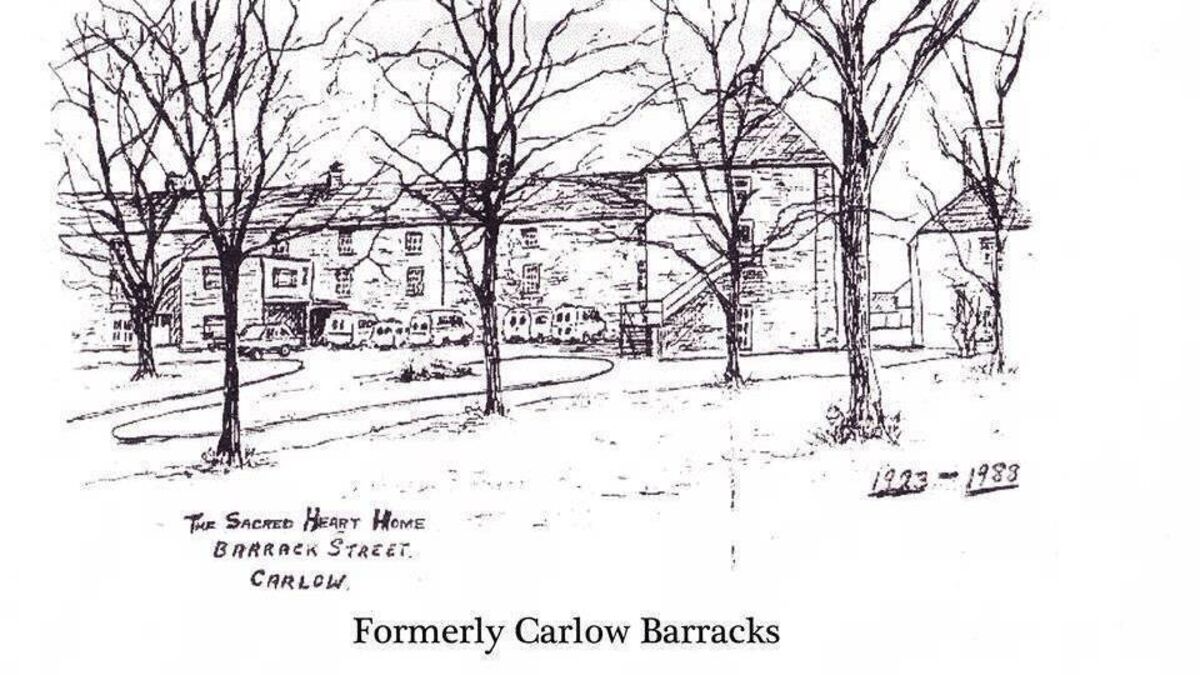
A drawing of the Sacred Heart Home on Barrack Street, before it moved to its new location on the Old Dublin Road
IN 1926, the Carlow County Home recorded in the census that it had 116 ‘inmates’, but who were those people and what can their presence in the ‘county home’ tell us about life in Carlow 100 years ago?
In 1926, a ‘county home’ was a workhouse in all but name.
Workhouses had been introduced to Ireland through the passing of the of 1838. They were intended to be a cost-effective solution to providing aid to the destitute. Construction on the Carlow workhouse started in 1842.
Workhouses were cruel by design, meant to deter all those but the most desperate. They provided those who were approved to reside there with just enough food to sustain life and they required able-bodied ‘inmates’ to perform hard labour in exchange for bed and board.
After Ireland gained independence, the workhouses were renamed ‘county homes’. The name was changed because ‘workhouse’ carried with it a trauma from the Great Famine. However, people living in the homes were still made to do labour.
County homes had poor sanitation and higher than average child mortality rates.
Control of admissions and day-to-day running of the homes was, on paper, the responsibility of the local county council, but in principle many councils handed over near-total control of these institutions to local religious orders. This seems to have been the case with Carlow County Home, as the head of household was a Sr M Francis Ballisty.
County homes often housed the local mother and baby home. Unmarried mothers were sent to mother and baby homes to be ‘rehabilitated’ and they were also kept separate from the rest of society, as there was a belief held by the Catholic hierarchy that moral lapses could be contagious.
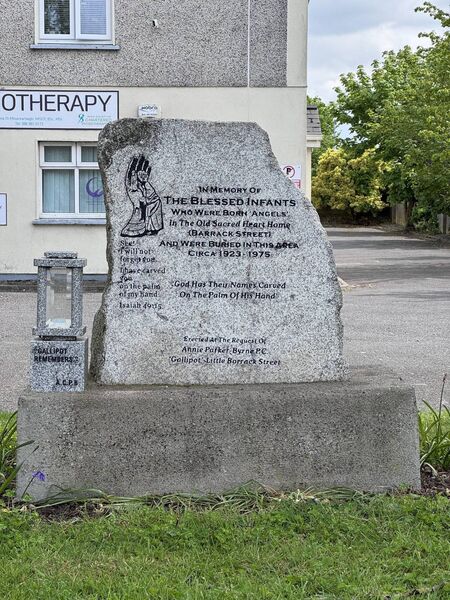
In many cases, mother and baby homes operated as long-term homeless shelters, as unmarried pregnant women were often kicked out of their family homes and shunned when their condition was discovered.
The census returns reveal whether a child was legitimate or illegitimate. For children born to single mothers, the census reads ‘mother alive, illegit’. On 18 April 1926, when the census was taken, there were 23 illegitimate children living in the home. The names of the fathers of these illegitimate children are not recorded on their birth registrations.
The youngest illegitimate child was Maggie Byrne, who was six months and two days old, born on 16 October 1925 in the Carlow County Home. Unmarried mothers were often sent to these homes when their pregnancy was discovered and they had their children there. Maggie was the second illegitimate child of Nellie Byrne, who was originally from Bagenalstown.
Nellie had had another daughter, Mary, in March 1922. However, while the census says that Mary was born in March 1922 in Carlow town, there is no corresponding birth certificate in the records for her. Sometimes a census can raise more questions than it answers.
The largest demographic of people in the county home were the elderly. In Ireland in 1926, the average life expectancy was 57 for a man and 58 for a woman. However, in the county home, there were 44 men older than 57 and 36 women older than 58.
Although the British government had introduced the old age pension in 1909, the Irish government had reduced it in 1924 because of mounting financial pressures. Many older people were unable to make ends meet on the reduced pension and turned to the county home.
Tellingly, the majority of older people were single and unmarried – people for whom, perhaps, there was not a network of extended family members to care for them in their old age. There were, however, about 30 widowed and married older people, so such an explanation does not tell the whole story.
Another demographic were orphans. The census states that ten children living in the county home had lost one or both of their parents.
In a time before the foster care system, long-term homeless shelters and state-funded nursing homes, the county home was a catch-all for those who would otherwise have been destitute. However, not everyone qualified to live in the county home; one had to be admitted with permission from a board of guardians under the British and then the religious institutions that took over after independence. Many were turned away as they were deemed unworthy of such support.
An interesting quirk of the census is that two people living in the county home do not have a known place of birth: William Gilbert (58) and Laurence Fumes (40). For William Gilbert, the explanation may lie in the fact that the registration of births, deaths and marriages only became mandatory in the 1860s, the decade in which he was born. For Laurence Fumes, it is altogether more mysterious.
Over 70% of people in the county home were born in Carlow. Most of the others were from the surrounding counties of Wicklow, Laois (then Queen’s County), Kilkenny and Kildare. Two people in the census were born in England â Christina McCabe (60) was born in Staffordshire and Edward Ellery (3) is down as being born in ‘England, not known’, and it is recorded that both his parents were alive.
The census captured an institution on a precipice, where most people who resided in it were admitted under the British system, where a local board of guardians decided their worthiness, that was now controlled by the local Catholic clergy. By examining the census, we can better understand the realities of change that occurred after we won our independence from Britain.