Carlow man convicted of strangling former partner in bedroom
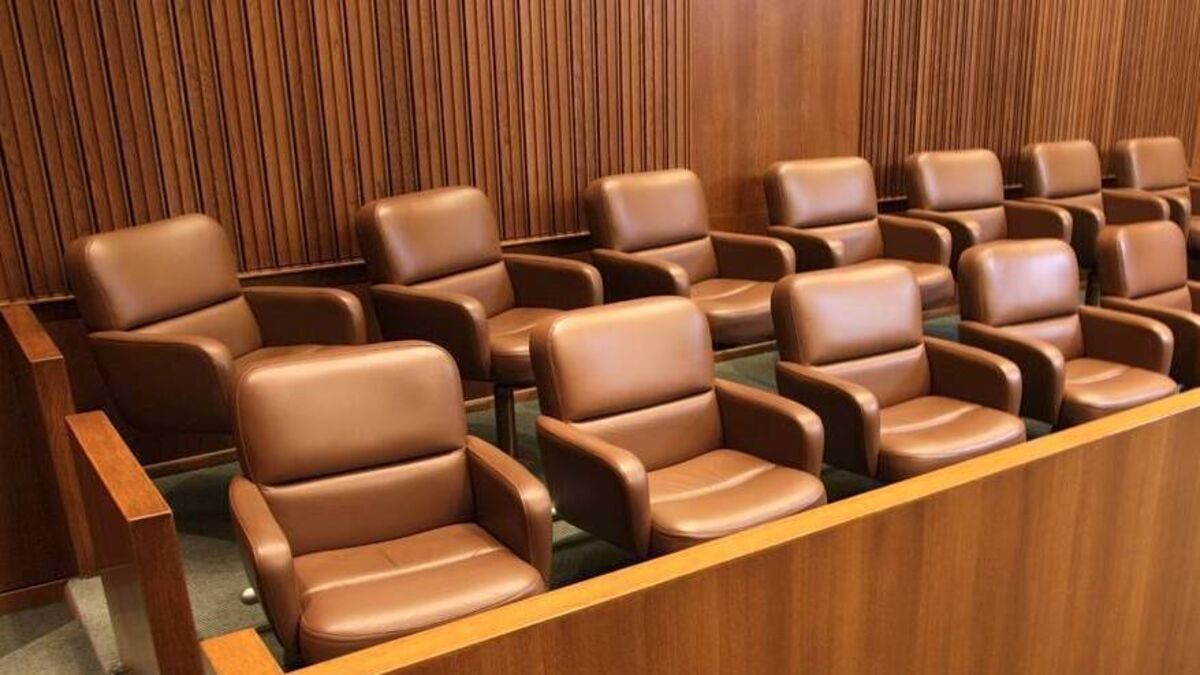
A courtroom jury box
A CARLOW man was last week found guilty of strangling his former partner on 29 January 2025 by a jury after three hours of deliberation at a sitting of Carlow Circuit Court. The jury found Paul Rowland (36) not guilty of two further counts of assault causing harm to the same complainant on 25 and 26 January 2025.
The defendant and complainant share a child, who was 23 months’ old at the time of the offence.
In response to questioning by prosecuting barrister Brian O’Shea, the complainant explained that she had been at her home in Carlow town with their son all day “trying to have a good day with him”. She said Mr Rowland, who has no fixed abode and lived with her intermittently, had returned to the house that evening “quite intoxicated”.
She told the court that he began verbally abusing her, then got her by the throat with one hand, pushed her back onto the bed, kneeled over her and put his two hands around her neck. Their son was in the room at the time.
“I could not take breath, his hands were too tight; his hands were around my neck,” the complainant said. “I could feel I was changing colour. I thought I was gone; I thought I was going to die soon,” she said in her evidence to the court.
She said that she broke free when she heard her son crying and Mr Rowland’s grip slackened. Mr Rowland then stood, and she sat on the end of the bed.
“I looked up at Paul, I looked him in the eyes, then I said, ‘If you want to do it, finish me’. It was the most terrifying experience of my life. I was convinced I was going to die,” she told the court.
When Mr Rowland took their son downstairs, she ran after him, took the child, barricaded herself and the child in the upstairs bathroom and called the gardaí. She stayed on the phone until gardaí arrived at the house.
Investigating garda Det Kayleigh Milward said she arrived at the scene approximately ten minutes after being dispatched. She said Mr Rowland was holding a can of alcohol in the front of the house when they arrived and initially tried to restrict their access to the house. The complainant came down the stairs in a “very high, distressed state” and gardaí entered the home.
The jury were shown photographs of red marks on the complainant’s neck that were taken by gardaí at the scene.
Mr Rowland was arrested at the scene and charged with offences under sections 3 and 3A of the and brought to Carlow Garda Station. A doctor confirmed that he was under the influence of an intoxicant.
Mr Rowland was interviewed by gardaí twice on the morning of 30 January. In memos from those interviews read to the court by Garda Milward, the defendant said that on the evening in question he and the complainant had both consumed alcohol and had “a bit of a tiff over nothing”.
He was out of work at the time of the incident and had collected a social welfare payment earlier that day. The “exchange of words” was, allegedly, caused by the fact that Mr Rowland had lent some of the money to a friend.
In interviews with gardaí, he denied that there was bruising on the complainant’s neck and described the whole situation as “over dramatics and all that sort of craic”. He suggested that she had made the allegations against him “out of vindictiveness” after he had made a hurtful comment to her that evening.
The director of public prosecutions brought two further charges of assault causing harm against Mr Rowland. The complainant alleged in her statements to gardaí that on 25 January 2025, the defendant had tripped her as she was entering the upstairs bathroom, causing injuries to her nose and face. She said that on 26 January, Mr Rowland had again caused her harm by causing a fold-up pool table that was leaning against a chest of drawers to hit her at the same place on her nose.
He denied involvement in both incidents.
Barrister for the defence, Tara Geoghegan, repeatedly put it to the complainant during cross-examination that she was exaggerating these incidents, which she denied.
On 4 February, the complainant was granted a protection order against the defendant by Kilkenny District Court. She was interviewed four times by gardaí over a month-long period after the incident as they sought to clarify the nature of their relationship and gain access to medical records.
Regarding their relationship, the complainant said they had previously been in a relationship, but that it had ended in November 2024, months before the incident. The court heard that Mr Rowland would regularly sleep with the complainant in her bedroom and that they would cook and eat together. They shared a key to the property at the time of the incident.
Mr Rowland alleged the pair were in a relationship.
The complainant told gardaí on 6 February that she had attended a general practitioner after the assault. However, records from the practice show she did not attend an appointment at the Oak Family Practice until 12 February, and that she was not forensically examined at that appointment.
She explained to the court that she believed “seeking medical attention (after 25 and 26 January) would bring light to a very toxic domestic relationship” and “anything could have happened” if Mr Rowland had found out that she had been to a doctor.
The stand-alone offence of non-fatal strangulation was introduced in legislation by then justice minister Helen McEntee in 2023. Most prosecutions under this legislation since its enactment have related to domestic violence incidents. The maximum sentence for this offence is ten years’ imprisonment.
The defendant was remanded in custody awaiting sentence and given consent to bail. Judge Mary Morrissey set the date for the sentencing hearing as 6 March and directed a victim impact statement be prepared.
She warned the defendant that if he was to take up the offer of bail, he would not be permitted to have any contact with the complainant.