Brave Julie aims to ‘walk while she can’ to raise funds for MND charity
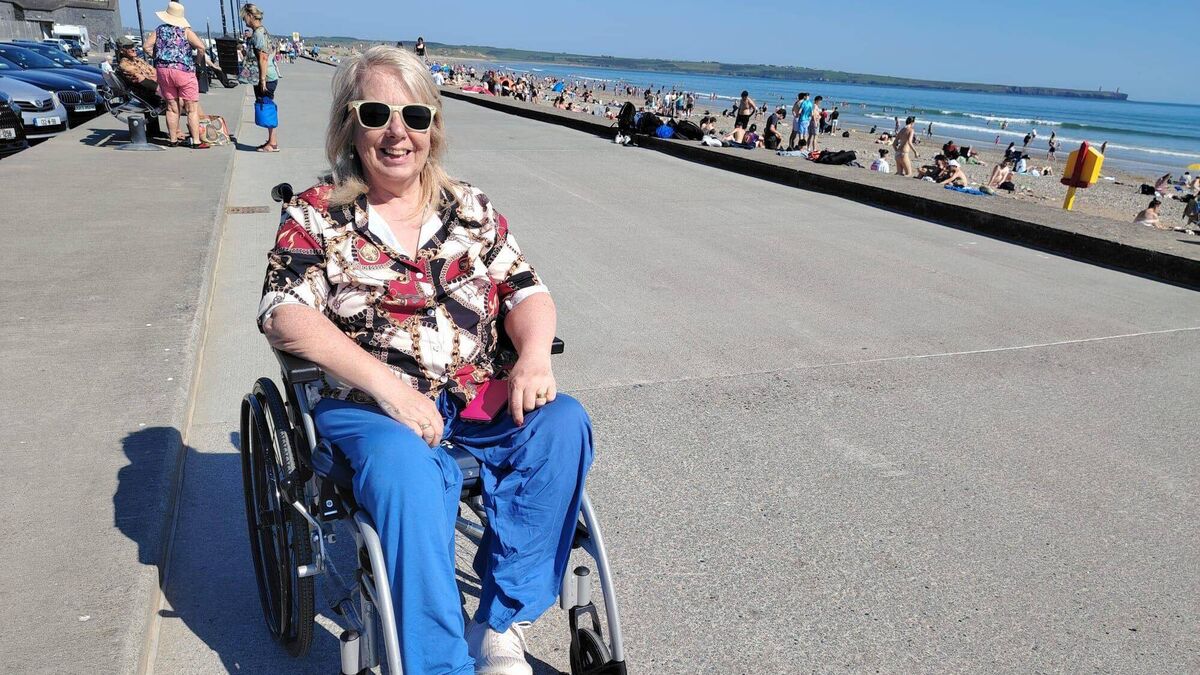
Julie Kelly from Hacketstown: 'You can either cry or fight'
WHEN Julie Kelly, a competitive ballroom dancer, musician, horse rider and motorcyclist from Hacketstown, was diagnosed with Motor Neurone Disease (MND) in June last year, she vowed that she would not let the diagnosis define her.
“My life changed big time in the wink of an eye so I said, ‘Julie, you can either cry or fight’. So fighting is what I’ve been doing. I get out and enjoy myself,” Julie said.
The 62-year-old first realised that something was wrong when preparing for a major dance competition and her ankle suddenly became weak. Following scans, tests and physiotherapy, her mobility continued to deteriorate. Julie went from using a walking stick to a frame and today relies on a wheelchair.
“I will not let it define me. I am stronger than it and I will fight on,” she said.
MND is a progressive, life-limiting neurological condition that affects the motor neurones responsible for controlling movement. As the disease progresses, people can lose the ability to walk, speak, eat and breathe independently. The rate of progression varies, but support and specialist equipment can be needed quickly.
Julie is leading this year’s campaign to raise money for the Irish Motor Neurone Disease Association. The campaign encourages people across Ireland to organise a 5km walk on Saturday 17 October or on another date in October. Registration is open and people can register online through the IMNDA campaign page www.imnda.ie.
This is the eighth year of the campaign and it has raised €864,000 since 2019. This year, IMNDA hopes to take the campaign’s total fundraising beyond €1 million.
The money raised will help the IMNDA to provide specialist nursing care, counselling and essential equipment for people living with MND. This includes customised electric wheelchairs and eye-gaze communication technology, which can enable people who have lost the ability to speak to communicate with family, friends and caregivers.
The IMNDA also supports research into MND, with the aim of improving understanding of the disease, developing better treatments and ultimately finding a cure.