1926 census reveals difficult life of Carlow women
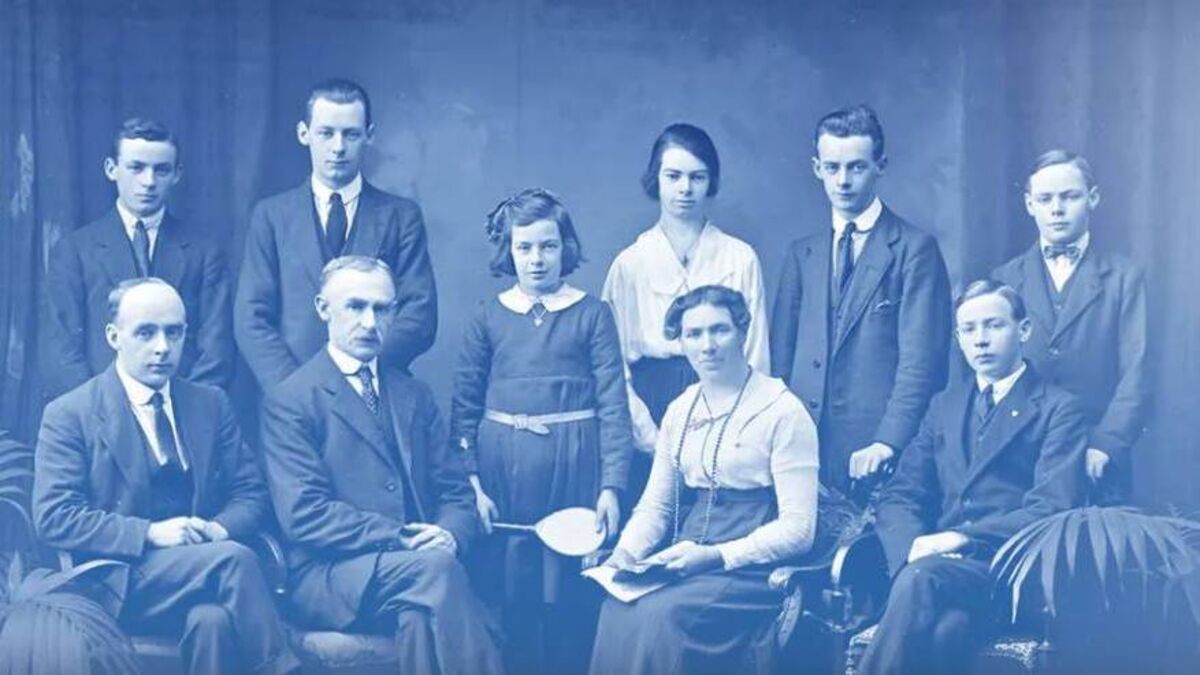
Official image from Census 1926
LIFE for women living in Carlow 100 years ago was very different. With limited access to education, work or protection from domestic abuse, women faced life with fewer choices open to them.
In a society that severely limited access to family planning, women often went on having children right up until they entered menopause. An example of this from the census is the O’Connor family, who lived in a five-room house in Kilcarrig near Bagenalstown. A Catholic family, Thomas O’Connor (54), who worked as an engine driver for the GS railway, is listed as its head. His wife Nora O’Connor was 46 and 12 months previously had given birth to their daughter Margaret.
According to the census, Nora had given birth to eight children, but only four are listed in the census, so it’s likely that four died in infancy.

Nora probably had given birth to eight children in about 15 years, which was far from unusual. In the same townland lived the Dillon family, and mother Annie Dillon had given birth to nine children in 13 years.
It is a common misconception that people in the past got married much younger. Couples were expected to be financially solvent by the time they married and so people often did not get married until their late 20s or early 30s. The exception to this rule is people who came from relatively wealthy families and so could support a household at a young age.
People only began to get married earlier after the Second World War when, in general, jobs were better paid and whole families could rely on the salary of one man in his 20s. The O’Connors, for instance, were married when Thomas was 32 and Nora was 24, and the Dillons were married when Annie was 22 and her husband James was 31.
Age gap relationships, where an older man married a younger woman, were normalised, especially as men were expected to only marry once they had secured their family’s financial future.
While the expectation was for women to marry and men to provide, life often complicated things. Men died, were put in prison, walked out on their families, lost their jobs through sickness, injury or being put out of work, and women were left, often with children to support, looking for ways to provide.
A common way for women to bring in a small income was to foster children from the county home, whom they would look after alongside their own children. This is what the Fenelon household in Ballinacarrig did in 1926. Its head, John Fenelon (72), is listed as being a farm labourer who was ‘out of work 12 months’. His wife Margaret (55) has ‘home duties’ down as her occupation, and while the couple never had any children, they were supporting Margaret’s mother Catherine Kavanagh (85), a widow listed as being ‘unable to work’, and a niece Catherine Farrell (14), whose mother was dead.
There are three children in the home whose relationship to the head of the household is ‘nurse child’. They were Micheal Hughes (8), whose parents were alive and who was born in the county home; Ellen McDonald (5), who was also born in the county home and whose father was dead; and Christopher Mullins (17 months), who was born in the Rotunda Hospital in Dublin and whose parents were alive.
Why were children whose parents were alive living with foster parents? Why were some children kept in the county home and some boarded out? While the census is a place that can provide many answers, it poses even more questions.
Although it was expected for men to be the providers and lead the household, census returns reveal a more complicated picture about how power was distributed within the home.
For most of history, the best position to be in as a woman was to be a widow – widows were typically afforded control over their lives and finances in ways that their single and married counterparts were not, and this rule seems to apply in Carlow. There are a number of households that have an older woman as its head, whose occupation is farmer and whose children’s occupations are assisting or working on mother’s farm.
Some examples of this are the Cummins family in Leaney near Ballintemple, where Henrietta Cummins (80) is the head of the household, with her son’s job down as ‘assisting on mother’s farm’.
There is also Mary Brophy (86), who was head of the household and is listed as employing three of her children on her 46-acre farm in Milltown near Shangarry.
Other family farms had different set-ups. Take, for instance, the 106-acre Doyle family farm in Ballinastrane near Ballintemple. There, Micheal Doyle (55) is listed as the head of the family and his mother is listed as a dependant who does not work for a living.
It was mainly women who lived in towns who had jobs outside of the home, some of whom might have moved from the surrounding countryside looking for work. For instance, women living on Staplestown Road were much more likely to be in employment than women living in more rural parts of the county. There was a Bridget Murphy (60), a widow who lived on her own and whose occupation was listed as ‘general dealer’.
Not far down the road from her was Jane Doyle (52), also a widow, who lived with her three children and who owned and ran a boarding house, whose 21-year-old son was initially listed as the head of the household, although his name was then crossed through and Jane’s signature put in its place.
While these women existed in an oppressive system that limited their opportunities, they found ways to assert their power and individuality – traces of which can be found in the census.