‘Carlow was a home away from home’
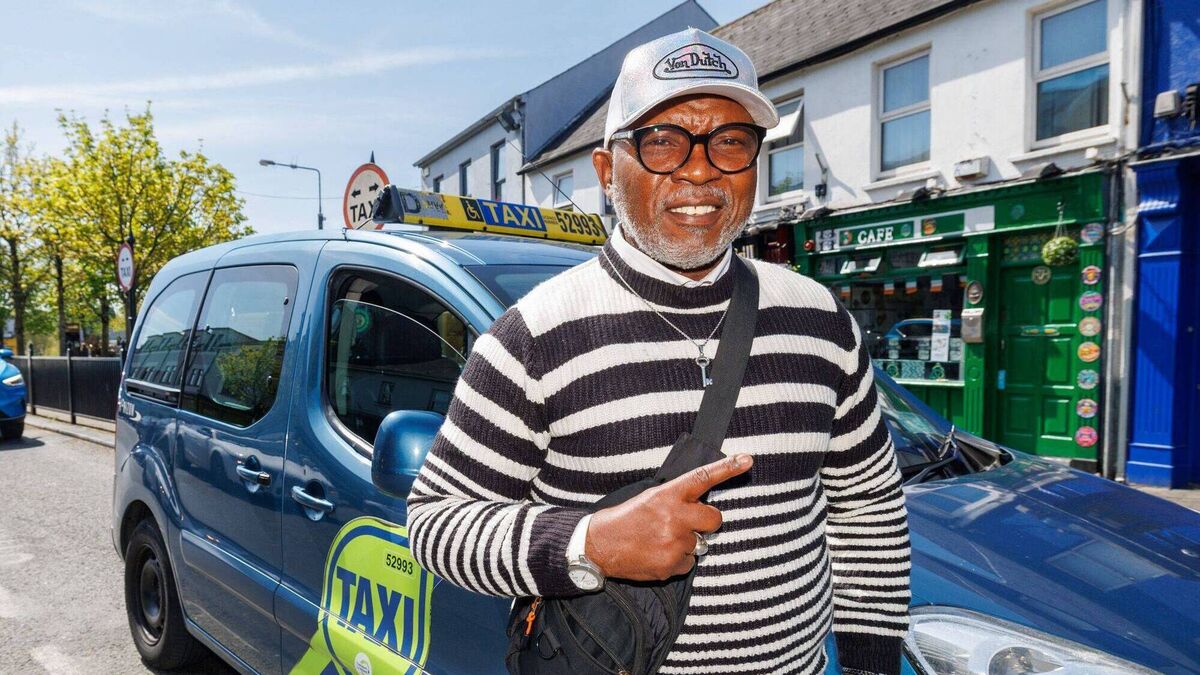
Hakeem Onabote: 'There is no covering it. We are too loud!' Photo: Michael O'Rourke Photography
“GOD bless the Irish. Seriously, I say that with a sense of conviction, with a sense of conviction,” said Hakeem Onabote (63), recalling the day in 2008 when he was granted Irish citizenship.
Originally from Lagos, Nigeria, Hakeem arrived in Dublin seeking refugee status in 2000 after spending several years working in Libya. “I’m always on the move to better my life,” he reflected.
“I have travelled. I’ve been in England. I’ve been in Germany. I’ve been in most African countries and I’ve seen people. The best of the best I’ve seen is the Irish before the 2008 crash,” he said resolutely.
When times turned hard and unemployment soared, he remembered feeling distinctly less welcome, as Irish people turned against foreigners whom they perceived as taking their jobs. “There was bitterness. I remember vividly the animosity, that the good spirit of the Irish I was used to seeing was kind of being eroded, strongly eroded.”
In his first eight years in Ireland, Hakeem had experienced a lot. He lived in a hotel reception centre for refugees for several months when he first arrived, made friends and met his future wife, Olatundun Balogun. After several months, he moved to Carlow to attend college. He first went to the Carlow Institute of Further Education and then IT Carlow, studying information technology and teaching.
“Carlow was a home away from home to me,” said Hakeem, “because the people were very friendly. It was good. They have good rapport, the reception from the community, from everybody around was excellent.”
He singles out the immigration officer at Carlow Co Council as being particularly welcoming and warm. “He is a type that when some people get their asylum sorted out, he would be the first to come to their house. They won’t send a letter. He will come to their house and tell them, ‘I congratulate you’.”
Hakeem and his wife had two sons and a good life. He was working as many as three jobs at a time, working in factories and as a security guard in Carlow and Dublin. “I was bumble-jumble everywhere,” he laughed.
However, his immigration status was uncertain. His refugee application was refused, appealed and refused again. He was unable to complete the college course because, they said, he owed €9,000 in international fees after his refugee status was declined.
Then came a “very terrible experience”.
After missing a letter containing a fine for speeding, Hakeem was summoned to Enniscorthy court in November 2004. The judge let him off the fine, but wished him good luck, something that pricked Hakeem’s ears. Immigration officers arrested him as he left the courtroom and brought him to a detention centre in Dublin.
However, his refugee application had not been entirely resolved and so his solicitor John O’Sullivan managed to negotiate a temporary stay on the deportation order. Hakeem chose not to pursue a case for wrongful arrest â it was the loss of his laptop during the ordeal that haunts him to this day.
Just weeks later, the Irish government announced that all children born before 1 January 2005 would be automatically entitled to citizenship and their parents entitled to permanent residency. His sons were born in 2003 and 2004, meaning Hakeem and his wife were allowed to stay.
He remembered joking with the Carlow immigration officer at the time: “He said, ‘Oh, you are the one that did not let me go on my sun holiday in Africa.’ Everything was booked for him to take me down to Nigeria. There was a plane waiting for me.” Hakeem remembered, laughing heartily. “I was like, ‘I’m not sorry’.”
He was unable to finish his college education due to the outstanding bill and instead became a taxi driver. Additionally, Hakeem began organising Friday prayers for Muslims in Carlow. It started out with six or so people going to each other’s houses each week and then grew into a community of 100 people, as more Muslims moved to Carlow, including Rohingya people.
They tried to convert a building in Askea into a mosque but ran into some problems with neighbours and the fire department. “We built the place up ourselves ignorantly. We were just happy,” Hakeem shrugged. The community now worships out of two different mosques in the town, “but we are all together,” he assured me.
His wife and children moved to London in 2012, but Hakeem decided to stay in Carlow. “I was not ready to go.”
Sadly, Olatundun died in 2019 and Hakeem brought the two boys back to finish their secondary education here.
As for the Nigerian community in Carlow, Hakeem described it as “multi-faith – religion doesn’t really separate us. Abroad here, we are all together. I go to their church ceremonies, they come to our mosques,” said Hakeem. “There is no covering it. We are too loud. Not loud. Too loud,” Hakeem emphasised. “It’s part of our culture.”
He travels back to Lagos twice a year for big celebrations with a “huge” extended family and maintains an attachment with his country of birth.
“A Nigerian has no business travelling or living in any other country in the world,” he asserted. “Because that country is blessed. Nigeria can feed the country and they can feed the whole of Africa. Nigeria has got everything. There’s no natural resources in this world that are not in Nigeria in abundance.”
He believes it shows real mismanagement of a country that Hakeem and so many of his peers were forced to go elsewhere to have a good life. He admires the younger generation that are now standing up and demanding better from the Nigerian government.
Meanwhile, Hakeem is incredibly grateful to Ireland for accepting him. “It is a very liberating experience that, you know, you are accepted in another man’s country as your own and given the freedom.
“The two countries are inseparable in my life, the Irish and the Nigerian,” he said.