The Master's Plan
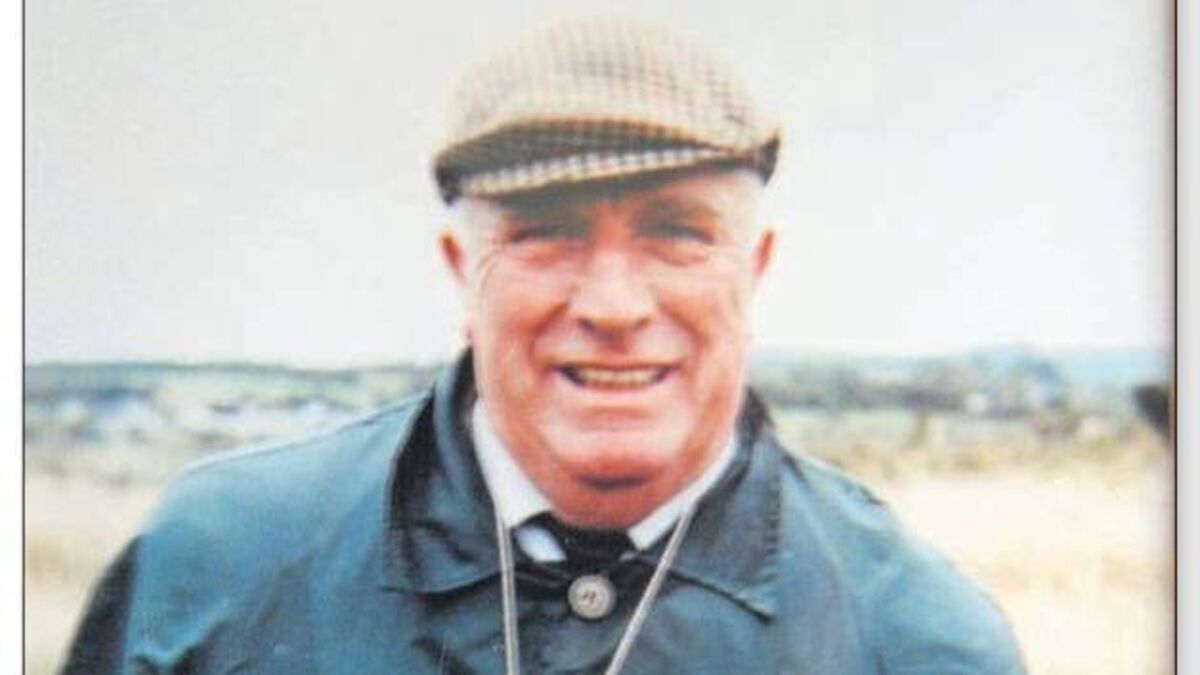
The Master - Jimmy McGinn
Come back with me dear reader, back to a Monday morning in early September 1941. Cycling out to his new posting in a small rural school on the outskirts of a southern city is a 25- year-old teacher, his head full of plans. Walking to the same small school that same Monday morning were a bunch of young boys wondering, maybe fearing, what the new teacher would be like.
It was to prove a match made in heaven. However, like many a romance, it had a bumpy beginning. The new teacher was from County Louth, Dundalk to be exact, a hotbed of soccer. He had spent the previous five years teaching in Manor Street CBS in the nearby city and word had it that even if the Brothers frowned on the ‘foreign game’ this teacher had founded Hibernian AFC and was a frequent attender at the ‘no hands’ games in Kilcohan Park. Freed of the dic-dat of the Brothers he introduced a soccer ball to the his new schoolyard. The response was tepid.
The new teacher, aware the county hurling team had captured the imagination of the locals when winning the Munster senior championship in 1938, wisely decided the small ball would be a better lure. And so began what you could call the Master’s Plan, a 12-step template as to how incremental gains pave the way, how little victories create the openings for ultimate glory …
The teacher ditched the soccer ball and in it’s stead produced an old hurling ball that had seen better days. If the big ball was in the ditch, out of the ditches of the area came skeaghs and sticks that served as hurleys. And so in the small school field were played raw games of ground hurling, enthusiasm trumping skill.
The teacher promised the boys that if he saw sufficient improvement to warrant it he would ask a local farmer if they could climb the school wall and play hurling on a bigger pitch. He did. They did.
Having endured a small field that was worn to hard caked clay and with only a pile of jumpers for goalposts, the boys were rejuvenated by now hurling on a big field with nicely cut grass and timber goalposts at either end. It was still ground hurling, ‘twas impossible lift the ball with these skeaghs, but the inclination was there, the boys wanted to put the ball over the crossbar.
Real hurleys. A real sliotar. The Master went into the city and asked John Keane, one the county’s greatest hurlers, a man later picked on the hurling team of the 20th century, if he could help with procuring a set of hurleys. He did. Now the boys were hurling on a long, wide field with real hurleys and a real sliotar.
A soccer man himself but as a teacher passionate in his belief that every day is a school day he enlisted the help of a couple of Christian Brothers in the city to instruct him in the intricacies of the game or, more accurately, to instruct him on how to impart the basics of the hurling to his pupils. Bro McGill of Mount Sion and Brother Raymond of De La Salle schooled their adult pupil in the importance of holding the hurl with the writing hand’ on top, the importance getting in close for the hip-to-hip exchanges, the necessity of having the hands locked when striking. They imparted the value of hooking and blocking, their proper techniques.
Now Principal, the New Headmaster established routines, one of which was the raising of the tricolour over the school every morning, another the saying of the rosary but before that at 8.30 am the boys hurled for a half an hour ahead of the first bell and for another 45 minutes at dinner time. That was as an ‘extra’ to after school training matches. Five mornings a week, five dinner times a week, five evenings a week. These boys were getting pucks of hurling, pucks of time to hone the skills imparted to them. The Master didn’t believe that practice made perfect, he believed proper practice made perfect.
The Master organised cluster leagues against other rural schools, played on a home and away basis, maybe four schools, guaranteeing six games, then a final. These games were treated like All-Ireland finals and if the Castle Field for home games was their fortress, the trips away were big adventures for boys who rarely strayed far from home. The Master entered his boys in the Sheehan Cup, a primary schools competition and they became serial winners.
Satisfied though he was with those ‘little victories’ the Master sought further improvement. The hurling in many of those early games was of the old-fashioned direct variety, a lot of hit-and-hope and drive it down the middle. From his soccer background he had acquired a tactical acumen that he now brought to the hurling field. He showed the boys how a cross-field ball could swing the play. Let past-pupil Pat O’Sullivan explain. “He was 30 years ahead of his time. It helped that he was a soccer man. He would say that ‘a man in position is more important than a man in possession’. Our hurling was all about opening it up. We zig-zagged the play. A generation of hurlers grew up on the same principles.”
With these new tactics in place his boys were now nigh unbeatable in the rural clusters and the Master reckoned maybe it was time for them to test their strength against city opposition. But a believer in incremental gains, he had a plan. He approached one of his old Christian Brother friends, asked him to bring out a team to their Castle Field but not to bring their best team but neither teacher/manager was to breathe a word about the make-up of the visitors. The day came and the culchies beat the city boys, it was every bit as good as winning an All-Ireland, the sheer thrill of beating Mount Sion. The boys’ confidence grew, talks of starting a club began.
But before that the Master went in search of a another test of their strength. Time enough to take on the ‘real’ city teams, first let’s see how we get on against South Kilkenny opposition. A series of cross-border challenge games with the sons of the famed black-and-amber followed and the inter-county rivalry infused the games with a real sting. His boys did well.
The February of 1954, past pupils of the Master returned to the school for the formation meeting of a club. The Master, though, sat at the back, he refused, on principal, to become a member of the GAA in protest to Rule 27, ‘The Ban’, which didn’t allow members play ‘foreign games’ which, of course, included soccer. That first year the club only affiliated a minor team and the first three officers of the club were all teenagers, proof that the Master had produced leaders. He had produced hurlers too, the new club won the County Minor Hurling Championship, beating all before them, city teams included.
“And still they gaz'd and still the wonder grew, That one small head could carry all he knew.”
Those lines from Oliver Goldsmith’s ‘The Village Schoolmaster’ could have been written with our hero in mind. And this wonder grew when The Master chose the club colours. Red and Black. Reliable folklore has it that the colours and particularly the hooped design was inspired by a favourite World War 1 poem of his which depicted blood on dirt and told the story of the hardships which must be endured. The Master not only chose the colours he imbued a pride in the jersey. Let a past pupil, Shay Fitzpatrick enlighten us. “The team would return to the city from away matches. The Master would stop the bus on the quays. He’d make us walk the four miles home, walk through the city streets. ‘Take your jerseys out of the bag and drape them over shoulders’ The Master would instruct. We walked the city streets believing we were Kings.”
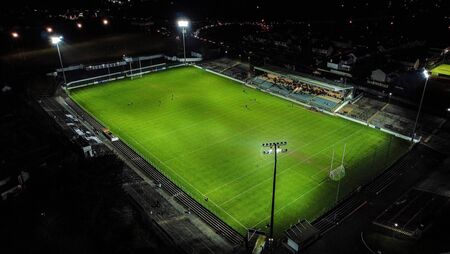
The city streets were Waterford. Home was Ballygunner. And the Master was Jimmy McGinn, a visionary, a motivator, a tactician, an inspiration. Ballygunner’s pitch is named after him. The crest on the red and black Ballygunner jerseys proudly include the McGinn family crest.
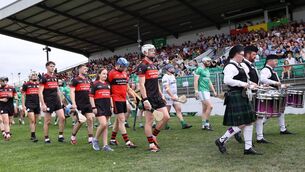
And last Sunday in Croke Park when Ballygunner won their second All-Ireland club title Jimmy McGinn’s maxim that ‘a man in possession is more important than the man in possession’ was once more proved correct. In 2022 Harry Ruddle was the man in position to take a stick-pass before locating the Hill 16 end rigging, the winning goal. In 2026 Mikey Mahoney was the man in position to take a hand pass before locating the Hill 16 rigging, the clinching goal.
And I’m sure The Master will have noted from his elevated vantage point on the level lawns of God that the man in possession on BOTH occasions, the man who, mindful of Jimmy McGinn’s mantra, found the man in position was the yellow helmeted No 12 Peter Hogan.
The last word to the small boy who proudly draped the red and black flag over his shoulder leaving the field of dreams last Sunday.
“Up The Gunners!”