Government needs to prioritise PAYE workers and OAPs
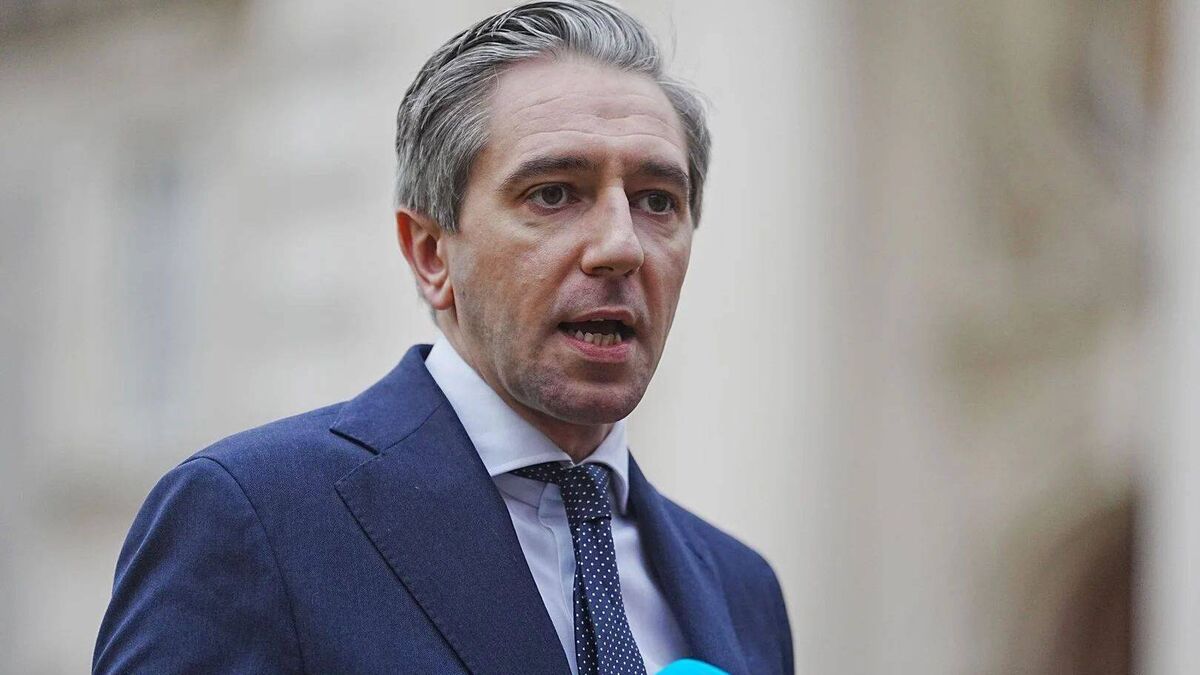
Minister for finance Simon Harris
ONE of the most important days of the year is fast approaching. No, I am not talking about Halloween or Christmas – dread the thought – but rather Budget day, which comes around once a year. This time it is Tuesday next, 6 October.
That’s the one day in the year when the government lays out where it is going to spend our hard-earned cash and where we are going to receive government supports. It bares its social conscience (it pretends to have one), plans for the development of services – and I’m not talking about the Children’s Hospital or Luas – such as health, education, farming, the national grid, housing, public transport and whatever else you want to throw into the mix.
We will also learn if old age pensioners are to get an extra fiver in their pockets, if all of us are to get something to offset the spiralling cost of home heating or gas, if electricity credits are on the cards and if the tax bands are to be widened to give those of us in the middle a breather.
We are too far out from a general election to consider this Budget as a giveaway in a bid to buy votes, but at the same time the government must be mindful that the public’s nerves are stretched to the limit.
Every day we hear of further increases.
Only last week those of us who can still afford private health insurance were informed of yet another increase in our premiums. I’ve lost count of the number of increases these policies have taken over the past few years – far more than any percentage increase anyone has received, public or private, in their wages during the same period.
And don’t get me started on a visit to a filling station, which is a bit of a misnomer now because very few people can afford to fill up at the pumps anymore. It is like playing Russian roulette. God only knows what a litre of petrol or diesel will cost when you get there, but you can be damn sure it will cost more than it did the last time.
I’ll take a wild guess and say the government will scrap any notion of removing the supports it put in place at the start of the latest oil crisis. Those who make the final decisions regarding how we fund and spend this country’s money may lack common sense, but they are not entirely stupid. That is a tinder box if ever I saw one and to remove it to gain extra income would be political suicide.
There is such a thing as the ‘grey vote’ in this country, something that politicians often ignored in the past, but in more recent years have come to realise it is this sector of society who have time on their hands to campaign and cause disruption, but, more importantly, to shift their vote and the one thing that gets the focus of every politician is a vote – either gaining or losing one – and none of them want to lose one.
Safe to say that support will remain, but whether or not anything extra will be offered is still up for grabs. I caution everyone to remember what Micheál Martin said last week when he bluntly stated that the government cannot address everything that is problematic in society at the moment. He didn’t put it exactly like that, but he was sending a warning shot to the rest of us not to expect too much.
There is talk about the removal of home heating oil from carbon tax, which would result in an estimated saving next year of €40 per 1,000 litres. Sounds good, but in reality, if you were to purchase that 1,000 litres last week it would have cost in the region of €1,200. So much for the extra €5 or even €10 increase in the old age pension, if there is to be one.
I read somewhere recently that an elderly person, let’s say someone in their mid-70s, needs to keep the room temperature where they sleep in the low 20s during winter. Most of these people have old gas or oil-fired burners and anyone who has ever paid a bill will tell you that as soon as you increase the temperature gauge, it begins to gobble up fuel. I suppose anything is better than nothing, but mark my words: whatever reliefs are given will be more than used up during the first cold snap.
But I suppose we shouldn’t complain too much. There is no problem in the government signing off on a pay increase of almost €92,000 a year for the head of the ESB, bringing his annual salary to €480,000, which, by the way, is €200,000 a year more than what the taoiseach earns.
Remember, this is an organisation that recently said it is increasing its prices, even though there are now almost 400,000 households in electricity arrears in this country – the highest number since the Commission for Regulation of Utilities began tracking such data in 2017. The average debt for those in arrears is a little over €500 and the number of those in long-term arrears for more than 90 days now stands at almost 190,000.
Most homes are totally dependent on electricity, no matter who supplies it, and the only reason these people are in arrears and in fear of disconnection is because they cannot catch up. You don’t have to be a generous to work out that by the time they cover all the other increases there is nothing left.
But don’t panic: if you find there is nothing for you in the Budget next week, remember the government has sent out over two million booklets advising us on how to be ‘emergency ready’.
On the checklist, they advise people to source an alternative way to keep warm, such as blankets, sleeping bags and emergency thermal blankets, and we should know how to switch off gas and electricity.
Maybe its authors are giving us a heads up before the Budget.