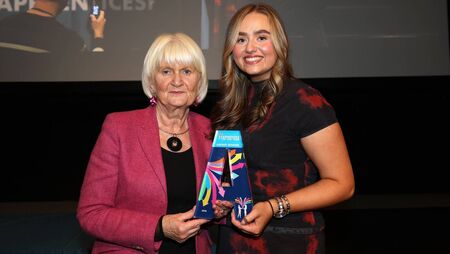
Senator says housing treated as investment commodity rather than public good
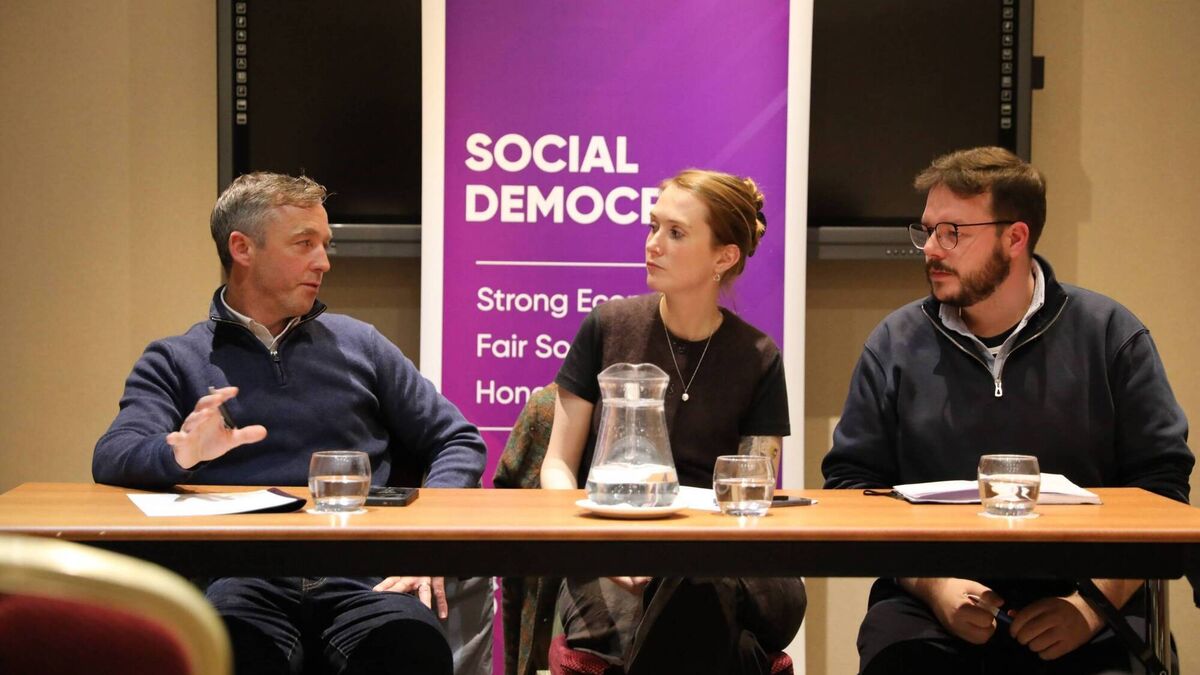
Rory Hearne, Patricia Stephenson and Joe Ryan.
CARLOW senator Patricia Stephenson called the housing crisis an “emergency” and promised attendees to follow up on their individual issues at a public meeting hosted by the Social Democrats.
The ‘Solutions to the Housing Crisis’ meeting, held in the Seven Oaks Hotel on 12 November, was attended by two-dozen locals and students attending nearby colleges.
Alongside the senator were housing spokesperson Rory Hearne, TD for Dublin North-West, and Joe Ryan, who leads the party’s Carlow-Kilkenny branch.
Opening the meeting, Ms Stephenson described the housing situation as an “emergency” and argued successive governments had failed to tackle the crisis. She said housing had increasingly been treated as an investment commodity rather than a public good.
Mr Ryan referred to the housing market as a “hostile environment.” The teacher explained that he had expected to spend the day on a public sector strike over pay before planned industrial action was called off following an agreement between unions and the government.
He spoke about returning to Ireland after living comfortably in China and struggling to establish himself in a housing market that felt increasingly inaccessible. He said many young professionals face difficult choices between investing in qualifications, for him a master's degree in teaching, and saving toward a mortgage.
Housing academic Mr Hearne argued that the roots of the housing crisis stretch back to the 1980s, when local authorities largely stopped directly building social and affordable homes and governments became increasingly reliant on the private market.
“The government have never once said housing prices are too high or asked how can we bring them down,” he said.
He criticised policies such as Help to Buy, arguing that they inflate prices by subsidising demand rather than increasing supply. He also claimed that housing policy has been shaped around maintaining property values rather than reducing costs for renters and buyers.
“The crux of why we're in a crisis is that housing is treated as an investment commodity,” he said.
Mr Hearne stressed that he was not opposed to the private market but believed councils should regain the capacity to directly build homes. He said 30 to 40 per cent of housing delivery should come from the state through local authorities and public bodies.
The discussion quickly turned to student accommodation, with contributions from SETU student representatives who outlined the challenges many students face securing accommodation in the region.
Panel members noted that SETU does not provide its own student housing, meaning students who cannot live at home must compete in the private rental market. Several attendees described long commutes as students are priced out of renting near campus.
Mr Hearne said the student accommodation shortage is placing additional pressure on the wider housing market. He criticised what he described as the lack of government support for universities to build accommodation on land they already own.
“It is the most crazy, illogical policy that I have ever read in my life,” he said, referring to arrangements where land is transferred to private developers before universities rent accommodation back from them.
He proposed alternative models including co-operative and university supported student housing, where students have a stake in developments rather than being entirely dependent on private providers.
The panel agreed that the lack of public transport in the area also aggravates the problem. Ms Stephenson said she has repeatedly brought up in the Seanad that an individual commuting from Carlow to Waterford via train cannot get there before 9am.
She said bus services are “on their knees” and there is no sense of urgency from the government to restore or improve the system. She criticised the fare hikes set for January, which prompted collective agreement from the room.
“The mind boggles,” Mr Ryan said in response.
The panel argued that transport and housing problems are closely linked. Mr Hearne said many students are forced into lengthy commutes because they cannot find affordable accommodation, while poor public transport compounds the problem.
Attendees also expressed concern that the traditional student experience is being lost as growing numbers of students travel long distances to college before immediately returning home. Carlow, they suggested, has been particularly affected as students leave on early evening trains rather than remaining in the town.
Questions were also raised about vacant and derelict properties, with Ms Stephenson praising Carlow Co Council's efforts in tackling dereliction.
She said vacant buildings can have a negative impact on communities and welcomed local initiatives designed to bring properties back into use.
Ms Stephenson encouraged any attendees to speak one-on-one with the panel.