New cycle lane plan for Graigue causes concern
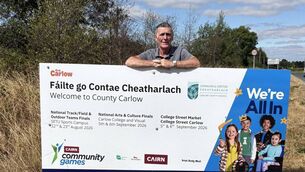
"Nobody wants it," said Graigue resident Seamus Nolan about the proposed cycle lane
THE prospect of another new cycle lane in Carlow, this time on Church Street in Graiguecullen, has gone down like a lead balloon.
“They’re not listening to us ordinary people,” said Graigue resident Seamus Nolan at a public meeting in St Fiacc’s Hall on Friday afternoon, 26 June. “They have smart lads here with all the figures and facts, but nobody wants it,” he continued.
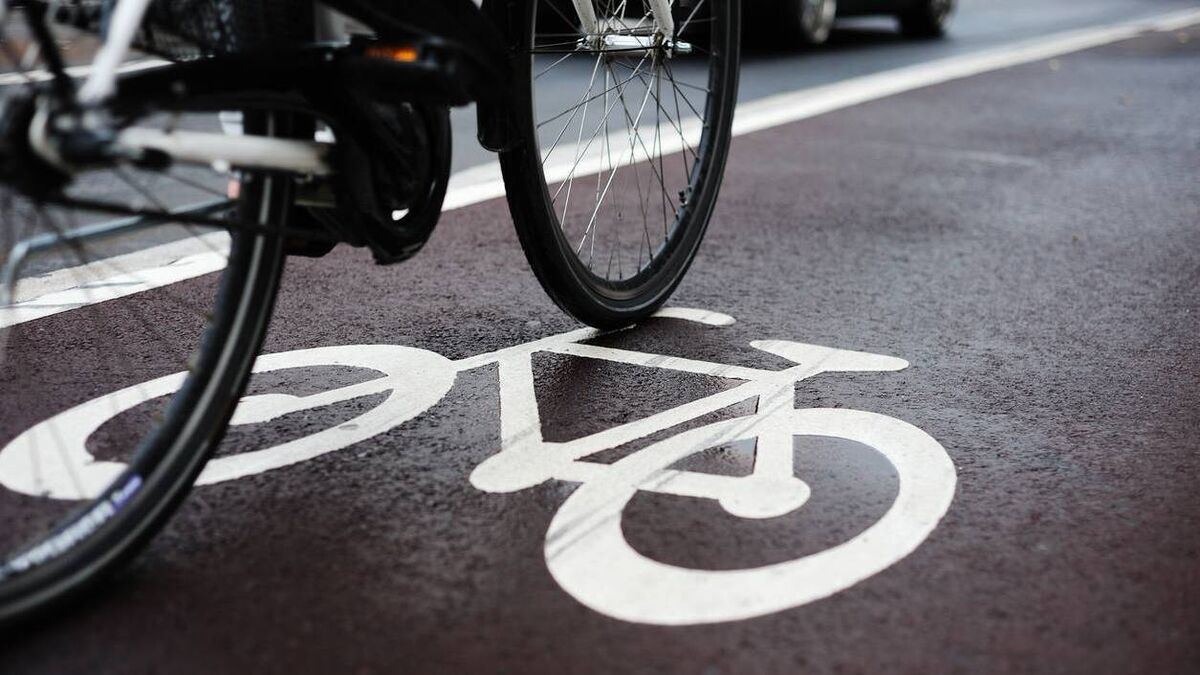
The plans are to install a two-way segregated cycle lane on Church Street, from Barrowvale and Oakley Park, through Croppy Place, to the town park.
Many people said at the meeting that they are not anti-cyclists but that they oppose the scheme in this location. Only 0.7% of traffic surveyed in December last year was cyclists or motorbikes, and residents saw this as evidence that the bike lanes won’t be used when they are installed.
‘If it ain’t broke, don’t fix it,’ was a common refrain.
The cyclical argument that people aren’t cycling because of the lack of infrastructure and that by creating safe cycle lanes people will begin to cycle was not accepted by residents.
“You’re trying to create the conditions to make it easier for people then who, maybe, are currently driving, maybe driving the kids to school because it’s perceived to be too dangerous at the moment to be out on the roads. You’re providing them with a safe alternative and a network for them to get from A to B,” explained Damien O’Tuama, national cycling co-ordinator of the Irish Cycling Campaign.
When asked if he had considered how the scheme would positively impact young people, Seamus replied: “What happens when the young people get older? This is progress, my arse,” he concluded.
“It’s a culture change. It takes a long time for people to get used to it,” said a council representative, who is also a civil engineer.
He pointed out that it took people in the Netherlands 30 years to get used to the cycling infrastructure there. “Change is change; people won’t always like change.”
Local resident and Sinn Féin representative Aaron Kelly said he “strongly opposed” the development. At a previous public meeting attended by around 100 people by his estimation, not one person was in favour of the scheme, he said.
“It’s such an older residential area,” he noted, also pointing out that there have been few serious injuries on the road so far. “Graiguecullen is a very community-based town; people are happy with the way things are.”
Mr Kelly is among the many people concerned about the loss of on-street parking for four homes on Church Street, saying that it will mean elderly residents have to park on the other side of the road or spend money to convert their front lawns into driveways. The council engineer said they were aware of the issue and the council would engage with those affected.
Mr Kelly also argued that it would negatively affect a local coal merchant business on the road, that the scheme is not good value for money and would have a potentially negative impact on the Croppy Graves. He also raised the issue of how traffic avoiding the narrower road might be diverted into residential areas.
“A lot of parents are saying that they still wouldn’t allow kids to cycle in the lane because there’s 25 exits off them,” he said, arguing that the cycle lanes might increase danger on the road.
“The volume of cars that is going to be reduced isn’t going to justify it. In certain areas, there is a need for cycle lanes, but not this area.”
“I’m not anti-cycle lane,” he said, noting that his daughter cycles. But would he use the new cycle lanes himself when they are installed? “Probably not, I’m too lazy,” he replied.
The active travel schemes in Graiguecullen and on Kilkenny Road are classified as ‘road works’ rather than significant planning developments and, therefore, don’t require local councillors to approve them or for official public consultations to take place.
The council engineer said they decided to go ahead with public consultation for the Graiguecullen scheme because several observations had already been submitted.
“Public consultation is considered good practice. It gives people a chance to feed into a report,” said the council engineer.
At the time of publication, 17 observations on the scheme had been submitted through the online portal. The council must take these observations into consideration during the design process, but it is not obliged to halt the scheme because of local objections.
There was no consultation on the Carlow town to SETU cycle lane scheme because there were far fewer observations, the council engineer explained.
“These schemes are not something thought up at 3am in the middle of the night,” said the engineer. He explained that engineers were not at the public meeting “to justify national policy” but instead to rectify misunderstandings about the scheme.
One such misconception is that narrowing roads will cause traffic jams, when, instead, he claimed there would be a “traffic calming effect”.
“Certainly, it will not make the road more dangerous, but overall it will slow people down,” agreed former civil engineer Colm Ryder, who submitted an observation on the scheme on behalf of the Irish Cycling Campaign. He confirmed that the designs for both Church Street and Kilkenny Road complied with national standards.
“Our hands are tied in a lot of ways,” said the council engineer, pointing to the national design manuals for roadways that engineers must comply with, but “I wouldn’t dismiss anyone’s concerns,” he continued.
He also noted a road safety auditor, independent of the council, will go through the full design and make recommendations before it is installed and then check again after construction to make sure all that was done had been done.
“I think we’ve somehow become used to most of our public space just being completely given over to the movement of cars and trucks and so forth, whereas it’s public space. It’s for the public to enjoy. It’s not just for metal boxes to move around,” said Damien O’Tuama of the Irish Cycling Campaign.
“I think we’ve somehow equated public space with just places to park our cars and move our cars.”
In the Netherlands, an example of where cycling infrastructure investment has reaped dividends, it took 30 years for residents to stop objecting to cycle lanes, said the council engineer.
After asked how the Dutch example applies when Ireland is a much hillier and more rural place, the engineer replied: “E-bikes are a game changer.”
He said he expects that bike lanes will be used as much by scooters as by bicycles – and that gardaí will be responsible for enforcing the regulations on those vehicles.
What makes people switch from driving to cycling is “the million-dollar question,” said Mr O’Tuama. “Often what persuades people is that they see their peers doing it.
“It requires political leadership. It can’t just be the council officials who are advancing these schemes. It’s mostly the local councillors who need to stick their heads above the parapet.”
Local councillors have instead turned against the plans and have been urging locals to make submissions to the council. Aaron Kelly and Carlow councillor John Cassin have organised a third public meeting on the proposal tomorrow (Wednesday) at 8pm in Graiguecullen GAA Clubhouse.
“It is an emotional issue,” said cllr Paul Doogue at the meeting last Friday afternoon. “I can understand the frustration if it was going past my house and the concern about how it would affect you when you’re older.”
Despite being cautiously optimistic about the active travel plan, he said: “I have to be supportive of the residents.” He said it was “unfortunate that the councillors won’t have a say in this,” but encouraged people to contribute valid submissions on the plan and to attend the next public meeting.
“Generally, after a little bit of fuss and discontent and online mayhem, people realise that the world didn’t cave in,” said Mr O’Tuama.
The closing date for submissions on the ‘Church Street Pedestrian and Cycle Scheme, Graiguecullen’ is Tuesday 7 July.