Man (39) told gardaí he tried to kill brother with hammer and by slitting his neck
Alison O'Riordan
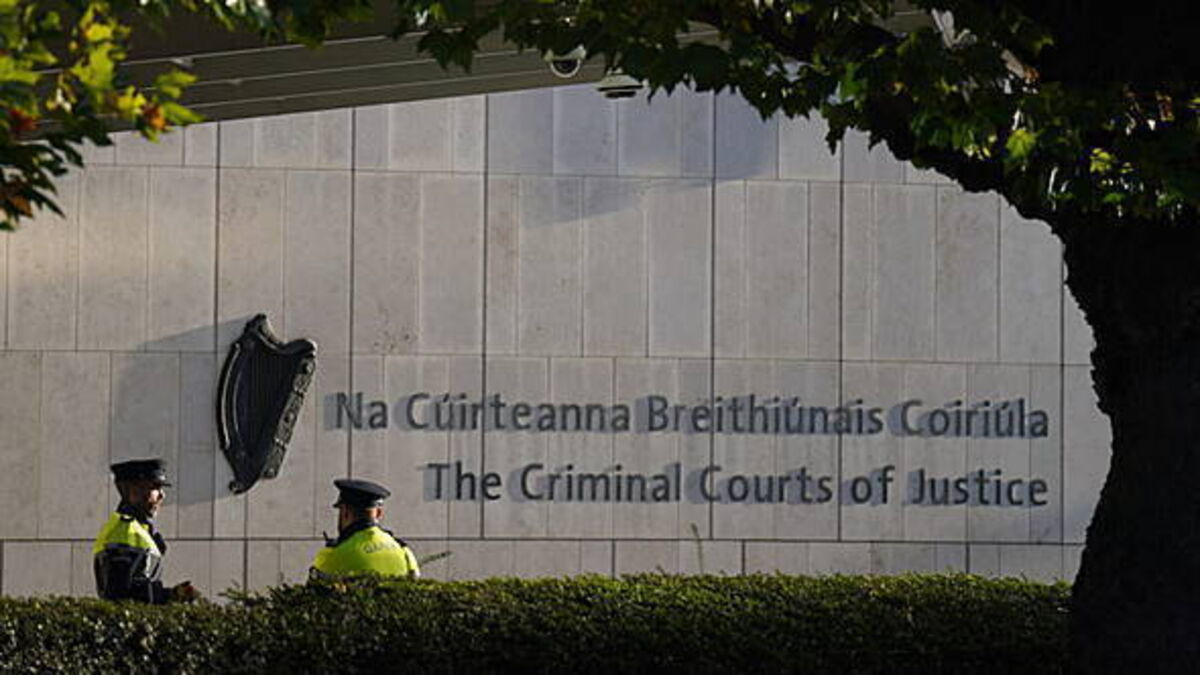
A 39-year-old man, who has pleaded not guilty by reason of insanity to the attempted murder of his vulnerable brother, told gardaí that he tried to kill his sibling with a hammer and by slitting his neck and wrists, a Central Criminal Court jury has heard.
It was during the opening of the trial of Gary O'Shaughnessy today that a prosecuting barrister said that the accused has a long history of mental illness and has been diagnosed with paranoid schizophrenia.
He said the defendant had stopped taking his medication at the time as he didn't think it was helping him.
Gary O'Shaughnessy, with an address at Ailesbury House, Lynn Road, Mullingar, Co Westmeath, is charged with the attempted murder of his brother Mark O'Shaughnessy (42) at the same address between May 15th and 16th, 2024. The brothers were living at Ailesbury House at the time.
He is further charged with intentionally or recklessly causing serious harm to his brother on the same date and at the same location.
O'Shaughnessy has pleaded not guilty by reason of insanity to both charges.
Opening the prosecution’s case on Tuesday, Ronan Kennedy said there is no dispute that the accused attempted to kill and cause serious harm to his brother by stabbing him and striking him on the head with a hammer.
Counsel said the case will centre on the mental state of the accused. He said the accused was diagnosed with paranoid schizophrenia and there is "no dispute this mental disorder was active at the time and inhibiting his mental state of mind".
Counsel told the panel that the law recognises that persons suffering from an acute mental illness should not be found guilty of a criminal offence if they are not able to appreciate what they were doing, or if they did not appreciate what they were doing was wrong or are unable to refrain from committing the act.
He said this gives rise to a special verdict of not guilty by reason of insanity.
The prosecution barrister said that the jury would hear from consultant psychiatrists on behalf of the defence and the prosecution. He said both expert witnesses are essentially in agreement, but there were small nuances in how they had reached their conclusions.
Counsel said both the prosecution and defence will be suggesting that the appropriate verdicts for both counts is not guilty by reason of insanity, but that decision was for the panel to make.
Outlining the facts of the case, Kennedy said the parents of the O'Shaughnessy brothers had passed away within a few months of each other in 2019.
Counsel said the two brothers were living together in the family home in May 2024, with the accused having moved in with Mark just before Covid in early 2020.
He said the jurors would hear evidence that Mark is a vulnerable person and suffers from a condition which causes retinal deterioration. "He is effectively clinically blind and as a result of that is very vulnerable".
Kennedy said the accused started experiencing problems with his mental health around 2011. He said there would be evidence that the accused had a number of psychiatric admissions to St Loman's Hospital in Mullingar, as well as an admission as an involuntary patient under the Mental Health Act 2001. Between these admissions the accused had episodes of care in the community, he added.
"These were characterised by poor attendance, no adherence with treatment and included no adherence with antipsychotic medication prescribed for him on occasion," said the lawyer.
There will also be evidence, Kennedy said, that the accused was not complying with his treatment regime at the time and had stopped taking his medication as he didn't think they helped him.
The defendant was also concerned about the impact the medication was having on his physical health. Counsel said lack of insight is a feature of someone suffering from paranoid schizophrenia.
The barrister said the accused has been receiving treatment in the Central Mental Hospital since November 2025, but continues to experience psychotic symptoms and is treated with psychotic medication.
The court heard that further evidence will be that Mark's carer arrived at Ailesbury House at 5:10pm on May 16th. When she went inside, she noticed a large amount of blood on the floor and walls of the hallway and on the ground floor of the house.
The barrister said the carer saw the accused on a couch in the sitting room with a hammer on the floor beside him. When she asked what the accused had done with Mark, Gary replied: "I've drained the blood out of him, we are evil".
Kennedy said the carer had seen Mark covered in blood on another couch in the living room and it was immediately obvious to her he had been the subject of a violent attack. She left the house and contacted the emergency services and gardaí.
The court will also hear evidence, the lawyer said, that Garda Gareth O'Brien had noted an opened 'Stanley' knife with blood on the handle and blade on a coffee table close to the couch, as well as a hammer. There was another 'Stanley' knife on the floor.
Kennedy said the garda noted that Mark had a large laceration to the neck and blood coming from the head. When Gda O'Brien asked the accused what happened, Gary replied: "He has no blood in him, he is evil".
Counsel said a paramedic would give evidence that Mark had obvious head injuries and a severe laceration down the right ear, across the neck and jugular vein and into the chest.
Kennedy said Mark spent a month in Beaumont Hospital and thereafter seven months in the Midlands Regional Hospital before being discharged.
During his interviews with gardaí, counsel said the accused made admissions that he had used a hammer and knife to try and kill his brother.
The accused also told officers that voices had told him to kill his brother, and it would take "400 belts" with the hammer to kill him, as he and his brother were "cursed".
The defendant further told gardaí that he had hit his brother four or five times with a hammer taken from a toolbox in the kitchen and that he had also slit his brother's neck and wrists, having also slit his own wrist.
Dara Foynes , defending, made 12 formal admissions to the court today on behalf of his client, including that the accused hit his brother a number of times on the head with a hammer found at the scene and stabbed him a number of times with a 'Stanley' knife.
The trial continues tomorrow before Justice Tony Hunt and a jury of seven men and five women.