Groundbreaking archaeological dig could uncover largest Viking structure identified so far in Ireland
Sarah Slater
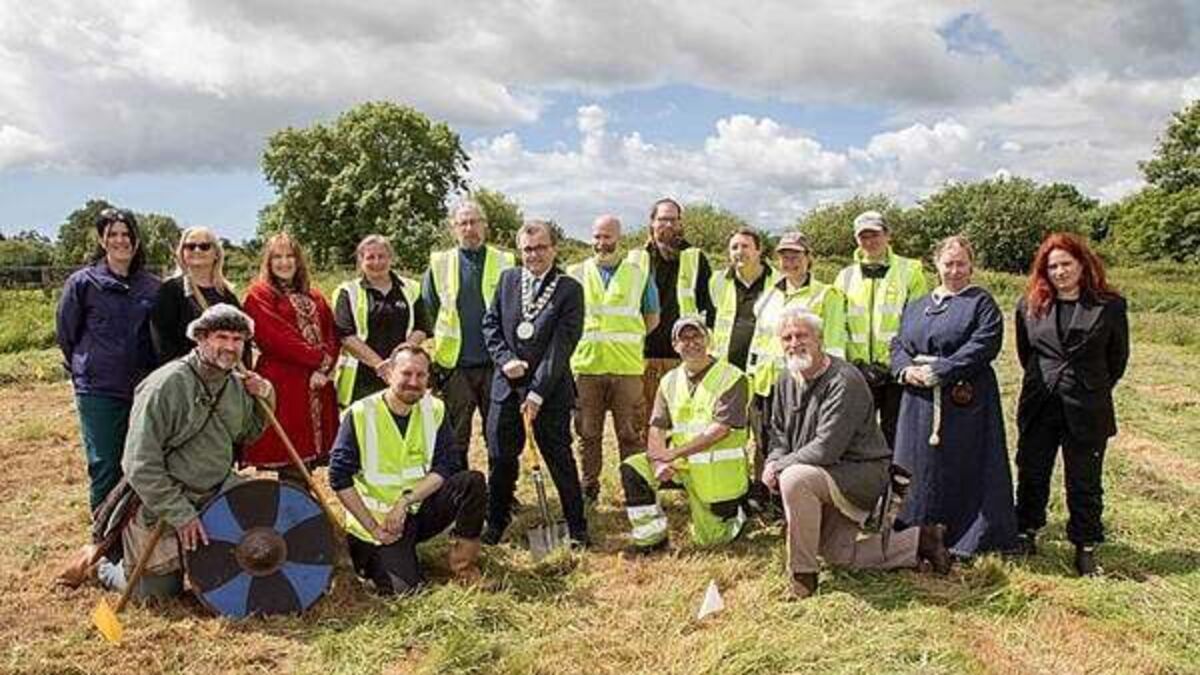
A groundbreaking Co Waterford archaeological dig could uncover the largest Viking structure identified so far in Ireland.
A team of archaeologists from Ireland and Norway are all working together to uncover more of both countries' shared Viking past.
The excavation, which began last Monday and continues until Friday, June 19th, in Woodstown, around 13 kilometres from Waterford city, is focusing on what researchers think are the “foundations of a significant structure at the heart of this Viking-period site” according to Waterford City and County Council.
The Vikings first settled in Ireland in the 9th century, and the Woodstown site was only discovered in 2003, which has had “profound implications on our understanding of the earliest interactions of the earliest phases of Viking interactions in Ireland,” according to the Woodstown Management Conservation Plan.
“The significance of the Woodstown site is clear by virtue of the number of artefacts discovered when just five per cent of the site was excavated,” said Fianna Fáil councillor Damien Geoghan, who was Mayor of Waterford when work was compiled on the excavation work in 2020/2021.
This structure was revealed during the geophysical surveys and is of considerable size.
If confirmed, this may be the largest Viking structure identified so far in Ireland, and may possibly be the remains of a longhouse or hall.
The excavation seeks to better understand this building and its role in the settlement, and to gain insights about how it was built.
In recent years, Woodstown has undergone a series of detailed geophysical and other non-invasive surveys. This work has been guided by an expert steering committee, with the surveys developing as a collaboration between leading geophysicists in Ireland and Norway.
“Together they have combined a variety of approaches to develop a deeper sense of what lies beneath the surface of these quiet fields beside the Suir,” the council continued in a statement.
The combined evidence from these surveys, in addition to the previous excavations, suggest that Woodstown was not just a base for raiding and plundering the surrounding countryside, but “a substantial settlement and, a centre for trade, commerce and industry,” they pointed out.