Garda murderer claims psychiatric evidence contradicted legal test for insanity
Eoin Reynolds
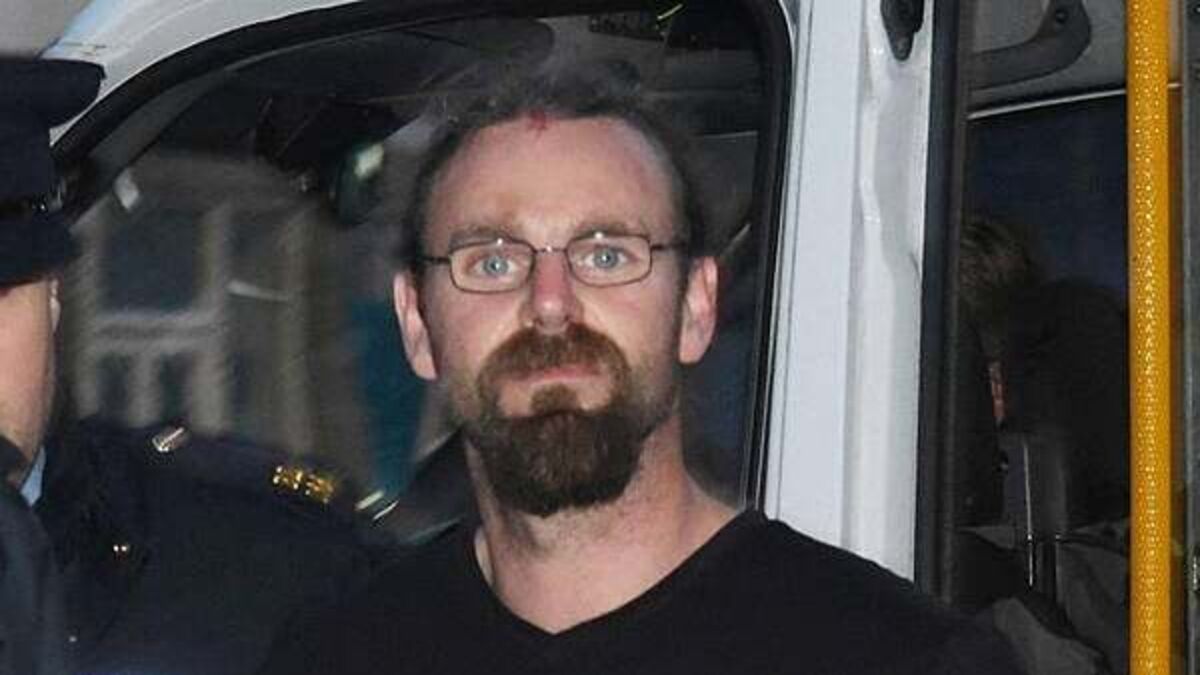
Stephen Silver, who shot and murdered Garda Colm Horkan after taking the garda's own gun from its holster, has appealed his conviction, claiming that the State's psychiatric evidence contradicted the legal test for insanity.
Silver's lawyers had argued at his trial that his responsibility for the killing was substantially diminished by his mental illness and that he therefore qualified for a manslaughter verdict under the Criminal Law (Insanity) Act 2006. They relied on the evidence of consultant psychiatrist Dr Brenda Wright, who said that Silver was suffering a relapse of bipolar disorder, which contributed significantly to his actions when shooting the acting detective.
Professor Harry Kennedy, who was called by the prosecution, disagreed with Dr Wright. He said Silver showed a functioning mental capacity by carrying out purposeful actions with specific intent. The professor cited as evidence of his functioning mental capacity, Silver's ability to take control of the gun, pull the trigger, stand back from Gda Horkan and, supporting the gun in both hands, pointing and aiming at his victim's trunk.
Prof Kennedy said the capacity to form an intent can be inferred from purposeful actions where a person does "one thing after another, after another".
At Thursday's appeal hearing, Dominic McGinn SC, for Silver, said Professor Kennedy's evidence contradicted the legal test for insanity under the Act.
To get to a point where a jury can consider diminished responsibility, Mr McGinn they must be satisfied that the accused intended to kill or cause serious injury.
Therefore, counsel said, the law recognises that an ability to form an intent does not exclude the possibility that a person has a mental illness and qualifies for a manslaughter verdict due to diminished responsibility.
Mr McGinn said the trial judge should have told the jury that an ability to form an intent does not exclude a defence under the 2006 Act.
Michael Delaney SC, for the Director of Public Prosecutions, replied, saying Professor Kennedy never suggested that purposeful actions could not coexist with insanity or diminished responsibility. Counsel said the professor had simply said that it was "one thing to look at" when assessing mental capacity.
Mr Delaney said the trial judge's charge had been "entirely appropriate" in that she told the jury to consider the expert evidence in the context of all the evidence. Counsel said the jury understood that they were not engaged in a "trial by expert" and were required to consider everything they had heard, including Silver's own testimony.
Mr Justice John Edwards, presiding with Mr Justice Patrick McCarthy and Ms Justice Isobel Kennedy, reserved judgment.