Explained: How to search through Census 1926 records
Eva Osborne
The National Archives officially released Census 1926 records at midnight, after the expiry of the 100-year limitation on their publication.
It is freely available and searchable on www.nationalarchives.ie following three years of work on more than 750,000 individual household and enumerator returns.
The 1926 Census was the first census carried out in the Irish Free State.
Search the 1926 Census
First names, surnames, counties, townlands/streets, and District Electoral Divisions can be used to search through the records.
You can also search using the map (see below). It gives geographical insights into your Census 1926 search and covers the 26 counties that were included in the census.

The National Archives said most people will find their relatives quickly and easily in the 1926 Census.
"The majority of names, households and addresses appear exactly as expected, and the search tools are designed to help you get started straight away," it said.
"A small number of cases may require a little more detective work, but for most users the first steps of the search will be simple and rewarding."
To help with trickier searches, the National Archives developed a list of tips and tricks to ensure you get the information you are after.
These include:
- Try different spellings: Names were written in many ways. Try alternative spellings or use a wildcard ()* to replace part of a name;
- Use wildcards to widen searches: Searching Mac* will return MacCarthy, MacMahon, MacAuley and similar names. Searching O’R* will return O’Reilly, O’Rourke, O’Riordan and more;
- Check O' and Mc/Mac names: Try all versions: O’Riley, ORiley, O Riley, McCormick, MacCormick, Mc Cormick;
- Try the Irish version of the name: Some forms were completed in Irish. Michael may appear as Micheál, Mary as Máire, John as Seán;
- Search with or without fadas: The system recognises both. Sean and Seán return the same results;
- Look for other family members: If you can’t find one person, try searching for a sibling or spouse;
- Search by place: If you know the townland or street, browse the households listed there instead of relying on name search;
- Expect older or phonetic spellings: Irish and English spellings varied in 1926. Names were written as they sounded.
Finding people in institutions
Large institutions such as industrial schools, hospitals, barracks, asylums, and workhouses often appear in the census as long, continuous lists of residents, the National Archives said.
"Because of their size and the way they were recorded, searching for someone in an institution can work a little differently from searching for a private household.
"The most effective approach is usually to search by place rather than by name. Institutions are listed under the name of the head of household — for example a superintendent, matron, brother or officer — rather than under the names of the residents themselves.
"Once you locate the institution through its townland or street, you can scroll through the full sequence of forms to view everyone living there on census night."
Search the Census 1926 here.
More about Census 1926 - The first Irish Free State census
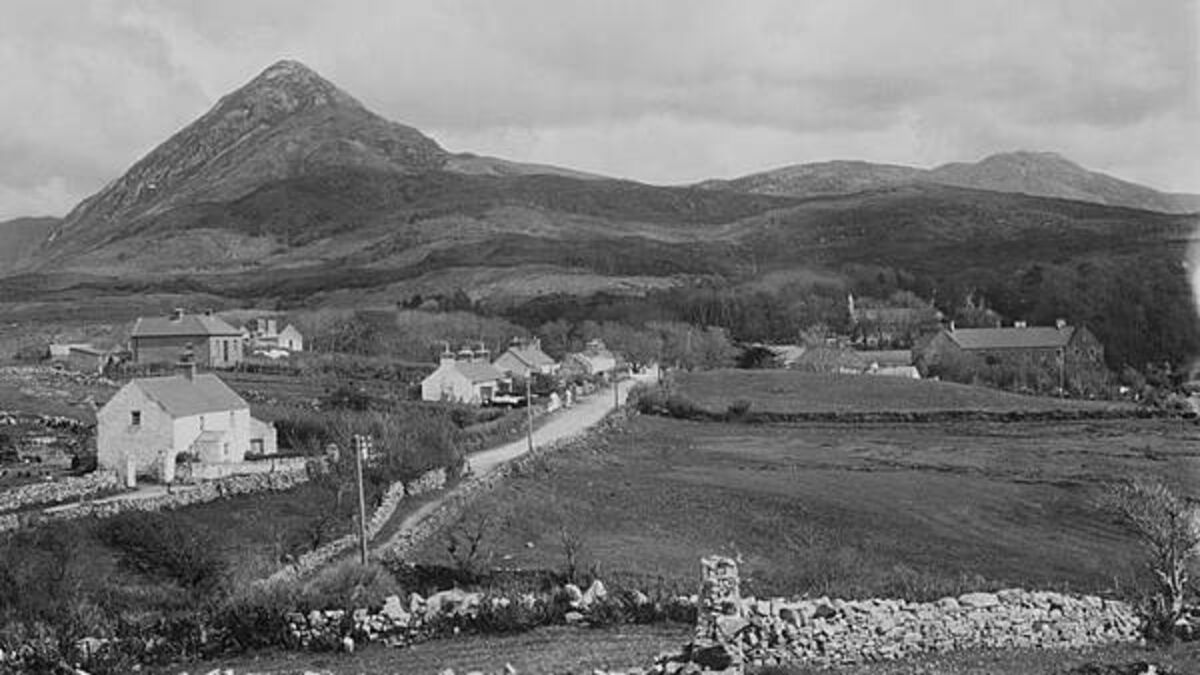
Census 1926 holds a unique place in history as it was the first census conducted after the establishment of the Irish Free State.
Taken on April 18th, 1926, it provides a detailed snapshot of life in Ireland during that period, the National Archives said.
The 1926 Census recorded a population of 2,971,992, a decrease of 5.3 per cent from the 1911 census.
Census 1926 is stored in 1,299 boxes, containing over 700,000 return sheets. The returns are laced together in 2,494 canvas volumes each representing an enumeration area within each of the 26 counties.
Census 1926 is made up of 21 data sets listed in Household Returns (A Form) and Enumerator Returns (B Form).