Dundon McCarthy gang associate who fatally shot Noel Campion is jailed
Alison O'Riordan
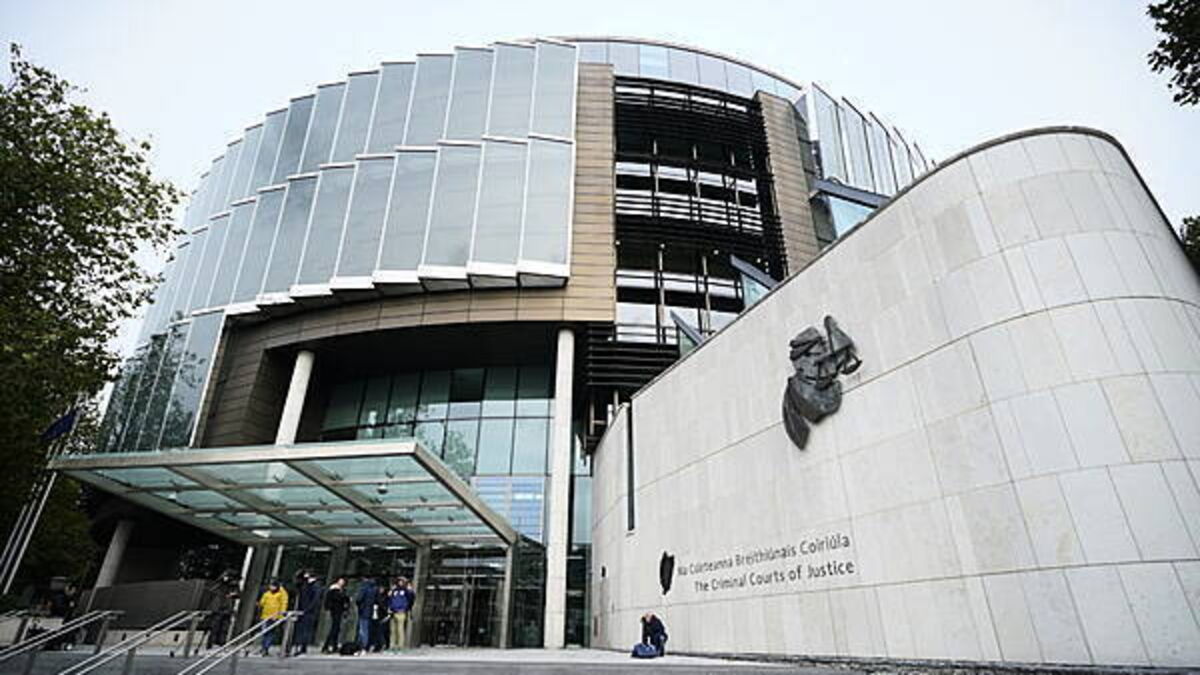
An associate of the Dundon McCarthy gang who fatally shot Noel Campion 19 years ago "in cold blood" and was later deported back to Ireland, having told multiple people in the US - including a police officer - that he had killed a man, has been jailed for 15 years by the Central Criminal Court.
The court heard during last month's sentence hearing for 42-year-old Darragh Quinlivan that he later characterised what he had said as "sh**e talk" and sarcasm.
Campion was shot dead as he was riding as a back passenger on a motorbike at Thomondgate in Limerick City - close to St Munchin's Church.
Sentencing Quinlivan at the Central Criminal Court on Monday, Justice Paul McDermott said he was satisfied the case fell into the "most serious category" and that the offence was part of a plan to kill an individual "in cold blood".
He said it was clear from the evidence that Quinlivan was the gunman who had killed Campion and he had also attempted to kill the man driving the motorbike that day.
The judge said Quinlivan had hid himself from view in a phone booth and "ambushed" the men "virtually at point blank range". He remarked that Campion had clearly been shot to advance the interests of the Dundon McCarthy gang.
Justice McDermott called the shooting "callous and brutal", where the defendant had opened fire on a public street during the mid-morning when there was heavy traffic and without regard for the public's safety.
The judge noted that he had received a considerable number of statements from those who have been greatly affected by Campion's killing.
He added: "They set out very eloquently and in great detail the terrible devastation brought upon the family following the loss of a husband, father, uncle, and friend in these appalling circumstances. It is a life-long endurance that the family are subjected to as a result of this shooting".
Justice McDermott pointed out that the devastation and heartbreak caused by Quinlivan's actions were obvious. However, the judge said this was put into "stark reality" when the "very detailed and raw" victim impact statements were presented to the court.
He described the statements as very moving and said they encapsulated the continuing grief and sorrow experienced by the family, which he said will continue into the future.
The judge said careful planning was involved in the killing including the procurement of the firearm. He said the disposal of the weapon required considerable effort and application.
Quinlivan had originally been charged with the murder of Campion (35) on the northside of Limerick city on April 26th, 2007.
However, when arraigned before the court in January, Quinlivan, originally from Limerick City but with an address at Ranswell Close, Bolton, Manchester in the UK, pleaded guilty to possession of a firearm with intent to endanger life at or about the junction of High Road and Thomondgate in Limerick.
He has also pleaded guilty that on the same occasion with the purpose of enhancing the ability of a criminal organisation, being the Dundon McCarthy organised criminal group, to commit a serious offence in the State, to wit the murder of Campion, did knowingly participate in the activity of that criminal organisation by shooting dead the said Campion.
Prosecution counsel, Dean Kelly , previously told the court that Quinlivan was not pleading guilty to the offence of murder.
Before passing sentence on Monday, Justice McDermott said the maximum sentence for unlawful possession of the firearm was life in prison.
He said the offence of participating in the activity of a criminal organisation had a maximum sentence of five years at the time but was subsequently increased, which he said was of no relevance to the case.
The judge said Quinlivan was observed in the aftermath of the killing drinking and behaving in a celebratory mood with seven other members of the McCarthy-Dundon gang. He said gardai believed that the shooting was directed from the top of the McCarthy-Dundon gang.
Quinlivan, he said, had applied for a passport five days after the shooting. The defendant had also appeared at Nenagh District Court on May 2nd, 2007, for taking a car and gave evidence that he hoped to leave Ireland within two weeks because of his involvement in the feud between the Keane-Collopy and the McCarthy-Dundon gangs.
The court has heard that the defendant left Ireland on June 6th, 2007, with his passport obtained in the days after the shooting. Quinlivan travelled to Tacoma in Washington State, where he lived and worked for the next six months.
In the early hours of January 13th, 2008, local police were called to a domestic incident in a house, where the defendant and his uncle had a significant argument which strayed into violence.
One of the officers arrested Quinlivan and observed he was so drunk that when he was travelling to the police station he had trouble talking and walking.
The policeman said Quinlivan told him: "You know why I'm here, I killed a man in Ireland" and then named the man as being 'Noel'.
The judge said today that Quinlivan was deported back to Ireland in March 2008 and that he had been 24 years of age at the time of the shooting.
Justice McDermott said he had received substantial documentation that the defendant had made significant efforts to move away from his criminal behaviour and that how Quinlivan is now is "completely at odds with his character" in 2007.
Quinlivan has 24 previous convictions, including those for robbery with a firearm and the unauthorised taking of a MPV.
Justice McDermott set the headline sentence for the charge of possession of a firearm with intent to endanger life at 22 years but took into account mitigating factors, including his guilty plea and that he had developed "a totally different lifestyle" since 2012.
He said Quinlivan had also expressed regret but this provided little solace for those left behind.
The judge reduced the 22 year sentence to 16 years when taking mitigation into account. He further suspended the last 12 months of that sentence for a period of two years on various conditions.
He was also sentenced to four years imprisonment on the count of participating in the activity of a criminal organisation. The man's sentences are to run concurrently.