Carlow history talk on P&T hears of postmaster’s hanging
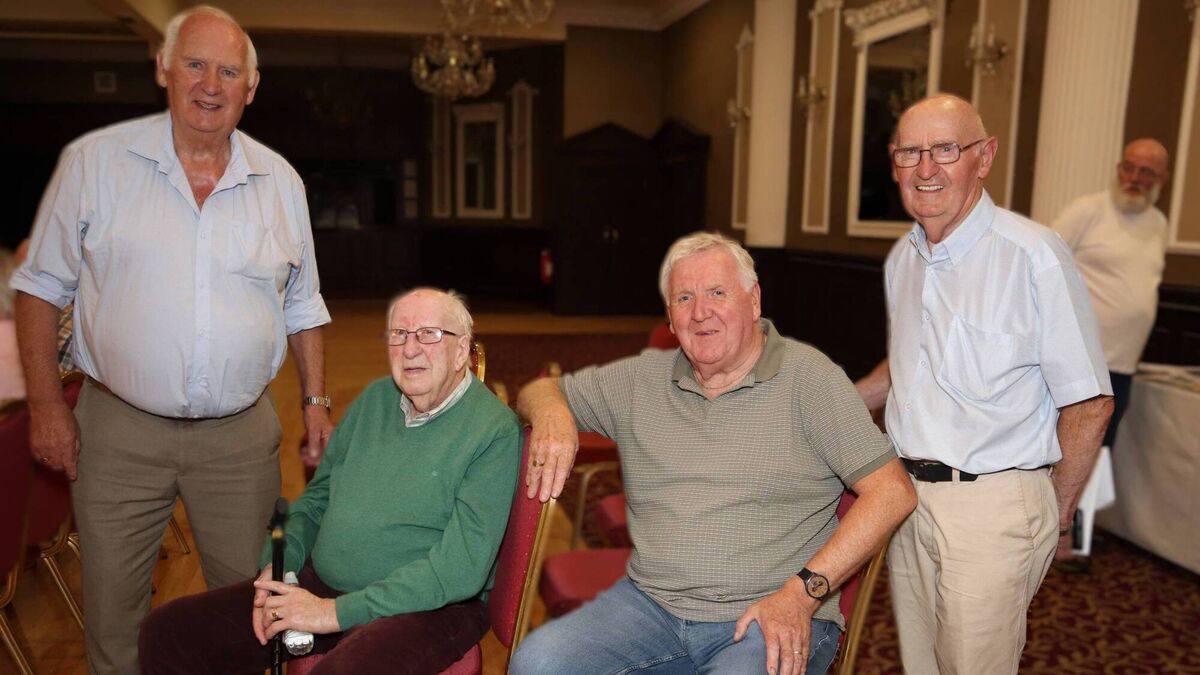
Robin James, Michel Farrell, Ed Ryan and Michael Lakes at the CHAS talk on the P&T in the Seven Oaks Hotel, Carlow
A LARGE crowd turned up at the Seven Oaks Hotel, Carlow for a presentation by Carlow Historical and Archaeological Society (CHAS) on the history of the Department of Post and Telegraphs (P&T) in the county as part of heritage week.
The presentation was delivered by the society's public relations officer Paul Curran, who has a personal connection to the P&T through his father.
"My father worked as a storeman in the P&T so there would have been photos around the house and whatnot of the time my father was there. Now, he passed away in 1972 but the purpose of these talks is to remember local people, not just my people but everyone's," Paul explained.
During the presentation, Paul mainly covered the period from 1922, when Ireland gained its independence, until 1984, when the P&T split into An Post as we know it today and Telecom Éireann, which later became Eircom and now Eir.
There were 40 rural post offices across the county during that time, all of which were covered in the presentation while Paul also looked into the engineering section of the P&T, which was responsible for the installation of telegraph poles.
During his research, Paul got in contact with former Carlow postmaster Jim Downey, who began in the role in 1963 before retiring in 1995. Jim, who attended the talk with his son, was able to shed some light on what it was like to work in the post office at the time.
On top of its more recent history, Paul uncovered an interesting story from Carlow Post Office in 1800.
"The postmaster at the time was a man called Wallace and back then it was more of a voluntary set-up, but he was basically embezzling money that was put in envelopes for wages and so on and eventually the main department in Dublin copped on," says Paul.
"They managed to trace the money back to Wallace and he was tried in Deighton Hall, where the court was, before being hanged in Barrack Street," he added.
Different times …