From Aughanure to Croke Park – Tracking Carlow’s Unsung hurling hero
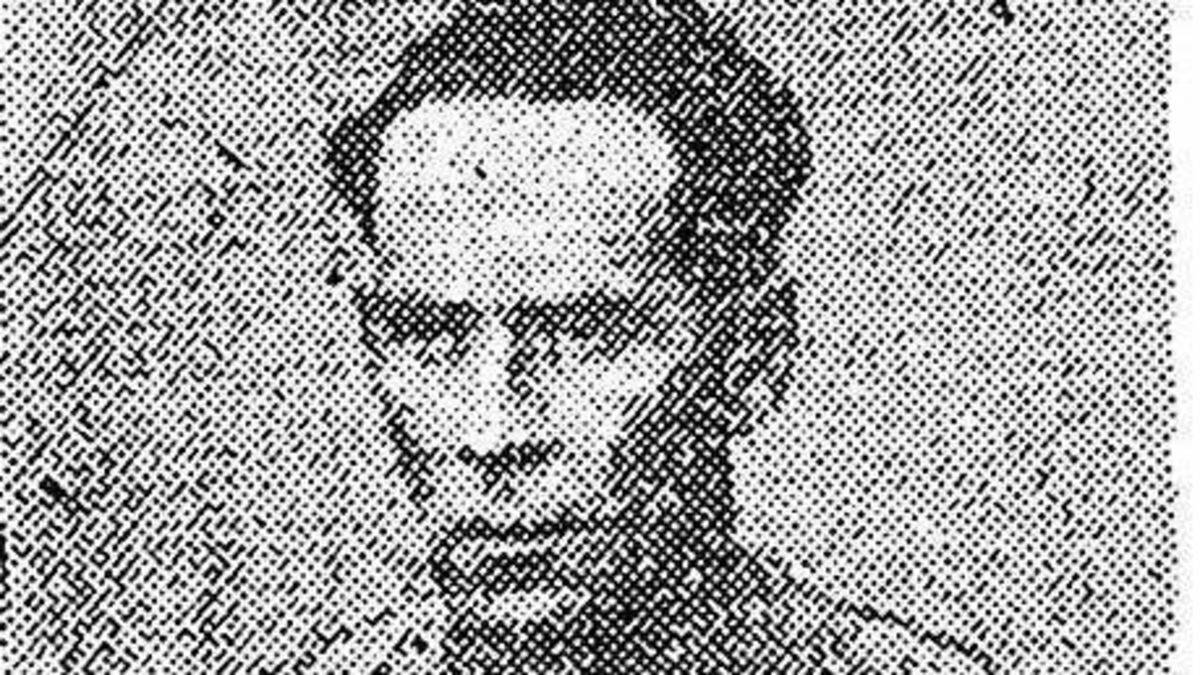
Joe Culleton 1935
Who was the first Carlow born man to play in an All-Ireland senior hurling final? Up until this time last year I was full sure it was Mick Morrissey, a native of Ballycrinnegan, St Mullins, who with his adopted Wexford won three coveted Celtic Crosses in 1955, 1956 and ’60.
Yes, I was aware of the story that in the 1949 All-Ireland final the two captains, Pat Stakelum of victorious Tipperary and Laois skipper Paddy Ruschitzko were ‘from’ Bagenalstown and had hurled together in school there. ‘Rusty’, as Ruschitzko was affectionately known, was born in New York on April 27, 1917, the son of Polish emigrant father Francis and an Irish mother, Mary Ellen Foley, who upon the death of her husband when Paddy was just three or four returned to Ireland and settled in her native Bagenalstown.
It is claimed that a school mate of his in Bagenalstown was Pat Stakelum, who rose to hurling fame with Holycross and Tipperary. Is this an Urban Myth or did the Stakelum’s live for a while in ‘Muinebeag’?
We do know that Paddy and Nora Stakelum brought 11 children into the world on their farm in Ballinahow in the parish of Ballycahill, Co Tipperary, including Pat on May 6, 1927.
So whether or not the men who shook hands and called the toss on the first Sunday of September 1949 had gone to school together in Bagenalstown, neither were born in the little Carlow town.
So Mick Morrissey it is then? No!
And by way of revealing our research on who was the first Carlow born finalists we will maintain this column’s tradition the week after the All-Ireland hurling final and tell our tale in diary fashion…
Census Night 1901 and in a small house in Aghanure, Painestown, Co Carlow lived John and Johanna Culleton and their seven sons and two daughters. The father, aged 38, was a Groomsman (we presume for Bruen’s in the nearby Oak Park Estate) and both he and his wife gave their birthplace as Co Kilkenny.
A couple of the older children are pencilled in as Kilkenny born, the third arrived into the world Wicklow, the rest, including three-year old Joseph were Carlow born, most likely in Aghanure itself, Aghanure being where nowadays Cahill Kitchens is situated.
The Census Night sees John and Johanna filling in the form in Cappagh in Co Kilkenny. John is now listed as coachman and as Cappagh in the Parish of Inistioge his duties are probably in the nearby Woodstock Estate. Five of the Culleton children are still living with them including the now 13-year -old Joseph.
The first Census conducted by the Irish Free State and by then John and Johanna were living alone in Kilferagh on the outskirts of Kilkenny city. John, now 65, is listed as a groomsman but of added value is that in this census people are not just asked for their county of birth but the town or townland as well.
John’s, interestingly, is Threecastles, Co Kilkenny, a village in the parish of Freshford who were very prominent in hurling circles in the early days of the GAA, winning a couple of county SHC titles in 1898 and 1903. There is no evidence to suggest that John hurled but he was certainly born in ‘hurling country.
All the Culleton children have ‘flown the coop’ and we track down Joseph to the Abbeyleix Road, Portlaoise, Co Laois where is located the Military Barracks and the 26 year old is a Private in the Defence Forces. Significantly, his place of birth is listed as Bagenalstown, Co Carlow.
James Stephens, the Kilkenny city club, play Mooncoin in a ‘Drug Walsh’ benefit tournament in Waterford Sportsfield (now Walsh Park) and though beaten the 1924 junior champions had, as their club history stated, joined the artistocrats of hurling.
The same history also explains that having won the junior with men drawn mostly from the Patrick Street area the club decided to widen their pick and “the army contact maintained by Martin Cassidy (Company Captain 20th Battalion) paid dividends as the club enlisted several players stationed in Kilkenny.” One of those players was Joe Culleton.
A city derby Kilkenny SHC semi-final clash in St James Park ended in a shock victory for ‘The Village’ over reigning champions Dicksboro. Joe Culleton was to the fore in goal. Joe while hurling with James Stephens acquired the nick-name ‘Bony’.
Joe Culleton was guarding the net in St James Park again the following Sunday, this time in the black and amber of Kilkenny, effecting a fine save in a low scoring National Hurling League victory over Offaly. It was to be his only game with Kilkenny.
The delayed 1927 Kilkenny SHC final took place in St James Park, the first of four-game marathon, ‘The Village’ denied the first day by a disputed goal while an objection and an abandonment brought it to match four where Mooncoin prevailed.
Joe Culleton played, and played well, the first day but does not appear in subsequent re-fixtures though his brother Dick does. Joe’s ‘disappearance’ is explained by the fact the entire 20th Battalion were transferred to Dublin where they became the 7th Battalion.
“A grand striker, Joe shows wonderful judgement under dropping balls” stated a preview of the Dublin SHC final in Croke Park where Culleton’s Army Metro beat Garda in a strong contest with the hurler of wonderful judgement “instrumental” in the club’s historic county final success.
O’Moore Park, Portlaoise, just a short walk down the Abbeyleix Road from where Joe Culleton carried out his Army duties in 1926 was, seven years later, the scene of him donning a different uniform, this time the sky blue jersey of Dublin, lining out at left corner back in narrow Leinster Senior Hurling Championship semi-final victory over Offaly, the first of 23 competitive appearances – 6 championship and 14 league – with the Metropolitan’s flagship hurlers.
Culleton was corner-back again in the Leinster final defeat to Kilkenny in Wexford Park.
Joe makes his National Hurling League debut, left corner back in a first round victory over Cork in Croke Park when the Dublin net is guarded by his Army Metro club colleague, Tipperary man Christy Forde.
Joe Culleton is back in Kilkenny and back in goal too, this time for a one-point victory over the the All-Ireland champion Cats, in Nowlan Park, his Army Metro club colleague Martin Power playing for the home side and locating Joe’s net from a free.
Dublin travel to the Limerick Gaelic Grounds to play the Munster county in the National Hurling League final, the Dubs having followed up those Cork and Kilkenny’s wins with another win over Waterford in Croke Park and a draw with Laois in Portlaoise, Culleton corner-back in both games. Joe, though, did not play that final and for a very sad reason, the death of his wife.
While Dublin won the Leinster SHC with a Provincial final replay victory over Kilkenny, having beaten Meath in the semi-final, the recently bereaved Joe didn’t play in any of those games. But he was named in the Dublin panel to play Limerick in the GAA’s Golden Jubilee All-Ireland final.
His pen-pic before the game, written by respected hurling correspondent Seamus O’Ceallaigh, reading “is the only Kilkennyman on the selection and is a sound left back, whose ingenuity in catching and fielding long balls is amazing and invariably turns defence into attack.”
After the final, which ended in a draw, we learn “Daniels {Dublin mid-fielder} was injured and his place was taken by Culleton.” And in the stroke of that pen we have proof that a man born in Bagenalstown, Co Carlow in 1898 saw action in an All-Ireland senior hurling final. Not only saw action but played well too, mentioned in dispatches as “proving a secure defender.”
In the Croke Park replay Joe Culleton joined the rare ranks of men who have played in an All-Ireland hurling final out the field and in goal. Named again as a sub we learn a Micky Cross drive was rolling towards Forde in the Dublin goal when three Limerick forwards, Mick Mackey among them rushed man, ball and all into the net for the levelling goal leaving Forde injured and unable to continue. He is replaced by Joe Culleton.
One report tells us “the sands of time were running low and only minutes remained when a hard shot by O’Connell was saved by Culleton,” Another states “Culleton in the Dublin goal was giving a magnificent display as the Limerick men pounded in lightening shots,” while yet another account enthused “Sgt J Culleton gave a masterly display between the sticks.”
Limerick, though, eventually raised a late green flag to clinch a 5-2 to 2-6 victory and deny Carlow it’s claims to a first Celtic Cross.
However Joe Culleton had written himself into the record books as the first Carlow born man to play in an All-Ireland senior final, albeit that that fact was never really written into the county’s GAA history … until now!
Our ‘tip-off’ as to Joe Culleton’s origins came in an 1955 ‘Gaelic Echo’ and 71 years we are glad to shed light on an unsung hero.