We must find a way to support small outlets in Co Carlow
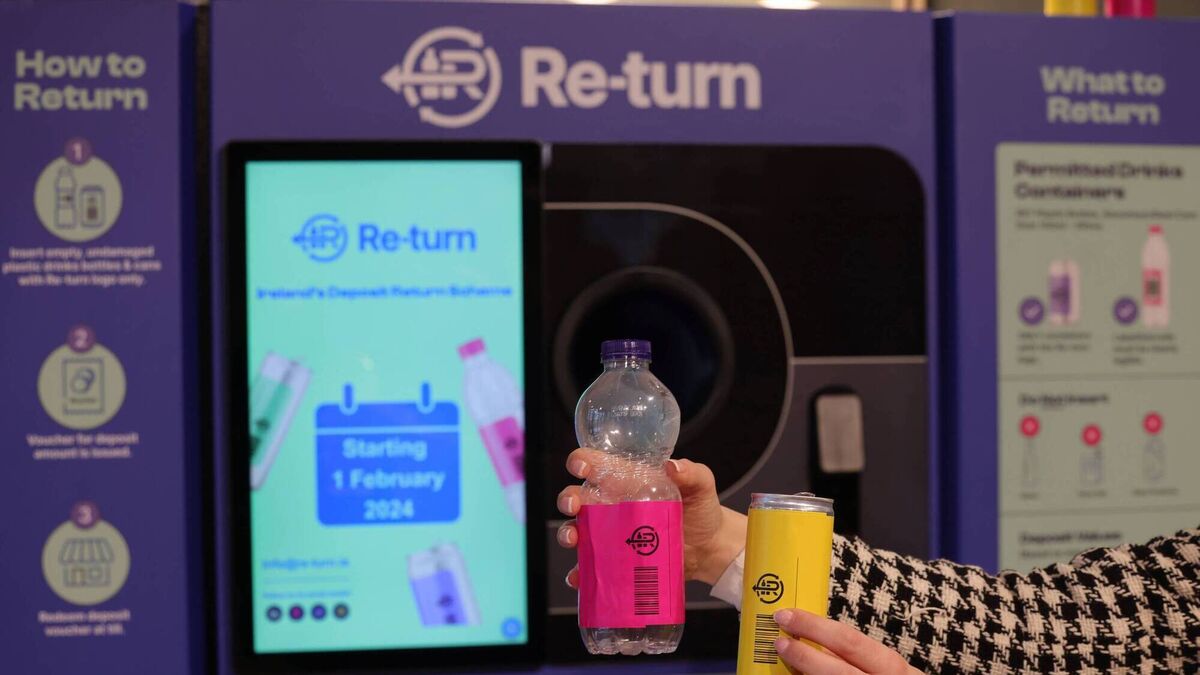
Small retailers say the Re-turn cans/bottles scheme is actually costing them money Photo: Alan Betson/The Irish Times
ONCE upon a time, there was a ‘corner shop’ on practically every street in any town or village in the country. Today, they are like hen’s teeth – so, if their owners say the Re-turn cans/bottles scheme is a source of angst for them and is actually costing money, we should listen.
Whenever possible, I try to use the small, independent shop. Yes, there are many items which can be purchased in a multiple for less, but at the end of the day, these shops have served us well and need to be protected.
I spend a lot of the time on the road and whenever I opt to use the old roads network instead of the motorway, I come across many villages where the heart has been torn out of them – not a shop in sight. There may be a supermarket in a nearby town or even a roadside service station, but there is nothing in the village itself.
We have to be careful that the same thing doesn’t happen to the ‘corner shop’ as happened to rural post offices. Remember, not everyone has a means of transport and these businesses may be the only place where they get to spend a few minutes talking to another human being, where the shop assistant actually wants to engage with you instead of standing in the same spot and shouting ‘next’ as people move along like sheep to pay for their goods.
At the same time, I have to say that, personally, I was a bit sceptical when the Re-turn scheme was first introduced. The thoughts of having to collect empty bottles and cans and bring them to a shop, feed them into a machine and then get a receipt to retrieve their value from the store just did my head in.
Having to pay a supplement to purchase a six- or 12-pack of water wasn’t an issue, but I dreaded having to queue and in the early days whenever I went to the trouble of returning bottles and cans, invariably I found an ‘Out of Order’ sign. Then I had to go to the bother of exiting the premises and dragging the bottles back to the car.
Take it as read that at that stage the humour was far from good. One day, I was so frustrated when I discovered the ‘Out of Order’ sign that I went about exiting the premises through the ‘Entry Only’ door. Immediately, the alarm went off and a nearby employee, who had managed to avoid eye contact in case I asked an awkward question, suddenly had no problem remonstrating with me for setting off the alarm.
I took a deep breath and counted to ten before answering him – but he obviously knew from my body language that discretion was the best course of action for him – and I continued to my car with a trolley full of empty bottles.
But like all schemes, the system is working much better now and an added bonus is the ‘saving scheme’ element. I am a devil for allowing the number of bottles to build up before bringing them to a machine.
The last time I went – Thursday of last week – I had one can and over 120 empty bottles and it was only half the amount I had stored at home before being issued with strict orders to get rid of them.
Thankfully, there was no-one in front of me when I went to the supermarket and, thankfully, the machine didn’t play silly buggers with me. The conveyor belt played nice and not one of the bottles was rejected. In the end I got a receipt for over €20, which I later deposited into a savings scheme card.
When the scheme was first introduced, I used to use the receipt to pay for some of the shopping, but there were times when I forgot or lost the receipt. Then, a store manager told me his colleagues saved all their receipts in an in-house savings card and before long they had enough money in it to cover the cost of having a get-together.
That sounded like a plan, which I quickly adopted, and last Christmas I was able to offset a sizeable portion of the festive shopping. I know it was my own money I was using, but I have to say I left the supermarket that day with a wide smile on my face and felt chuffed with myself considering all the extras I persuaded myself I had got for nothing.
That is all well and good, but it doesn’t solve the problem for the small retailer, who has invested heavily in recycling machines, which must be cleaned and maintained.
They say the problem is very simple: it is costing them money. After all, they get the same money per bottle or can as the large multinational. People might argue with them about that, but any machine must be maintained, and if you are a family-run business, you already have enough on your plate without having something else to worry about.
A two-tier reward scheme that pays more to smaller retailers, as already in operation in the UK and Northern Ireland, seems a more sensible approach. I know a €2,000 per site support fee was introduced earlier this year, but that was for sites that process between 250,000 and 500,000 bottles and cans a year.
Sounds great, but I don’t know of any small shop which could manage those numbers in any given year, yet they are expected to pay the same electricity and maintenance costs as the larger stores that can more easily absorb such costs.
Let’s get the thinking caps on and come up with a way to support these small outlets before even more of them decide to call it a day and shut shop forever.