Solar eclipse in Carlow today: What time it starts and how to watch safely
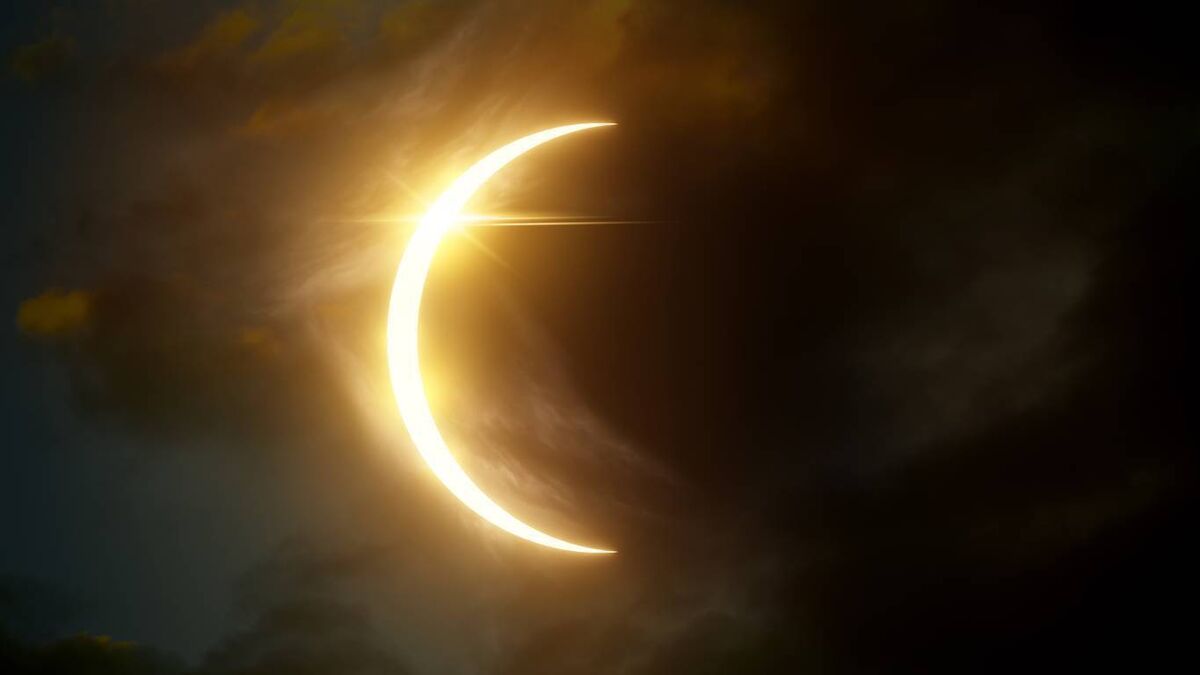
The moon about to pass in front of the sun creating a solar eclipse. Photo composition from iStock
CARLOW stargazers will be treated to one of the most impressive solar eclipses visible from Ireland in decades this evening, Wednesday 12 August.
A deep partial solar eclipse will take place over the county from shortly after 6pm, with the moon passing across almost the entire diameter of the sun.
An exclusive simulation shared with by well-known science correspondent Leo Enright shows how the eclipse is expected to appear from the top of Mount Leinster at its peak.
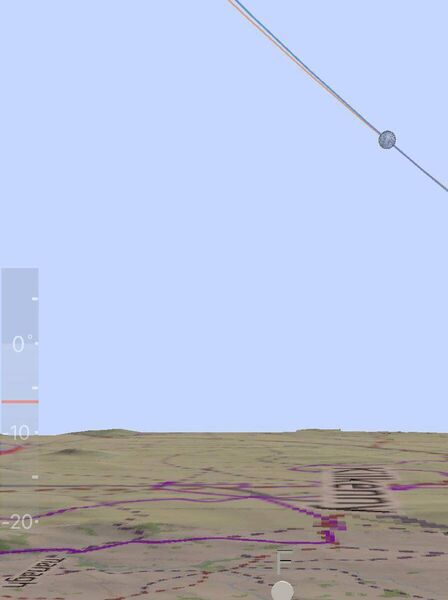
In Carlow, the eclipse will begin at approximately 6.13pm, when the Moon first begins to move across the Sun. It will reach its maximum at 7.11pm before ending at around 8.06pm, meaning the entire event will last for approximately one hour and 53 minutes.
At its maximum in Carlow, the eclipse will have a magnitude of 0.952, meaning approximately 95% of the sun will be covered by the moon.
While it will appear as a partial eclipse from Ireland, Wednesday’s event is a total solar eclipse along a narrow path crossing parts of Greenland, Iceland and northern Spain. Ireland lies outside this path of totality but will still experience a particularly deep partial eclipse.
The Royal Observatory Greenwich says it is the best solar eclipse visible from Ireland and Britain since 1999, with around 90-96% of the sun covered depending where you are.
However, science communicator and explorer Dr Niamh Shaw has warned people hoping to watch the eclipse that ordinary sunglasses will not protect their eyes.
“Sunglasses are for fashion. They remove glare of the sun, but you can’t actually see the sun if you’re wearing them, you’ll just see a glare. And with eclipse glasses, you’ll actually see the sun,” Dr Shaw told .
“If you look at the sun for any long period of time, even after a couple of seconds, you will do damage to the retina, which is at the back of your eyes, and it will burn the shape of the eclipse into the back of your eye.
“There are pictures online showing that you can actually see the eclipse on someone’s eye. So be very careful. A lot of people seem to think that sunglasses are fine to wear for the eclipse. They're not. They really aren't,” she warned.
“There is no way in Ireland can anybody look at the sun without eclipse glasses or a colander or a pinhole camera or a viewfinder,” she added.
Dr Shaw pointed families towards ESERO Ireland’s Eclipse26 website, which contains information on viewing the event safely along with eclipse-related activities.
“There are lots of activities for families to do there,” she said.
ESERO Ireland’s official eclipse guide confirms that regular sunglasses are not safe for observing the eclipse and recommends purpose-made solar eclipse glasses or indirect viewing methods.
A pinhole projector, for example, allows viewers to project an image of the Sun onto another surface rather than looking directly at it.
As the eclipse will remain partial throughout the event in Carlow, there will be no point at which it is safe to look directly at the sun without appropriate protection. The Royal Observatory also warns against looking at the Sun through cameras, binoculars or telescopes unless the equipment has an appropriate solar filter.
Weather permitting, the spectacle should be visible across Co Carlow throughout the early evening, reaching its most dramatic point shortly after 7.10pm.