Poisoned red kite found between Tullow and Ballon
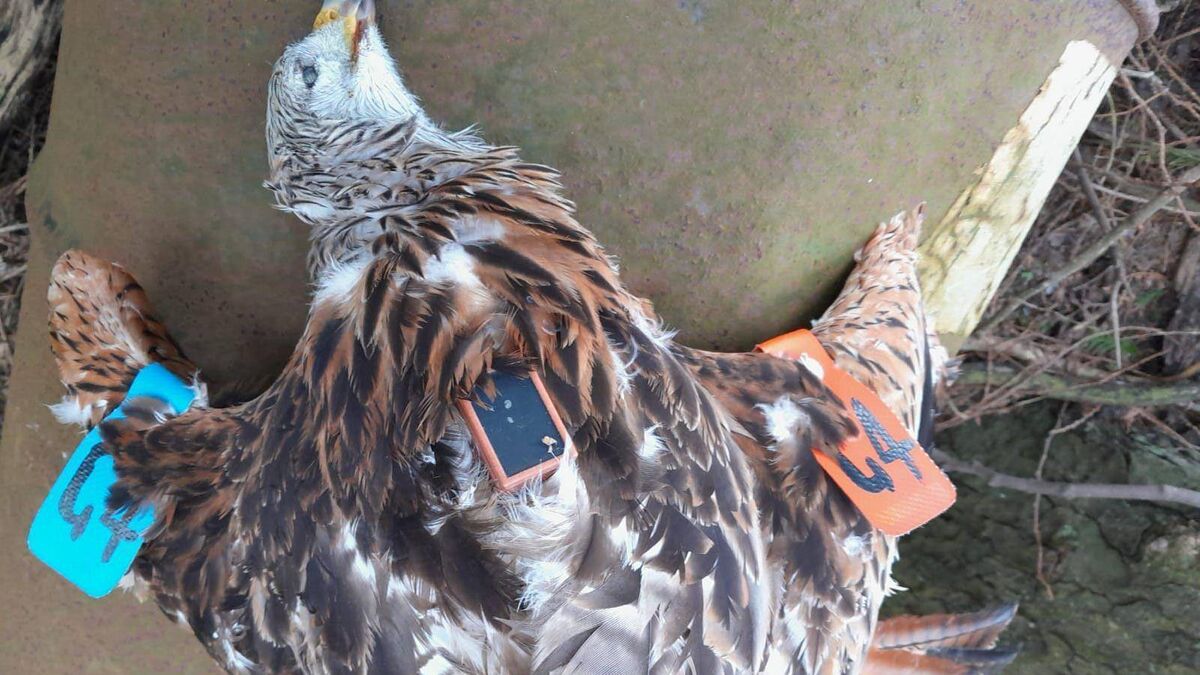
Orlagh, the red kite, was found dead between Tullow and Ballon Photo: Northern Ireland Raptor Study Group
THE FIRST red kite known to have bred in County Carlow in more than 300 years was poisoned with an illegal pesticide. The endangered bird of prey was found dead between Tullow and Ballon, the NPWS (National Parks and Wildlife Service) revealed to
It had been nesting in the county for the past year, approximately five kilometres from where it was discovered poisoned.
Toxicology results confirmed the presence of the banned substance, carbofuran, in the bird. She was a three-year-old red kite named Orlagh who originally fledged from a nest in County Wicklow and had been fitted with a GPS tracker as part of a cross-border project which studies the lives and movements of birds.
Dr Marc Ruddock, red kite project manager with the Golden Eagle Trust and co-founder of , said Orlagh was particularly special. “It attempted to nest in 2025 and in early 2026 all signs indicated that it was nest building in the same area. We were very shocked to see the tag then stop moving suddenly,” he said.
Following a report from the Northern Ireland Raptor Study Group, NPWS staff collected the carcass and submitted it to the State Regional Veterinary Laboratory for testing.
The use of carbofuran products in agriculture has been banned in Ireland since June 2009. According to the NPWS, the pesticide is no longer legally available anywhere in Europe but is known to be illegally procured and used by a minority of people who persecute wildlife, particularly birds of prey.
Minister of state for nature, heritage and biodiversity Christopher O’Sullivan described the poisoning as “deeply concerning,” adding that carbofuran is particularly toxic to birds. He said use of the substance is a criminal offence carrying penalties including fines of up to €5,000 and/or imprisonment of up to 12 months.
Hazel Doyle, NPWS district conservation officer for the south-eastern division, warned that the poison is lethal not only for wildlife but for domestic pets, farm animals and anyone who inadvertently comes into contact with it.
She appealed to the public to report meat baits found on land, tethered live birds and animals – which are generally laced with the poison to lure birds of prey – and any suspicious dead birds of prey or birds dying in unusual circumstances.
Dan Curley, chairman of the National Association of Regional Game Councils (NARGC), told that the organisation condemned the poisoning.
“That poison has been banned for a good few years. That’s obviously illegal activity and we would be 100% against any of that,” he said.
Asked whether the poisoning could have been accidental, Mr Curley said: “No, no, it wouldn’t be. All these poisons have been banned for years.”
He said it was “very unlikely” the poison had been used to kill something else and was accidentally ingested by the red kite. Asked what someone would be doing with carbofuran in 2026, he said: “It’s hard to know. I don’t even know where they would get it first place,” adding that it had never been a common poison to begin with.
“Poisoning has not been allowed for many years; it’s banned because of its indiscriminate nature,” Mr Curley said. He explained that where magpies, crows, grey crows, rooks or jackdaws are damaging crops, farmers are permitted only to shoot or trap them.
This is not the first instance of red kites being poisoned in recent times. A spokesperson for the NPWS said: “A number of cases of suspected poisoning and other causes of death for red kites were submitted for testing” in Ireland between 2024 and 2026.
In 2024, six red kites were submitted for testing. “Rodenticides were detected in all six birds, although the results indicated that poisoning was likely to have been the contributing cause of death in four of the six cases. In 2025, one red kite was found to have a level of rodenticide considered potentially fatal,” added the spokesperson.
This year, another red kite was recovered with evidence of having been shot, while a further two recent cases (including Orlagh) involved the detection of carbofuran.
Any suspected wildlife crime, including suspected poisoning or other unlawful killing of birds, can be reported in confidence to WildlifeEnforcement@npws.gov.ie.