New study reveals hidden mental health toll on farm families
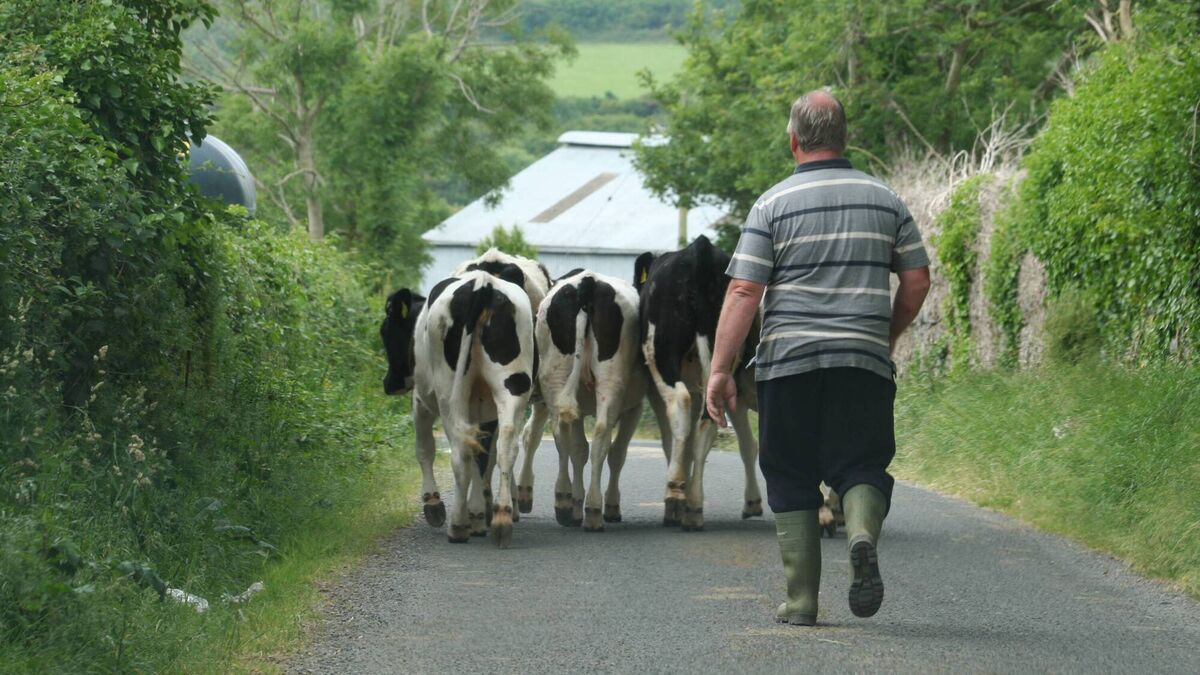
Stock image of Irish farmer
A NEW study has revealed the unseen or overlooked mental health struggles faced by Irish farm family members, including partners, parents and children.
The Farm FaMHealth project, an initiative by Dublin City University funded by Research Ireland, found that while the mental health struggles of primary farmers are widely documented, wider farm family members face similar challenges but often fail to seek help until reaching a point of severe crisis.
In response, researchers have launched a nationwide preventative mental health intervention programme with farm family members across Carlow now being encouraged to take part.
Over 99% of Irish farms operate as family enterprises where work and home life are closely interconnected. The study found that spouses and children frequently act as an invisible workforce, carrying the weight of unpaid labour, intense domestic responsibilities, and severe ‘role overload’.
The research, based on a survey of 447 Irish farm family members, paints a stark picture of the dual burden many face. Some 68% of those surveyed are employed off-farm, with 57% working full-time, yet 43% still carry out daily physical farm labour. Spouses, particularly women, were found to frequently manage household duties, childcare and farm administration alongside off-farm work, often without formal wages or recognition.
The study also found that 60% of participants had not sought help for mental health issues, while 30% showed “low resilient coping” capacities – a situation researchers say is worsened by traditional expectations of stoicism and self-reliance, which remain both a cultural norm and a major barrier to seeking help among farm families.
According to the research, family members often do not access existing mental health supports aimed at farming communities simply because they do not identify as farmers themselves.
“Previous research has focused almost exclusively on primary farmers,” explained Professor Siobhán O’Connor, co-principal investigator on the project.
“However, our qualitative phase showed that spouses and children face identical pressures. Because they don’t view themselves as the primary farm operator, they do not tend to engage with available supports. They suffer in silence, with many juggling off-farm employment and daily manual labour to keep the farm afloat,” Professor O’Connor said.
In response to the findings, the project has designed a specialised mental health training programme, due to launch at the end of July, with recruitment ongoing for sessions across the country.
Rather than focusing on crisis management, the programme centres on early prevention, help-seeking and daily mutual support. It aims to teach family members how to recognise early warning signs of stress, anxiety and depression, both in themselves and their loved ones, before burnout occurs.
Sessions will be delivered in hybrid format, with both online and in-person elements, designed around the seasonal demands of farm life.
Farm family members in Carlow and surrounding counties are being urged to sign up for upcoming regional training sessions.
“This is about moving away from the ‘crisis-only’ narrative,” said Dr Sinéad O’Keeffe, a Farm FaMHealth researcher. “By educating families on self-care and giving them the tools to speak openly, we can build resilient rural communities that support one another every single day.” For more information on the report, regional training dates, or to register for the upcoming intervention, visit: FarmFaMHealth Project.