UHL trolley chaos continues despite opening of 96-bed unit
David Raleigh
The opening last month of a 96-bed unit at University Hospital Limerick (UHL) did little to mitigate world-war-like conditions inside the hospital’s overcrowded Emergency Department (ED) this week.
The €105 million facility has been taking patients.
However, inside the trolley trenches of the emergency department, the sickest of patients were stuffed together cheek by jowl, holding onto trolleys, chairs, or even a loved one for much-needed support.
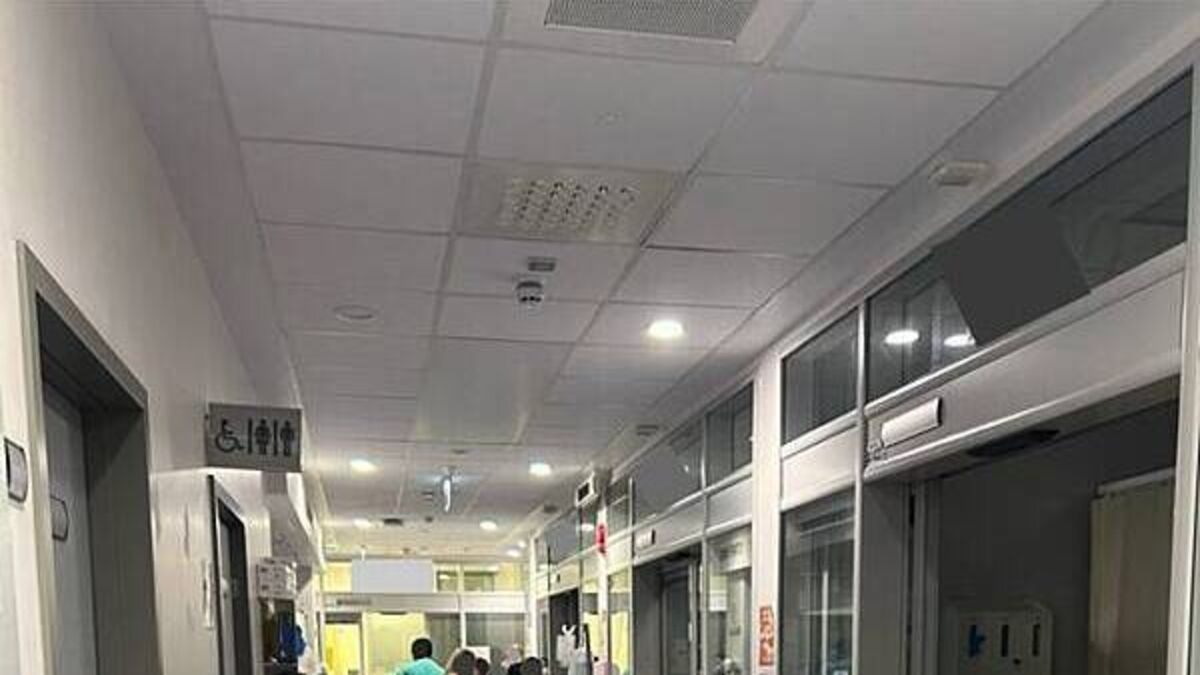
Photographs taken inside the emergency department zone in recent days show patients languishing on trolleys across both sides of corridors with little or no room to walk.
There were 103 patients without a bed at UHL on Tuesday, according to figures published by the Irish Nurses and Midwives Organisation, making UHL the most consistently overcrowded hospital nationally.
Sligo University Hospital and Mater Misericordiae University Hospital were next with 44 patients on trolleys each, followed by University Hospital Galway (36), Cork University Hospital & Mercy University Hospital, Cork (both 34), and St Vincent’s University Hospital (33).
The level of overcrowding grew so dire on Tuesday that the UHL communications department issued a SOS call late on Tuesday night for people to “consider all available healthcare alternatives before attending the ED”.
Frail patients
The “sickest, most seriously injured and frailest patients” were being prioritised, the hospital said.
“UHL is currently experiencing huge demand for its services, with upwards of 350 people attending the Emergency Department in the past 24 hours, with approximately half these patients arriving to ED without GP referral,” read a UHL statement.
Such was the level of patient overcrowding, UHL issued a advisory to the public that “the Emergency Department is for patients with life-threatening emergencies”.
“Anyone with less urgent illnesses is going to experience a long wait, perhaps unnecessarily,” it said.
UHL urged people to find and use alternative healthcare options including “local pharmacies an family doctors, walk-in injury clinics, and medical assessment units”.
“When your GP’s surgery is closed, Shannondoc (0818-123-500) is open from 6pm to 8am, Monday to Friday, and all day (24 hours) on Saturday and Sunday,” it said.
“We apologise to every patient who has experienced long waits for a bed in UHL.
"Our staff are doing everything to provide the best possible care, and we continue to monitor the situation closely and will provide further updates as necessary.”
Injury Units are a walk-in service, open 8 am to 8 pm at Ennis, Nenagh and St John’s Hospital for treatment of a range of injuries that don’t need hospitalisation, such as broken bones, dislocations, and minor burns, the HSE said.
In the Midwest, there is a “typical patient experience time of around two hours”, it said.
By the time patient Tom (81) is admitted to Zone C, it is 3.30 pm, and the trolley trenches inside the Emergency Department at University Hospital Limerick are already heaving.
Makeshift ward
With no space for a small mouse, Tom and his trolley are carted back out onto the “glass ward”, which staff refer to as a makeshift ward located on the main corridor next to glass windows outside the ED zones.
The lights are never dimmed here, and the air blares the familiar chaos of an emergency department stretched beyond its contours—unanswered phones ringing, wheels scraping, muffled coughs, vomiting, and hushed apologies muttered as bodies squeeze past bodies in narrow, improvised corridors.
Trolleys lie cheek by jowl, forming a kind of metallic maze. Despite the chaos, nurses, porters, healthcare assistants, caterers, visitors and doctors somehow thread themselves through it with the knowledge of having long accepted that space here is a luxury.
Ahead of Tom, an elderly woman in pyjamas and a nightgown clutches a sick bag in one hand, its plastic rustling against her wrist.
She pauses, uncertain of where to go next, until a staff member gestures above the noise towards one of the many “mattresses on wheels” stationed like temporary islands in a sea of discontent.
The woman’s husband trails behind, worry carved into the lines beneath his eyes. They are told to sit and wait. They do. There is nothing else to do.
Time moves strangely in the trolley maze — fast and slow, urgent and idle.
An elderly patient manages to give a urine sample in the toilet next to a trolley. The rattling of a patient’s chest on the other side of the door tells one all one needs to know about dignity.
Those lucky enough to walk to the toilet are at least spared the humiliation felt by those trying to aim their wee into a pot on a trolley, next to more trolleys.
There is no space reserved for urine samples, so the little container with the patient’s sample ends up standing on a ledge, sandwiched between patients ' trolleys and patients on chairs — It’s a silent marker of how much the system relies on improvisation.
At 5 pm a staff member stops briefly beside Tom (81). The clinician looks stressed—shoulders tight, his steps already angling toward the next call.
“I still don’t have a handover,” he says, almost apologetically. Tom nods. He still hasn’t been seen.
"The corridor continues its choreography of chaos. A trolley squeaks. Someone pukes. Someone cries. A man, intoxicated, snores in a booze coma despite the noise. More come, more are moved into the corridors.
"At 5.15 pm, a light-blue outfit approaches Tom—a neatly dressed clinician with a calm, steady manner.
"He introduces himself and gets to work taking the patient’s blood, efficient but kind. It is one of the first clinical steps of Tom’s stay, hours after he entered the department.
"And then, he waits...
"Patients have died on trolleys when their families have argued they could have been saved. The hospital apologises, staff weep, some have left with scars that went on deep.
We remember the tragedies, the loss of young and old lives; we remember the arresting words of one of the hospital’s own emergency medicine consultants... “it’s like a death trap”.
If UHL’s corridors could talk, they might say that none of this is the fault of the people in the staff uniforms or rolled up shirt sleeves, or the people in pyjamas clutching sick bags, or the worried husbands and wives, or the man watching his urine sample sit on a ledge catching other patients' eyes.
The trolley trenches might say that they’re trying—stretching—carrying more than they were ever built for.
But the corridors don’t talk.
They just hold the story, hour after hour, trolley after trolley, patient after patient, until finally someone moves on… making space for the next one.