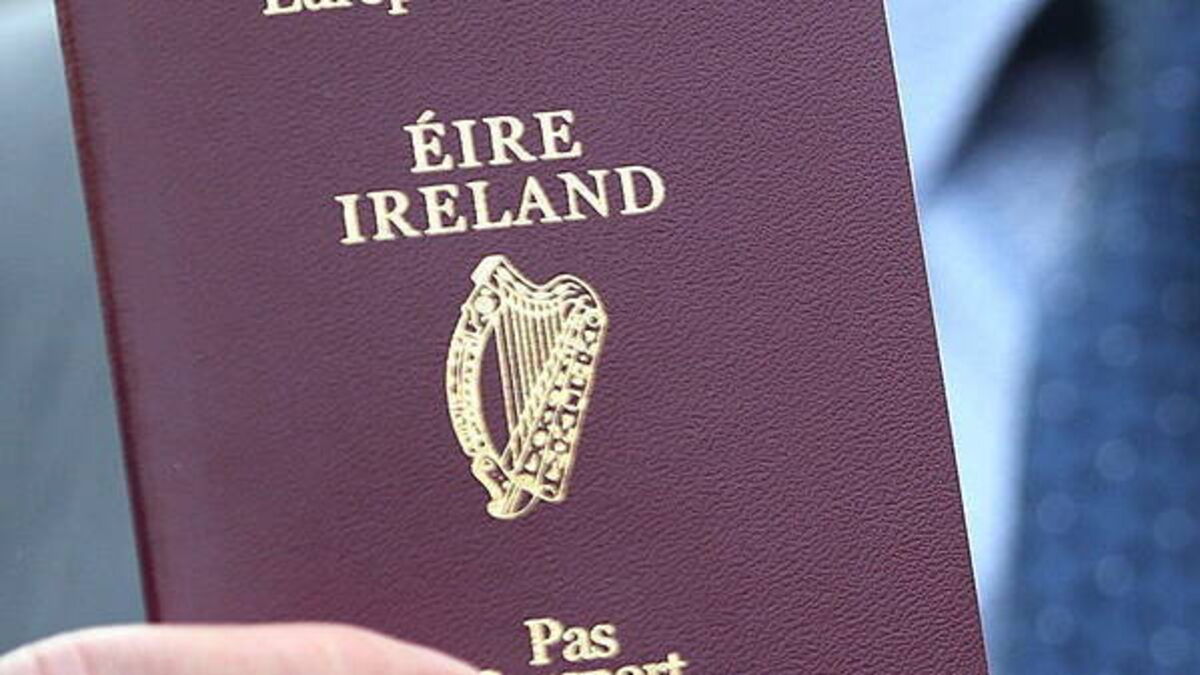
Two women challenge decision to refuse their child Irish passport
High Court Reporter
Two married women have taken a High Court challenge over a decision by the Minister for Foreign Affairs to refuse a passport for their son, who was born with the assistance of a UK fertility clinic.
It is submitted to the court that one of the applicants is an Irish citizen living in the UK, in a lawful same-sex marriage and that she is the legal parent to her child.
She is named on the birth certificate as ‘parent’, but not as mother. She is also the genetic parent, as her egg was used via ‘shared motherhood’ IVF.
Her partner, who gave birth to the child following the IVF procedure, is named as the mother on the birth certificate.
It is claimed that her parentage, parental rights and family status are not recognised by the State for citizenship through descent and the Department refused to grant the child an Irish passport.
The notice party is the birthing mother named on the UK birth certificate as ‘mother’.
In an ex parte application - where only one side is represented - the couple seek a High Court declaration that the Irish applicant, who cannot be named, is the lawful parent to their child under Irish law.
They also seek an order compelling the department to grant citizenship 'by descent' to their child under Section 7(1) of the Irish Nationality and Citizenship Act 1956.
Lawyers for the applicant submit their client was born in Northern Ireland, has an Irish passport and entered into a same-sex relationship with a citizen of the UK, which led to a same-sex marriage.
Between April to September 2024, both spouses engaged in 'shared' motherhood IVF - also known as reciprocal IVF - conducted in a registered fertility clinic in the UK.
Inseminated eggs by an unknown sperm donor were transferred to the applicant's wife, who carried the child to term and physically gave birth.
It is submitted that the applicant is named as "parent" on the child’s birth certificate and is a lawful parent, whereas the applicant’s wife, who physically gave birth to their child, is named as "mother".
In December 2025, the applicant and her wife applied for an Irish passport for their child on the basis that the applicant was an Irish citizen at the time of their child’s birth, and was also their child’s legal and genetic parent at the time of birth.
In April 2026, the Department refused to recognise the applicant’s parentage of the child based on the definition of “parent” and not "father".
The applicant replied advising she was not just the legal parent to the child but also the biological and genetic parent, as her genetic material, or 'egg', was used, supporting the 'genetic link' for citizenship by descent.
It is claimed the Department erred in law, and acted ultra vires, by not recognising the applicant as the legal or genetic parent to their child, and the State has "unlawfully, and without reason or lawful justification, limited the definition of 'parent'."
Judge Mary Rose Gearty, on Wednesday at the High Court, ordered that a separate but related application for a portion of the claim made by the applicants' legal team could not be heard 'in camera', as requested, but made no judgment on the substantive application for leave to appeal the State's decision.
The matter must now return to the judicial review ex parte list at the High Court.