Stardust survivor granted High Court permission to challenge Government pay scheme
High Court Reporters
A survivor of the Stardust nightclub fire was left 'aghast' after hearing that the Government intends to offer just €20,000 compensation to those injured in the disaster, the High Court has heard.
The compensation offer is limited to those who participated in a tribunal held in 1985.
Lawyers for Jimmy Fitzpatrick, who was 16 at the time of the fire and suffered catastrophic burns, told the court the decision came "out of the blue" following their client's 40 years of campaigning for justice.
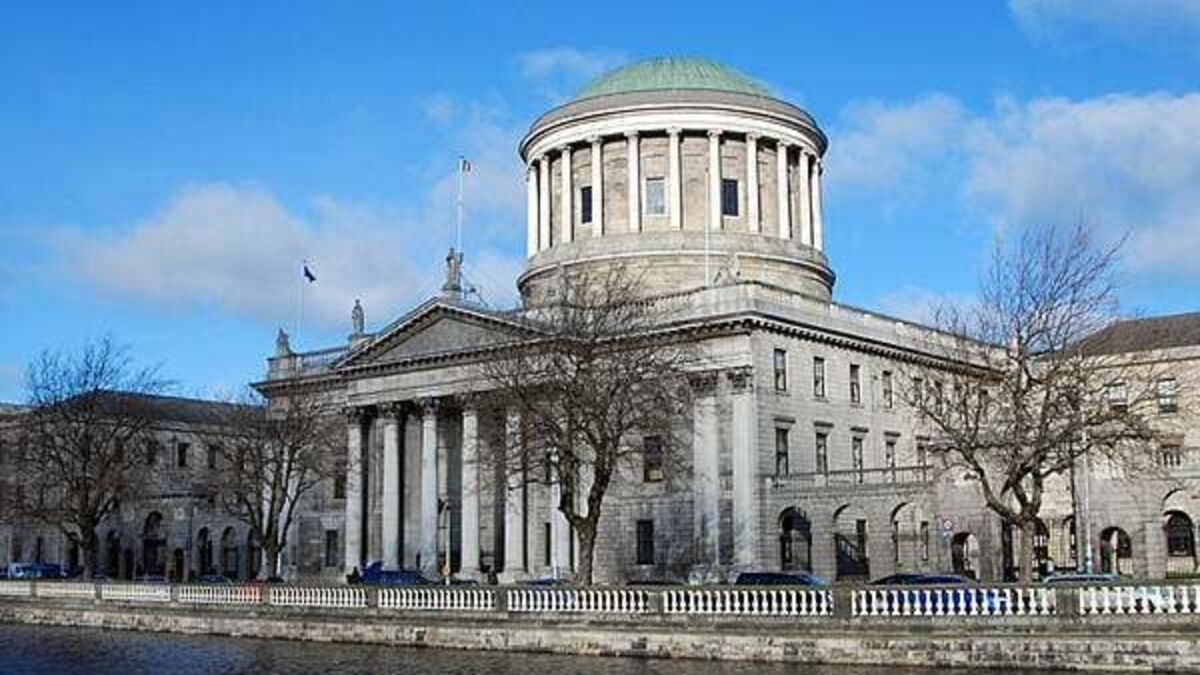
At the High Court on Monday Ms Justice Mary Rose Gearty granted leave to Fitzpatrick to seek a judicial review of the payment scheme. Fitzpatrick wants the government to engage with survivors before setting the parameters of the scheme.
In 2023, Fitzpatrick told the official inquiry into the disaster that he spent nearly four months in hospital having suffered 'catastrophic' and 'life-changing' third-degree burns to his arms, back, neck, shoulders and face.
He became emotional as he told the tribunal about his friend, Liam Dunne (18), looking over the partition between their hospital beds and telling him: "Jimmy, we made it this far, we'll get out and we'll have a couple of pints." Mr Dunne died a short time later from his injuries.
In April 2024, after 122 days of hearings, the inquest's jury returned verdicts of unlawful killing in relation to the 48 people who died in the blaze.
They found that the fire, which broke out on the night of February 14, 1981, originated in a hot press as a result of an electrical fault.
The State apologised for decades of failures in recognising the suffering of survivors and the government made a public commitment to a financial redress scheme, divided into two phases.
Phase one was for the 48 bereaved families, who received a flat payment of €500K each. Phase two was to be for the injured survivors, who were told that payments would be tailored to each person, avoiding a 'flat' payment fee.
At the High Court today, Michael L O'Higgins SC, with Katie Stevens BL, told Judge Gearty that Mr Fitzpatrick's solicitors, Phoenix Law, had written to the minister in July and September of last year requesting confirmation that engagement would commence with survivors' representatives and that details of the implementation of this second phase would be established.
In the ex-parte application - where only one side is represented - lawyers submitted that in February 2026 the Minister announced what amounted to a "non-tiered payment of €20,000 for survivors, limited to those who had participated in the 1985 Tribunal".
Fitzpatrick's lawyers said the scheme was being introduced "without any engagement or consultation" with survivors.
It is submitted that this decision "abandoned the promise of the second 'exceptionality' phase and imposed a new eligibility criterion, based solely on the 1985 Tribunal participation, which many survivors then regarded as exclusionary and procedurally unsuitable".
O'Higgins submitted to Ms Justice Gearty the decision came "out of the blue, to say the least" and left his client - a campaigner for justice for over 40 years - "aghast".
Counsel said the Minister used "Jesuitical language" in response to requests from Phoenix Law as to how matters were proceeding.
O'Higgins is seeking a High Court declaration that the implementation of phase two without engaging with survivors is unlawful, contrary to fair procedures and in breach of the Constitution.
He further seeks a High Court order directing the Minister to reconsider the second phase of the payment programme through "meaningful engagement with survivors and their representatives and to publish a consultation framework and timelines, a draft scheme of parameters for 'exceptionality' and a lawful eligibility criteria for redress, not based solely upon participation in the 1985 tribunal."
Fitzparick, of Swords, Co Dublin, has taken his case against the Office of the Minister for Justice and the Attorney General.
Having granted leave to O'Higgins, Ms Justice Gearty adjourned the matter to November.
Fitzpatrick was part of a group of Superquinn workers who attended the Stardust on the night of the fatal blaze.
He told the inquest that he lost a number of friends in the fire, including George O’Connor (17), David Morton (19), Martina Keegan (16), Michael Griffiths (17) and Richard Bennett (17).
He recalled being on the dancefloor with friends when the DJ said there was a small fire and not to panic. He said he looked over and could see “a flicker” behind the partition.
He told Gemma McLoughlin-Burke BL, a member of the coroner’s legal team, that he saw a bouncer carrying a fire extinguisher and said when the man raised the shutter the fire “shot up” to the ceiling.
“It was like the air got hold of it and the whole thing just went up like an inferno; it went in seconds,” he said.
Fitzpatrick said he made his way towards the main door, exit two, but on his way out he saw two girls he knew standing by the cigarette machine, screaming but “going nowhere”. He said he made his way to the passageway near the front door but decided to turn back to get the girls.
As he made his way back, he could see “droplets of fire” falling everywhere, he said.
Asked to describe the droplets, he said it was like it was “raining fire” with “balls of flame” that were about 3mm wide.
He grabbed the girls and “threw” them towards the exit and they fell into the hallway as “mayhem” broke out.
Fitzpatrick said he went to follow the girls, but as he was running he tripped over a handbag and fell on the floor. He said at this point, the lights went out. He tried to get up but the crowd rushing towards him and towards the door kept knocking him down.
“I was being trampled so I crawled as fast as I could away and I was on a carpet at that stage but then I hit wood and I thought I’m going the wrong way, I’m on the dancefloor. You could see nothing,” he said. “You could chew the smoke, it was that thick.”
Fitzpatrick said he didn’t know where he was and felt his back getting burned and was finding it hard to breath. He said he stood up and made his way to where he could hear people screaming and kicking a door, which eventually burst open.
The witness said when he got outside he was “completely black, head to toe” and a young man he did not know walked him to the front of the building and put him in an ambulance.
He told Des Fahy KC, representing a number of families of the deceased, that he had seen chains on all the exit doors in the Stardust on each of three or four occasions when he had been there previously.
Asked by counsel if he had seen anyone in charge on the night of the fire, he said: “No. Mayhem was in charge…nothing was under control.”