Sinn Féin stands with blockaders, says Pearse Doherty

By Cillian Sherlock, Press Association
Sinn Féin stands with fuel-cost protesters, “including those who were blockading” critical infrastructure, the party’s finance spokesman has said, as opposition parties remained divided on the issue.
Ireland’s only oil refinery and major depots that are key to fuel distribution were blockaded by protesters for a number of days last week in coordinated action by hauliers, farmers and agricultural contractors seeking Government intervention on their operating costs.
The action was an escalation of protests which began as slow-moving convoys on motorways, and was not anticipated by the State, Taoiseach Micheál Martin conceded on Tuesday.
The blockades strangled fuel distribution throughout the country, with hundreds of filling stations running dry and curtailment of the operations of emergency responders, and concerns over the provision of healthcare and other vital services.

The Garda Public Order Unit launched major operations to clear blockades at Whitegate oil refinery, Galway docks and Dublin city centre over the weekend.
The Defence Forces were also involved in clearing the blockade in Galway, after Justice Minster Jim O’Callaghan announced on Thursday that they would be called in to respond to protests.
Separate blockades near Rosslare Europort and a depot at Foynes, Co Limerick, were also stood down.
After the end of the blockades, the Government announced a fuel-cost package worth more than €500 million – largely targeted at the agricultural and transport sector.
Speaking to reporters before Cabinet, Taoiseach Micheál Martin said the approach taken by protesters “did not make sense” and admitted: “The blockade, certainly as a tactic, was not something that was anticipated.”
He said ministers “accept fully” the rights to protest and freedom of assembly, adding that these had not been undermined by the policing response to fuel blockades.
“There’s always a balance, and one has to distinguish between the blockading of absolutely critical national infrastructure and protest.”
Tánaiste Simon Harris agreed, saying: “I draw the line between protesting and other activities that, in the words of An Garda Síochána, were illegal, like blocking the mobility of people.”
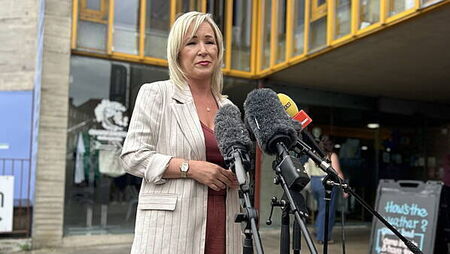
Asked on Tuesday if Sinn Féin supported the blockades, Pearse Doherty told reporters the party “absolutely supports the protesters”.
Pressed multiple times on whether he specifically supported the blockade action, he answered: “We stood with the protesters, including those who are blockading.”
However, Doherty said the party did not want to see more protests or blockading, adding: “What we want is government action.”
People Before Profit defended the blockades as a tactic, with leader Richard Boyd Barrett saying that “disruptive protest can force the Government to do things” as he called for a “new phase of protest and mobilisation”.

Asked if he was advocating for blockades, Boyd Barrett said: “While the Government is unwilling to act to prevent people from suffering real hardship where they can’t pay their bills, simply saying wait for the next election isn’t good enough, and we need to put it up to them – and we’ve seen over the last week that protests work.”
The Dun Laoghaire TD said the trade union movement could not stand by and let workers be “left behind”.
Solidarity TD Ruth Coppinger described the blockades as “absolutely justified and legitimate” as she criticised trade unions for being “virtually silent” except for a statement from Unite.
However, Labour TD Ged Nash said the trade union movement “will be stepping up to the mark” and “will have a much more muscular presence” in seeking a “fair share” for workers.

Asked what he meant by a muscular presence, Nash, who said Labour did not support the blockades, replied: “One of the reflections I think that everybody in Leinster House needs to take out of this is, how effective are we?
“When people look at the kinds of alternatives that we saw on our streets last week, that are not very appealing to ordinary working people who want to see a decent society, a respectful society, a sustainable economy, we need to ask ourselves the questions why working class people and why people in low and middle incomes believe and are so desperate in the situation they’re in that they feel that people like that have answers.”
Nash said the Government’s package was designed to “placate” what he described as “narrow sectoral interests”.
Aontí leader Peadar Tóibín said his party did not want to see a blockade but the “reality was it was happening” and said the Government should have engaged with protesters.
He said he would “encourage everybody to abide by the law” and added: “I don’t want to see any blockades in the country ever again.”
Independent Ireland TD Richard O’Donoghue said he had stood with “hard-working people” who were protesting “peacefully” at Foynes, Co Limerick.