Inflation could reach 6.7% under ‘severe scenario’ – report
By Cillian Sherlock and Gráinne Ní Aodha, Press Association
Inflation could reach as high as 6.7% in less than a year, according to a “severe” scenario forecast by the Department of Finance.
The scenario is modelled on the event of “pronounced and prolonged disruption to energy supply” with oil at $130 a barrel in 2026, and averaging $125 a barrel in 2027.
The forecast is the worst scenario included in a range of projections published in the Annual Progress Report on Tuesday, which examines potential impacts of the war in the Middle East.
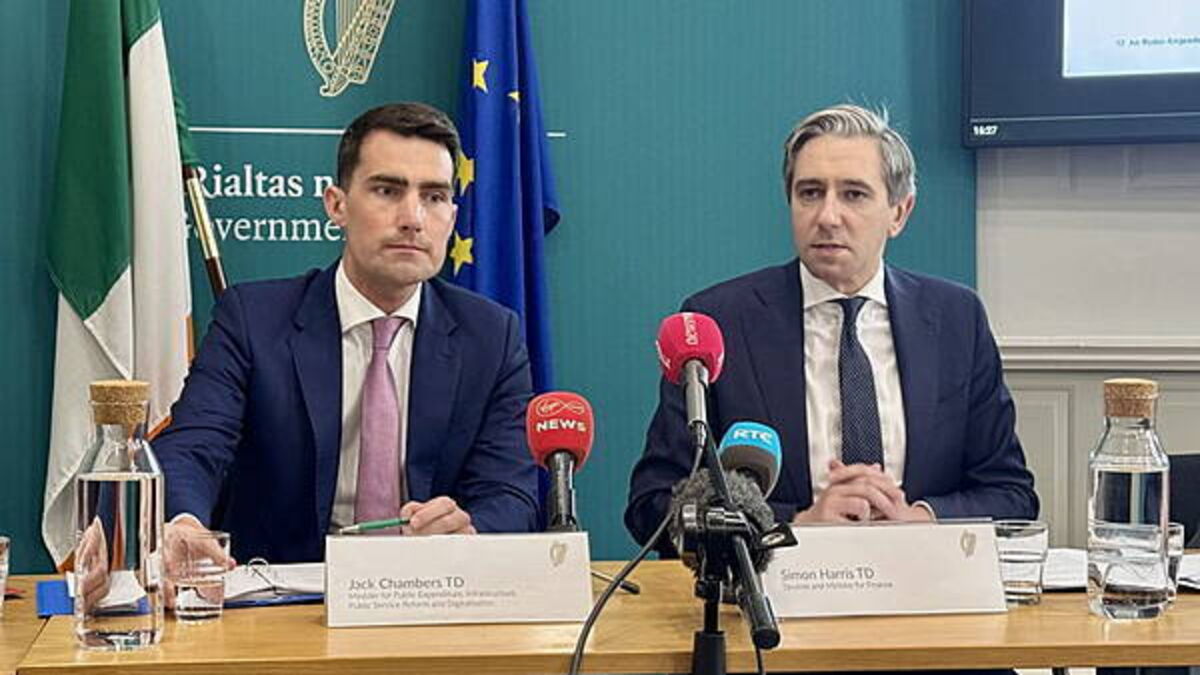
Earlier, Tánaiste and Finance Minister Simon Harris warned there is a risk of stagflation in the Irish economy.
Harris said the country’s growth forecast would have been upgraded if Iran had not been bombed.
“That does speak to the resilience of the Irish economy where growth is strong, there are more people in work than ever before,” he said, arriving at Government Buildings ahead of Cabinet on Tuesday morning.
“We’ve got to move beyond the lazy politics of suggesting that surplus is a dirty word or a derogatory term. Thank God we have a surplus in this country.”
Harris said there is a risk that inflation will rise to a level where the benefit of economic growth is not felt.
He said: “There’s a lot of risks at the moment and I suppose we’re trying to forecast and we’re trying to plan while grappling with external factors largely outside the control of this country.”

Harris said Ireland is facing into the next period from a position of “real relative strength” and “fiscal resilience”, demonstrated by economic growth and high employment.
The Finance Minister said Ireland and Europe is “somewhat at the mercy” of decisions “taken by other people far away”, as he advocated for more sustainable energy use.
He said: “As we plan for the future, as we plan for the Budget, as we plan as a country, we’ve got to move the conversation beyond just what we do in the here and now around the energy crisis to how we move away from a reliance on fossil fuels.
“To break that link, we have to make sure that we don’t just talk about how we help people in the here and now, but we also talk about how we help people with their energy bills in a more sustainable fashion.
“How we help people get solar on the roof, how we help people replace windows and doors, make their own home warmer, make their own home cheaper to heat. How also, through the Critical Infrastructure Bill, we accelerate the delivery of renewables.”