Local hall packed to overflowing for solar farm meeting
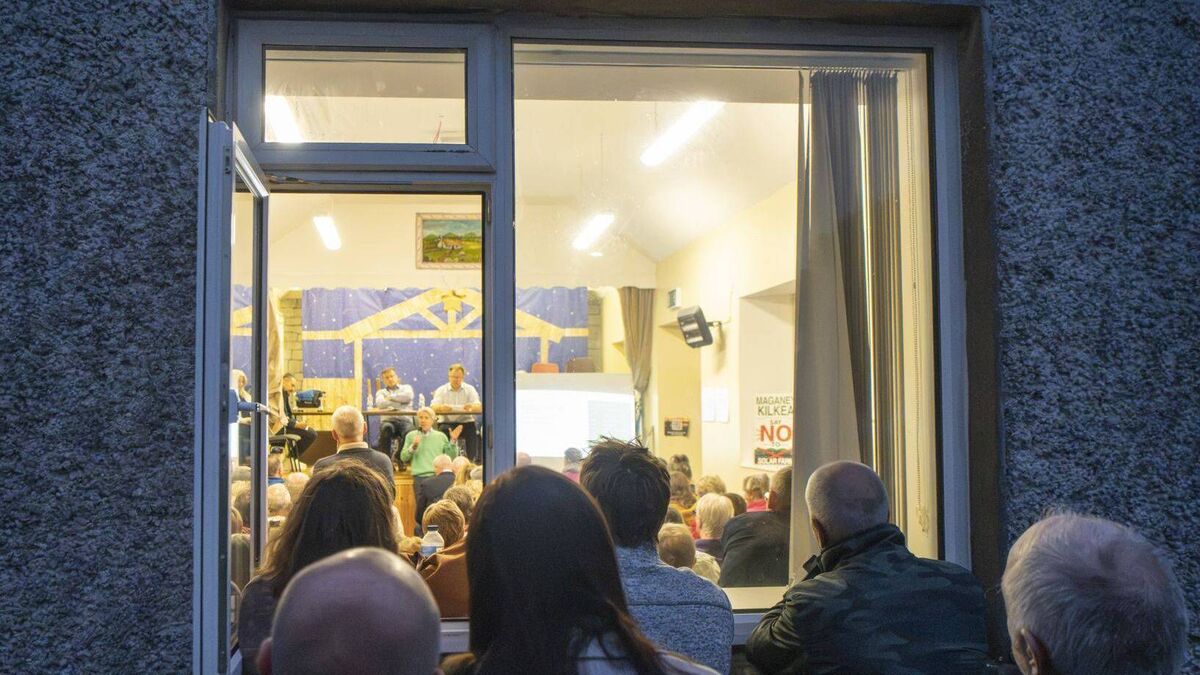
The hall was so packed for the meeting that the surplus crowd had to look on from the outside Photo: Aisling Hyland
“THERE is no strength without unity” was the closing message at a packed Levitstown Hall last Tuesday night, 8 September for a public meeting regarding a proposed BNRG Maganey solar farm, with locals coming together to share information and plan their objections strategy to the 114-hectare (281-acre) project.
The meeting was billed as an information meeting, but there was undoubtedly a tone of opposition and protest regarding BNRG’s plan for a large swathe of land stretching from Maganey to Kilkea.
Local opposition to the project was expressed by several speakers which was met by applause by the 130-140 locals present. The application, which is currently being considered by Kildare County Council, includes 496,308 square metres of solar panels along with 48 Battery Energy Storage System containers and 12 Medium Voltage stations.
Such was the turnout at the meeting, there was not enough room in the hall and locals listened in through hall windows.
The proposed solar farm is planned across lands in the townlands of Beaconstown, Johnstown North and South, Kilkea Upper and Crooket.
The gathering was chaired by Brendan Pittman who is a spokesperson and secretary for the group, as well as being a local businessman.
Local residents, former Versace executive Stephen Croncota, former school principal Gerry Watchorn and solicitor Dermot Flanagan were the primary speakers at the meeting, with Mr Croncota and Mr Watchorn giving presentations outlining their long list of objections to the plan, while Mr Flanagan gave advice to the gathered crowd on how to fill out their own objections and how to structure them.
Public representatives deputy Mark Wall and cllrs Mark Leigh, Veralouise Behan, Brian Dooley and Ivan Keatley all spoke to offer their support.
Concern was expressed over the scale of the development and its potential impact on the local community.
Mr Croncota gave the first presentation, outlining his concerns around the potential problems with the proposed project, including concerns over tourism, noise, roads, privacy, food security and future expansion.
He made a significant allegation – that the county fire service has admitted that it does not provide training for instances such as lithium battery explosions at solar farms.
Mr Croncota, who converted a derelict building into Crookett House Arts Centre, recently told the national media that he fears the solar farm, which would surround three sides of his property, could jeopardise his arts centre.
Mr Watchorn went into further detail on noise levels, claiming that BNRG has already stated its acceptance that an audible noise level will come into effect due to the facility.
He said that the company’s planning application does not meet the requirements set out by Kildare County Council.
He spoke of the potential threat to local heritage, noting the “five recorded monuments within the development footprint”.
Mr Flanagan told the meeting to start from personal experience and viewpoint when writing an objection.
A number of the public representatives who spoke at the meeting emphasised the importance of locals submitting objections to the project.
The deadline for submissions is 28 September and a decision is due on the application on 8 October.
Mr Pittman thanked supporters of a GoFundMe campaign to fund planning, technical and legal advice for the group’s response.
At the time of writing, the campaign has raised €4,815 towards its €7,500 target.