Used someone else’s passport to get job as carer
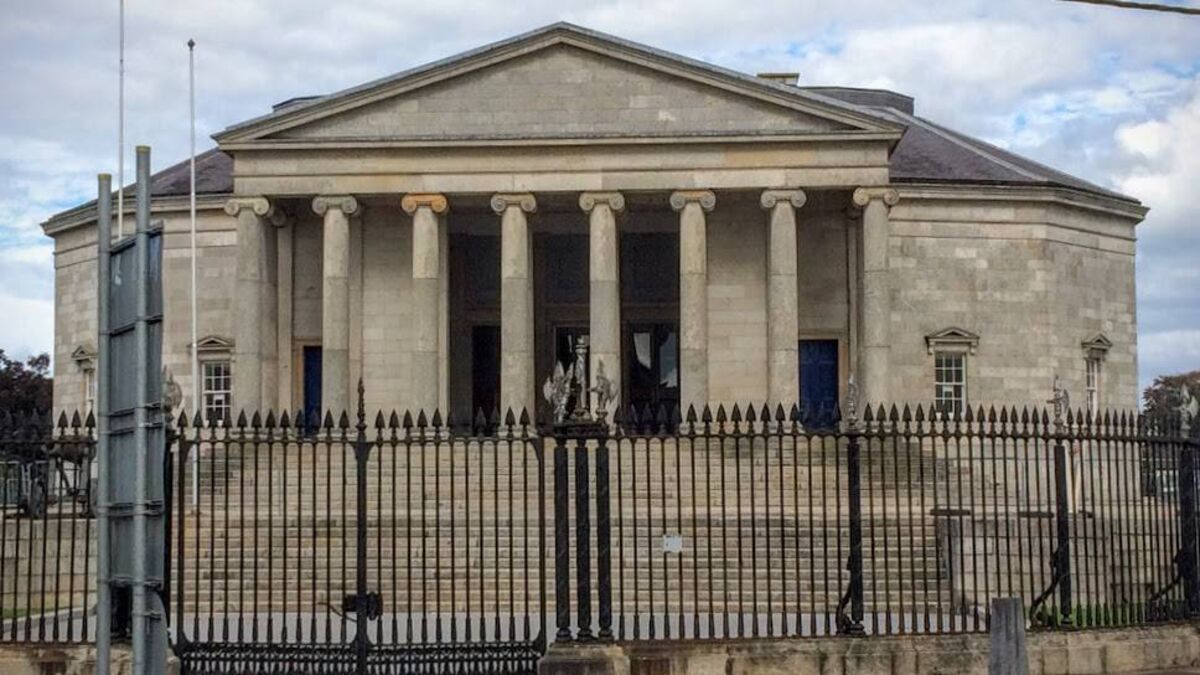
Carlow Court House
A NIGERIAN man who used someone else’s British passport to secure employment providing care to elderly people in Co Carlow received a nine-month suspended sentence at Carlow District Court.
Seun Lateef Adeyanju (34), currently residing at an IPAS accommodation centre in Dublin, pleaded guilty to three charges, including theft by deception and offences under the .
The court heard that on 8 January, Garda Sharon Walsh encountered the defendant riding an e-scooter in Carlow town and became suspicious about his identity. When questioned, Mr Adeyanju claimed to be a British national and produced a UK passport, one that bore a different name to his own.
He was arrested under the . It was subsequently established that he was a Nigerian national who had entered the Republic through Northern Ireland months previously without a valid visa or permit. He made a voluntary admission to that effect.
Investigations revealed that Mr Adeyanju had attended the Woodford Dolmen Hotel in Carlow the previous year, where he met a local care company and applied for a position using the false identity. In support of his application, he furnished additional false documentation, including a bin collection receipt and a PPS card, alongside the passport. The document, his solicitor would later clarify, was not doctored – it belonged to someone else entirely.
The company took him on and he went on to provide care to nine elderly clients, washing and dressing them and carrying out home-keeping duties. He worked a total of 371 hours and earned €6,800 gross. He was, the court heard, almost always accompanied by a senior care assistant during that time.
The company confirmed that feedback on his work had been positive throughout, with no concerns of ill treatment or misconduct raised in respect of any of the clients in his care.
His passport was seized by gardaí as part of efforts to establish how he had entered the country. He has no previous convictions.
Solicitor Joe Farrell, addressing the court on behalf of his client, drew a distinction between the use of the passport and the falsification of documents. “The passport he was using is not false; it is somebody else’s, not doctored,” he said. “I would say this is a differential. He did not falsify documents.”
Mr Farrell outlined the difficult circumstances that had brought his client to Ireland. “He needed to get some work and there were certain difficulties back in Nigeria. He had a difficult life back there and he wanted to make a better life for himself.”
He added that Mr Adeyanju had been volunteering since taking up residence at the IPAS centre, where he receives a weekly allowance of €80.80. He has also engaged solicitors in Dublin to pursue an application for refugee status.
In mitigation, Mr Farrell asked the court to weigh the quality of his client’s work against the offending. “I would ask you to look at what the sergeant said his former employer said about him, that his work was impeccable,” he said, adding that he was uncertain how the conviction might affect his client’s pending refugee application.
The prosecution informed the court that Mr Adeyanju has since acquired the status of asylum seeker.
Judge Geraldine Carthy acknowledged the gravity of the matter. “The matter is very serious if one looks at it in the round,” she said. “He furnished someone else’s documents and got a job as a medical assistant. According to his employer he did quite well; however, someone of legal status probably didn’t get this job because he did so illegally.”
On the section 6 theft charge – obtaining a wage by deception – Judge Carthy convicted Mr Adeyanju and imposed a nine-month sentence, suspended in its entirety for 12 months, on condition that he be of good behaviour and commit no further offences. She convicted him on the remaining charges and took them into consideration.