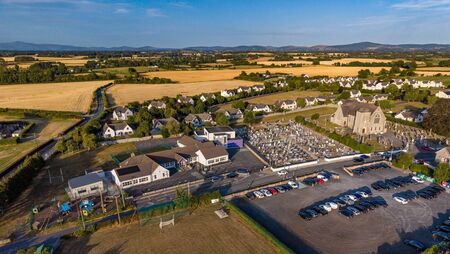
Chief executive of NZE defends consultations with Rathoe community

Peter Harte, chief executive of Net Zero Energy (NZE)
NET Zero Energy (NZE) chief executive Peter Harte has defended the company’s consultation with the Rathoe community and said he is confident that the proposed Rathrush Green Energy Park will meet strict safety and noise limits, following criticism by residents and elected representatives at last week’s public information day.
Speaking to at Rathoe Community Hall, Mr Harte said power stations are already operating in Ireland, citing gas-fired plants at Great Island, Huntstown and Whitegate. “This one does exactly the same thing, but fuelled on hydrogen,” he said.
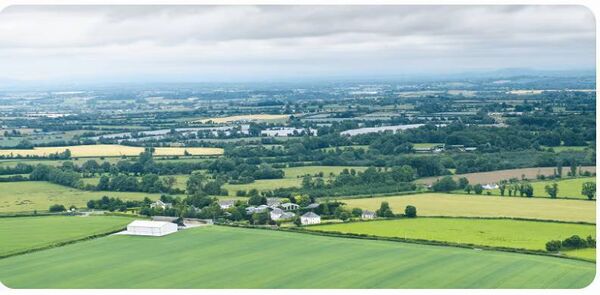
He said setback rules for facilities of this type are clear and are based mainly on noise and fire safety.
On noise, Mr Harte said the EPA sets a night-time limit of 35 decibels â roughly the noise level of a library â and that Rathrush would face a stricter standard than some other power stations because the site is classified as a “low-noise environment”.
He said NZE had measured noise levels in the surrounding area before choosing the site. “We’ve specified sufficiently quiet, unusually quiet machinery so that we can be compliant with those noise limits at those distances,” he said, adding that the same limits apply to other power stations, factories and roads.
On fire safety, Mr Harte said the project falls under Health and Safety Authority (HSA) oversight because of the volume of fuel to be stored on site. The facility would store hydrogen, along with hydrogenated vegetable oil, a back-up fuel the company is required by the regulator to hold. He said that this places the project under , which determine the required setback distance from housing.
Mr Harte said NZE has been working with the HSA for between 12 and 18 months on the technical land use planning assessment. He said the findings will be included in the planning application and published for consultation. “So far, the results are saying that we’re comfortably inside the setback zones that would be required,” he said.
He said facilities of this kind can, in some cases, restrict future housing development nearby, but that the HSA assessment found this would not apply at Rathoe. “That’s not us saying it, that’s what’s required by the HSA,” he said. “And like the licences, if we don’t adhere to those things, we lose the licence.”
Mr Harte acknowledged that NZE, as developer, will not be the long-term operator of the facility. He said the company typically brings early-stage projects to this point before handing them to established operators such as ESB or Statkraft, which have dedicated community liaison teams.
“If somebody has a problem with the project, they will address that concern,” he said. “And if the community isn’t happy with that, well, then you’re back to the EPA licence and the HSA licence.”
When asked about the company’s consultation with the Rathoe community, Mr Harte said NZE had gone “above and beyond” because the technology was unfamiliar locally.
“We know we’re coming into the community; we know this is an unknown project and it’s up to us to explain what we’re doing. It’s just the polite thing to do,” he said.
He rejected suggestions that residents had been kept in the dark, saying NZE briefed the media, Carlow county councillors and the local community at the same time when the project was first announced in June. Councillors were given a two-hour briefing before the announcement, he said.
Staff also went door-to-door, dropping information cards to every household within 1,500 metres of the site. “If we missed one, apologies, but we certainly aimed to get to everyone,” he said. “We’ll see in six months’ time whether we’ve done it right or not, but so far all we can do is put the information out.”
On claims that NZE’s ‘community benefit fund’ amounts to a bribe, Mr Harte said the fund was intended to reflect local concerns and priorities, not to buy support. He said the company was seeking views on which local projects could benefit. Households within 1km of the site would be offered €1,000 a year, with payments reducing by distance, while a wider fund worth an estimated €12 million over the project’s lifetime would be allocated by the community through a committee of its own choosing.
Asked about those living closest to the site, Mr Harte said the impact would vary from house to house. Some nearby homes are shielded by terrain, he said, while others further away have clearer sightlines to the facility. He said NZE had held roughly 100 individual conversations with residents, including some concerned about the impact on water wells, and the company was working directly with those affected, prioritising those closest to the site.
Mr Harte said NZE intended to continue engaging with the community as the project progresses.